SAO PAULO
With less than ten months to go before the opening match of the 2014 World Cup begins in Sao Paulo, FIFA Secretary General Jérôme Valcke says he has received assurances that all twelve host stadiums will be delivered, as the Association announces record pre-sales of World Cup tickets for next year’s games.
FIFA’s Director of Marketing Thierry Weil said that in the first 24 hours after online ticket applications opened on Tuesday morning, some 2.3 million requests were made – the vast majority by Brazilians. Tickets released in this initial tranche, which runs to October 10, will be put together and selected at random if demands exceeds supply, as is expected.
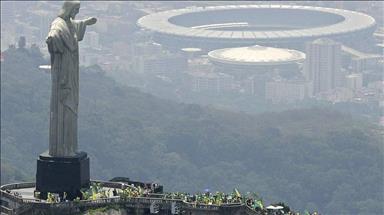
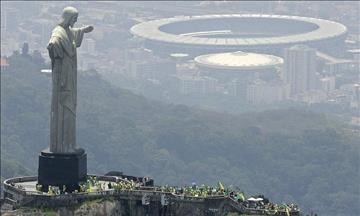
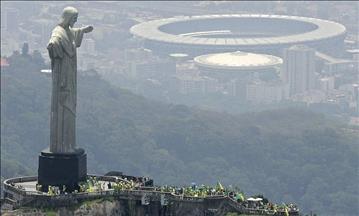
“It’s a pleasure to announce a new record for ticket application. In less than seven hours we had more than a million requests. After 24 hours we had had 2.3 million requests. Of these, 88.5% were made by Brazilians,” Mr. Weil told reporters at the Maracanã Stadium in Rio de Janeiro.
FIFA said the results demonstrated the support shown by Brazilians for the World Cup, although the nation is alone in knowing when and where their team will play its matches.
The level of demand has been far higher than that seen in the last two World Cups, FIFA highlighted:
“In [Germany] 2006 there were 500,000 requests in 16 hours. In [South Africa] 2010 it took ten days after sales opened for us to reach 506,000 applications. So I believe we have truly set a new record,” Mr. Weil concluded.
Fans from 200 countries have applied for tickets, FIFA said, with Argentina and the United States applying for the most tickets after Brazil.
Tickets range from 90 USD for first-round matches, to around 990 USD for the final in Rio at the Maracanã stadium. Tickets sold exclusively to Brazilians, Category 4 tickets, are cheaper than the rest of the tickets on offer, but will be restricted to areas behind the goal and higher seats.
-More World Cup volunteers sought
FIFA also announced that registration for the FIFA World Cup Volunteer Programme would be reopened on 9 September in Cuiaba, after high demand from across the world continued to pour in.
It was noted that the new volunteers would be a “slightly different profile” – including those who speak foreign languages, and more elderly and disabled people.
Famous Brazilian striker Ronaldo, who is a member of the LOC (Local Organizing Committee) Board, says volunteers would be key to making the World Cup a big success:
“For those wanting to take part in the World Cup, being a volunteer is a great opportunity. I’ve been a volunteer since the beginning of the World Cup project and I have always believed that volunteers make great events a success. At the Confederations Cups, 7,000 other people also believed that. We hope this can now be repeated,” Ronaldo told journalists.
-FIFA more relaxed after Confederations success
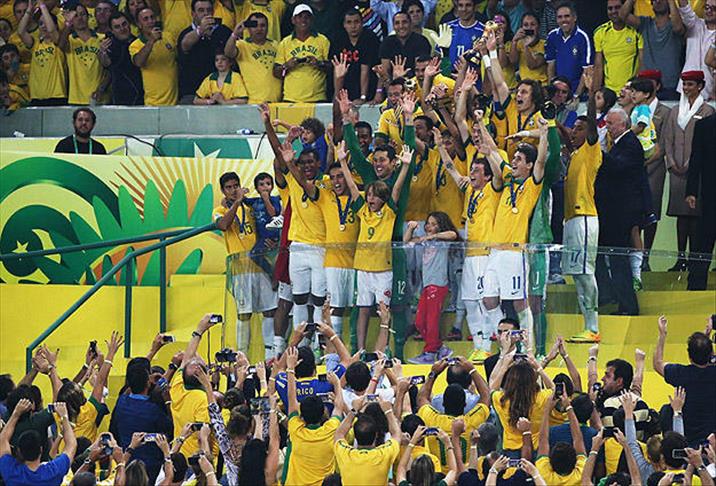
Speaking at a press conference in Rio de Janeiro after completing the first stadium inspection tour since the Confederations Cup, Mr. Valcke said the competition would definitely be a success and guaranteed that FIFA was now much more relaxed following the positive outcome of the Confederations Cup – widely seen as a dry run for next year’s tournament.
“The Confederations Cup allowed us to see that FIFA and Brazil have worked together. The result was excellent – both in terms of organization and the support of the fans. This makes us comfortable in saying that, yes, we will have a successful World Cup,” Mr. Valcke said.
The delegation included members from FIFA, the LOC and the Brazilian government.
The inspection tour took in São Paulo, the southern city of Curitiba and Manaus, capital of Brazil’s Amazonas region, where assurances were given and new agreements signed over the delivery of the host stadiums for the end of the year, giving organizers the chance to test-run the venues ahead of next June’s World Cup.
Curitiba’s Arena da Baixada Stadium had been of particular concern, but after agreeing to leave construction of the stadium’s new retractable roof until after the World Cup, the stadium will now be ready by the end of the year.
-Brazil responsible for security
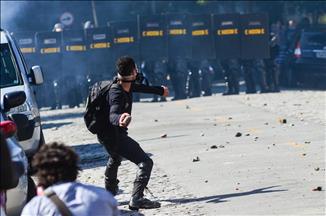
There are concerns that, after the mass anti-government protests seen this June and July – many of which were pitched against the government’s spending on sporting mega events – the World Cup could reignite fresh mass protests at the moment when thousands of tourists are set to descend on Brazil and the world’s media is closely focused on the country.
When asked about security in Brazil for the World Cup, Mr. Valcke said the Brazilian government was responsible, and Brazilian Sports Minister Aldo Rebelo – representing the government – said the state would guarantee everyone’s safety and that Brazilians themselves would not let any protests disrupt the event.
“There is nothing to fear in terms of security at the World Cup. The Cup is an event that the Brazilian people want, judging by the number of people looking for tickets. That’s the best security that the tourists, delegations and journalists could have. Beyond, of course, the formal security laid on by the Brazilian government,” Mr. Rebelo assured reporters.
englishnews@aa.com.tr