DHAKA, Bangladesh
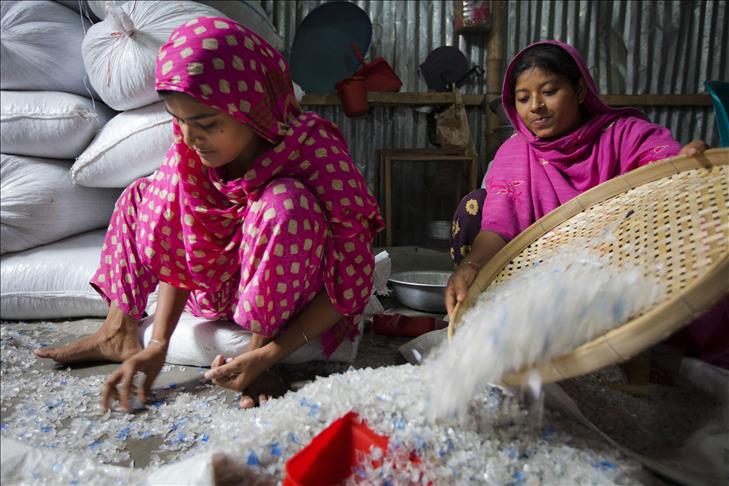
Bangladeshi workers in export-focused factories will be given the right, in principle, to organize workers' associations under a new draft law approved by Bangladesh's cabinet on Monday.
The law would give workers within Export Processing Zones -- state-run industrial areas that provide businesses with infrastructure, facilities and support services -- the right to form associations for collective bargaining, the cabinet secretary Mohammad Musharraf Hossain Bhuiyan said at a press briefing on Monday.
“At least 30 percent of workers from each factory have to apply to the Export Processing Zone Authority for forming the society,” he said. “Each factory will have one association, have an executive committee elected for one year by workers.”
Trade unions have previously been banned from factories in the specially-designated industrial areas under the EPZ Workers Association and Industrial Relations Act 2009. The new law was created because workers in the export zones are not covered by standard labor laws.
The issue of workers' rights in Bangladesh was highlighted when an eight-story factory building collapsed on the outskirts of capital Dhaka in April 2013, killing more than a thousand people.
“I welcome it as a step toward workers’ freedom of association, but we do not want two laws for workers in one country," said Nazma Akther, the director of Awaj Foundation, which campaigns for the rights of women workers in Bangladesh. "We want the right to form union and I wish government would consider to give out scope to EPZ workers too to form union as it is in the present labor law.”
The United States suspended a system of eased customs, known as the Generalized System of Preferences, on Bangladeshi imports in June last year due to deficiencies in worker safety and labor rights. Reform of rules for the Export Processing Zones were part of an action plan issued for renewal of the agreement.
www.aa.com.tr/en