BERLIN
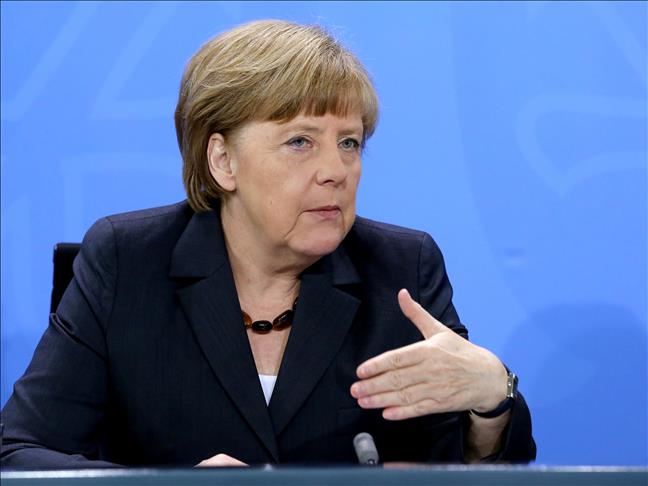
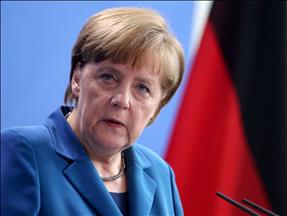
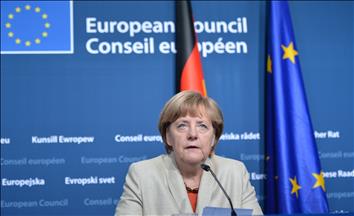
German Chancellor Angela Merkel defended her cabinet members on Monday amid a growing scandal on German intelligence BND’s secret cooperation with the NSA.
Merkel dismissed recent media reports that her government had lied to the public ahead of general elections in 2013 and tried to cover up NSA’s massive surveillance carried out in cooperation with the BND.
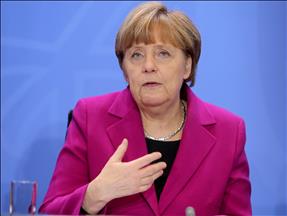
In a press conference at the headquarters of her Christian Democratic Union party on Monday, Merkel defended her minister Peter Altmaier, who is responsible for intelligence services, and his predecessor Ronald Pofalla.
“Every one of them acted with their best knowledge and belief at the time. That has been the case for the current minister responsible for the Chancellery, and also for his predecessor Ronald Pofalla. That is what I can say in public. The details can be discussed at the parliamentary investigation committee,” he said.
Merkel said she is ready to respond to questions by the parliament’s investigation committee on the NSA scandal, if lawmakers would see the need to invite her amid recent reports.
German daily Sueddeutsche Zeitung reported over the weekend that Merkel’s cabinet had tried to manipulate public opinion ahead of general elections in September 2013.
The alleged manipulation was done by senior officials claiming at that time that the U.S. administration had promised a “no-spy agreement” to Germany, after revelations of U.S. whistleblower Edward Snowden, which showed that the NSA had also targeted Germans as part of its massive digital surveillance, carried out by the help of BND.
Merkel’s former aide Ronald Pofalla told reporters in August 2013 that the U.S. administration offered a “no-spy-agreement” to Germany, which implied that the NSA would soon review its surveillance activities and would no longer target German citizens or institutions. Pofalla’s statement calmed down the public outcry over the NSA scandal.
But recently leaked documents on the e-mail communication from 2013 between senior officials from Merkel’s Chancellery and the White House showed that U.S. officials were not interested in a no-spy agreement with Germany and also refrained from giving any commitment to Berlin that U.S. agencies will respect German laws in their future activities in Germany.
The recent reports have further increased pressure surrounding German Chancellor Angela Merkel, whose popularity ratings have already dropped in the wake of the widening scandal surrounding BND.
A recent poll by German public broadcaster ARD showed that Merkel’s approval rating fell by five points to 70 percent in May.
According to a separate poll carried out early this month for the weekly Der Spiegel, 33 percent of Germans said their confidence in Merkel has decreased due to the recent scandal showing BND’s secret cooperation with NSA.
The German parliament’s investigation committee on the NSA scandal has already questioned Interior Minister Thomas de Maiziere and senior intelligence officials last week over recent claims that the U.S. spy agency had carried out large-scale surveillance on European politicians and companies, using Germany's Bad Aibling station.
The secret cooperation between the BND and NSA began in 2002, according to the reports and was aimed at spying on telephone and internet communications in conflict regions.
But an internal BND investigation carried out in 2013 revealed the U.S. spy agency had also spied on companies like aerospace giant EADS.
BND’s investigation reportedly showed that the NSA demanded at least 40,000 parameters to be targeted, which were against the interests of Germany.
German opposition parties are suspecting a massive economic espionage and are demanding a full list of telephone numbers, e-mail accounts and IP addresses monitored by the BND in cooperation with the NSA.
But Chancellor Angela Merkel has so far resisted that demand and argued that Berlin should first consult with Washington.
Merkel has also defended the BND’s cooperation with the NSA, despite recent revelations.