20 November 2015•Update: 20 November 2015
By Todd Crowell
TOKYO
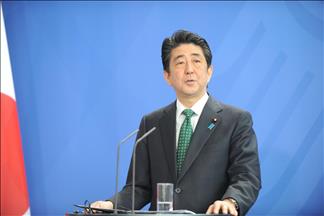
Prime Minister Shinzo Abe, who equates his economic policy interventions to the firing of samurai "arrows", needs a few more in his quiver as Japan slips into recession for the second time since 2012, when he and his party won power on a promise to turn things around.
Gross domestic product contracted 0.8 percent over the third quarter ending September, putting the country officially into recession.
This is the fifth recession since the beginning of the 2008 “great worldwide recession”, and the second on Abe’s watch.
The proximate causes of the turndowns were apparent to most economy observers.
The first recession was blamed on the government’s decision to raise the national sales tax in 2013, which reduced consumer confidence and spending.
The more recent turndown, economists say, is the fallout from the stalling economy in China. That in turn had an impact on particular makers of machinery and machine parts.
For every good spot in the economy at present, there is a negative aspect. The overall unemployment rate is very low at 3.4 percent, but those getting jobs tend to be part time workers who receive lower salaries and no benefits.
Japan’s major corporations are reporting higher profits, but these profits have not been plowed back into the economy in the form of new investment or higher wages. Limited growth in some people's wages has only been happening in fits and starts.
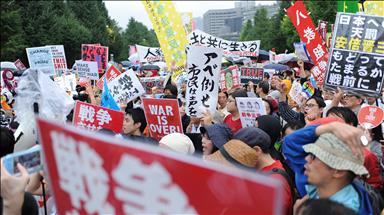
Abe and his Liberal Democratic Party won an overwhelming majority in parliament three years ago on its promise to focus like a laser on the economy, which it has done -- aside from some distractions, such as last summer’s fight over new security laws.
Abe's first arrow, implemented early on, constituted a deliberate effort to raise the rate of inflation though the Bank of Japan’s easy money policy.
That plus the second arrow, more government stimulus, had the early impact of boosting the stock market and weakening the yen (now about 120 to the dollar compared with rates as high as 75 during the previous administration).
However, the third arrow -- structural change to the economy -- has languished. Probably its only genuine accomplishment was to enact the Trans Pacific Partnership (TPP) with the United States and ten other Pacific nations.
The public is rapidly losing confidence in “Abenomics”, as his economic program is called in Japan. A survey by the Nikkei indicated that only 25 percent of the public believed it would revive the economy.
Abe is well aware that he needs some new arrows, especially those that might find their mark with the public fairly quickly. After winning re-election to his party presidency, he said his government would look at programs that impact women in the workplace.
In addition, he wants to put in place policies that help in the care of the elderly.
Japan loses about 100,000 workers a year as people leave their jobs to take care of aging parents.
Encouraging more young people to marry and have children would also boost consumer spending, not least on home furnishings and clothing.
However, Abe cannot do much about the steady shrinking of Japan’s population and thus the workforce.
In the three years he has been prime minister, Japan’s population has shrunk by about 3 million people.