Former camp inmate recalls Bosnian incarceration
Politician spent 907 days in nine concentration camps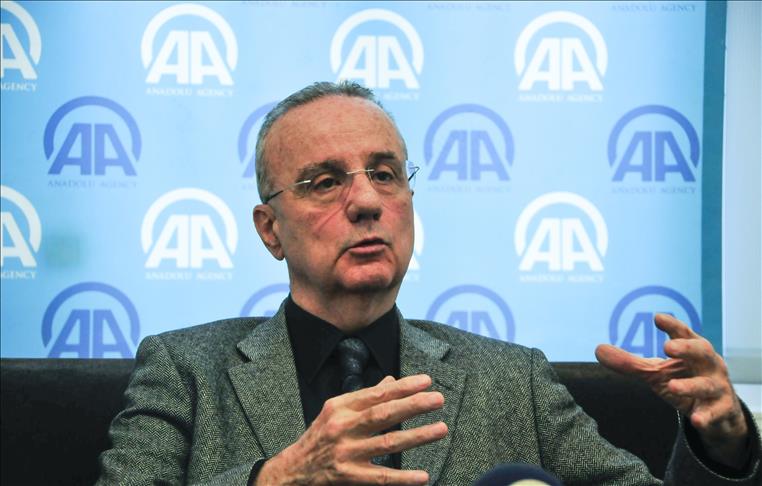
By Almir Terzic
SARAJEVO, Bosnia-Herzegovina
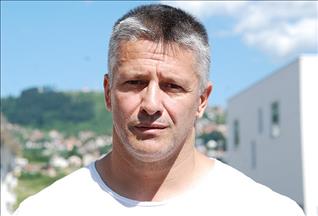
Irfan Ajanovic remembers June 30, 1993 well. It was the first of 907 days he spent in camps run by Croatian and Serbian paramilitaries during the wars that devastated the former Yugoslavia during the 1990s.
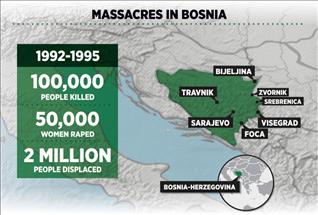
"I was captured on June 30, 1993 along with other Bosnian soldiers in Zepce [in central Bosnia-Herzegovina],” he told the Anadolu Agency in an interview to mark the start of the three-and-a-half year war that saw an estimated 100,000 killed.
“We were locked in the hangars of a factory that produced, processed and packed cement. That night I slept on the concrete together with another 2,000 civilians and soldiers. My 76-year-old mother, who was captured with me, slept on the concrete as well. Dirty, tired and exhausted I was handed to the Chetniks the following day."
The Chetniks, as the irregular Bosnian-Serb forces are called locally, took him from their then Bosnian-Croat allies at Zepce – the first of nine camps to hold Ajanovic over the following two-and-a-half years.
At the end of his incarceration, the entirety of which he spent in solitary confinement, he weighed 56 kilograms (123 pounds).
Last week saw the 23rd anniversary of the outbreak of the war.
Ajanovic, a former deputy speaker in the Yugoslav parliament, now campaigns for justice for those imprisoned in largely Serb-run concentration camps across Bosnia during the conflict.
Following his release in December 1995, Ajanovic continued his political career, helping found the Democratic Action Party and was elected to the Bosnian Federation’s parliament for six consecutive terms between 1996 and 2014.
He also became a president of the Association of Detainees, a role that has seen him struggle to bring war criminals to court.
In particular, Ajanovic has focused on the Bosnian-Croat camps in Zepce, where Bosnian Muslims were imprisoned between 1992 and 1993.
"The fact that those charged for the crimes committed in Zepce are not being processed is a crime of justice and a crime of judicial institutions against truth and justice," he told AA.
He added: "We will not get to a solution… until the truth comes to light.”
According to Bosnia's Association of Detainees and the Association of Victims and Witnesses of Genocide there are still 8,000 people missing.
Cherif Bassiouni, the legal expert appointed by the UN to investigate war crimes in the former Yugoslavia, documented 683 concentration camps across Bosnia.
The Association of Detainees has estimated that around 200,000 inmates, mostly civilians, were held in 1,350 camps.