Melike Pala
03 February 2026•Update: 03 February 2026
BRUSSELS
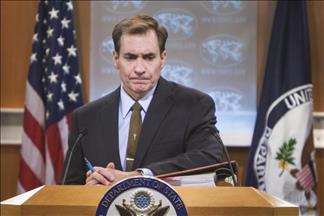
EU foreign policy chief Kaja Kallas warned Tuesday that China's expanding interest in the Arctic poses growing security risks, saying the region is no longer a zone of low tension but a frontline of global power competition.
Speaking at a news conference with Norwegian Foreign Minister Espen Barth Eide, Kallas said the Arctic had long been characterized by "low tension and high cooperation," but the security environment in Europe has fundamentally changed since the war started in Ukraine.
"China might not be buying up the Arctic just yet, but it’s steadily expanding its footprint," Kallas said, adding that outspoken claims by the United States regarding Greenland underscore the changing geopolitical reality of the region.
US President Donald Trump has called for his country’s control over Greenland, citing national security concerns related to Russia and China. He also threatened sanctions on European countries which opposed the move to take over the Danish territory.
He withdrew the threats after meeting NATO Secretary General Mark Rutte at the World Economic Forum in Davos, Switzerland, saying a framework for a deal involving Greenland and the broader Arctic region was established.
Talks between the US, Denmark and Greenland began last week to resolve the crisis.
"The Arctic is no longer a quiet corner on the map. It is the front line of the global power competition," she stressed.
Kallas noted that while China does not yet have a direct presence in the Arctic, it is showing growing interest in Arctic ports and transport hubs as climate change opens new trade routes.
"What the intelligence services are warning is that it creates security risks because, you know, the leverage over the supply chains is something that we have already experienced if those supply chains or trade routes are weaponized, for that matter," she said, warning that similar risks could emerge in the Arctic.
Kallas also highlighted China's dominant position in the global rare earth market, noting that the Arctic region, including Greenland, holds critical raw materials of strategic importance.
"Europe must stay vigilant in this case, and that’s what we are doing," she said.