Chinese Foreign Ministry spokesperson Qin Gang had expressed anger on Thursday over the visit, reading the gesture as honoring Japan's war crimes during World War II.
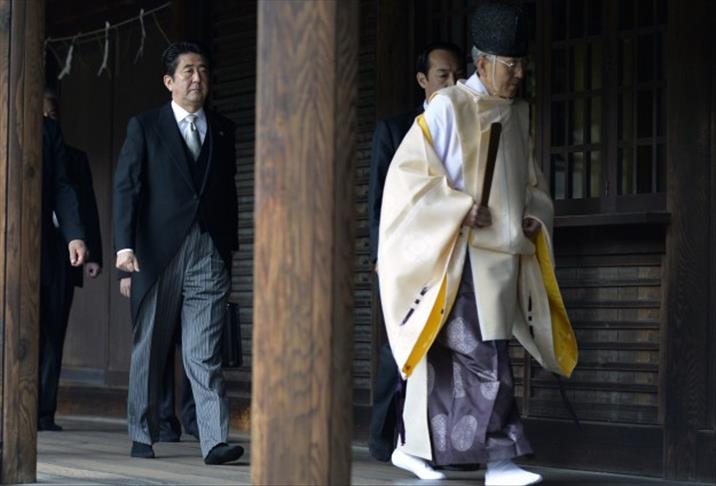
The Yasukuni shrine was constructed to honor the 2.5 million men, including 14 convicted war criminals accused of crimes during WWII, who died serving the Emperor of Japan from 1867 to 1951.
Catharine Ashton, the EU's foreign affairs high representative, said the visit "is not conducive to lowering tensions in the region or to improving relations with Japan's neighbors, especially China and Republic of Korea."
"All countries in the region have reaffirmed their commitment to peace and stability in recent months," she said, adding, "the EU urges the countries involved to build positive and constructive ties with their neighbors that will bolster confidence, defuse tensions and assure the long term stability of the region."
Abe's visit drew harsh responses from China and South Korea and the US disapproved of it amid political tension between the two countries.
China has summoned its ambassador to Japan after the visit. China and South Korea accuse Japan of glorifying its militarist aggression during WWII instead of learning lessons from it.
englishnews@aa.com.tr