By Rafiu Ajakaye
LAGOS
Many Nigerians are skeptical about the recent cease-fire deal reached between the army and Boko Haram, with some analysts calling the Friday announcement a reckless political gimmick.
"I can tell you in summary that, yes we have listened to them and we are watching them, but we do not believe them," Abubakar Mu'azu, a leading researcher of Nigeria's five-year-old Boko Haram insurgency, told Anadolu Agency.
"First, you must realize that one major problem this government faces is lack of credibility and acceptability," he said. "Many people simply do not believe them because they made claims in the past that turned out to be false."
Nigeria announced Friday that it had reached a cease-fire with Boko Haram. The deal also stipulates the safe return of over 200 schoolgirls abducted by the group over six months ago in exchange for detained militants.
Nigeria said Chadian leader Idriss Derby had represented it at the negotiations that led to the deal, while a negotiator named Amodu Danladi had represented Boko Haram.
Mu'azu, however, noted inconsistencies in the government's announcement.
"Many people see this announcement as political gamesmanship because it seems desperate for acceptability," the academic said.
"The person they claim to have spoken to readily admitted to the tag 'Boko Haram,' whereas the insurgents have never addressed themselves as such," he noted.
"They have never accepted being called Boko Haram. They simply want to be called Jama'at Ahlis-Sunnah li-Da'wati wal-Jama'ah," Mu'azu added.
"Also, when they asked him whether their leader, Abubakar Shekau, was aware of this [the cease-fire deal], he said Shekau would accept it," he asserted.
"Does this mean that the man who entered into this negotiation isn't Shekau?" Mu'azu asked.
Last month, the military claimed to have killed a man it had said was masquerading as Boko Haram's long-dead leader Shekau – an assertion the group has denied.
Neither claim could be verified independently owing to limitations on media coverage of the crisis.
Mu'azu also wondered what the government was offering the militant group in return for the abducted girls' release.
Outlawed in Nigeria, Turkey and United States, Boko Haram made international headlines in April after abducting scores of schoolgirls in Borno State.
Only 57 of the girls are now accounted for, while the fate of the rest remains uncertain.
-Skeptical-
Shehu Sanni, a top civil rights activist who once brokered a failed peace deal between Nigeria and Boko Haram, likewise entertains doubts as to the government's cease-fire announcement.
"All my attempts to confirm the cease-fire deal did not produce any result," he told AA. "My sources are telling me that they don't know who that person [Danladi] is," he said.
Sanni insisted that any statement that did not come from the Boko Haram leader could not be said to be authentic and would not be complied with by group members.
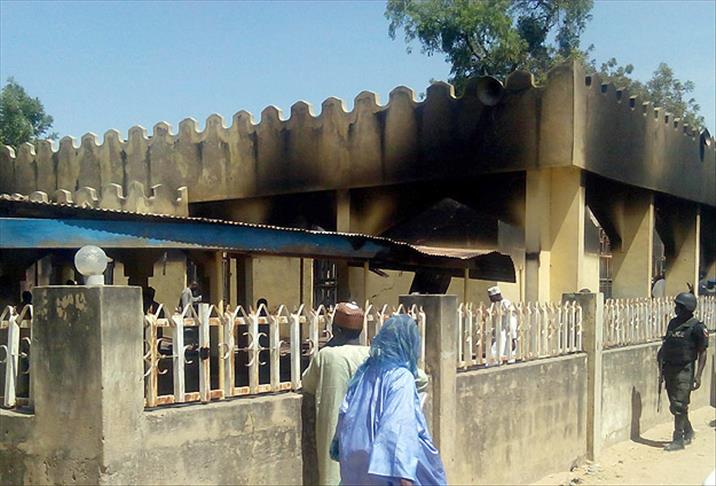
Boko Haram insurgents have reportedly attacked two communities in Nigeria's northeastern Borno State since the cease-fire deal was announced.
About 20 Boko Haram fighters in two vehicles stormed Maikadiri in Abadam in northern Borno, where they had fired into residents' homes, local sources told AA.
They also raided a village near Shaffa in the Hawul Local Government Area, about 230km from provincial capital Maiduguri.
The two attacks reportedly left several people dead.
Yinusa Yau, another Boko Haram researcher, also voiced skepticism about the recent cease-fire deal.
"The government once told us Boko Haram was 'faceless' – it is interesting we are now hearing this," he told AA.
"The army had told us several things in the past that turned out not to be true," added Yau.
"I think we will have to wait and see developments in the next couple of days. We will be happy if the ceasefire is indeed true," he asserted.
But Lawan Rabana, a spokesman for the Chibok community from which the schoolgirls were kidnapped, appeared overjoyed by the announcement.
"We are excited by the information; we hope it turns out to be true," he told AA.
"It has been our view all along that we should try and negotiate with Boko Haram for the girls' release," Rabana stressed.
"Any arrangement that will lead to the release of the girls is welcome, including this idea," he said.
Nigeria is fighting a five-year Boko Haram insurgency in its northeastern region, where more than 13,000 people – mostly civilians – have been killed and the local economy brought to its knees.
Boko Haram first emerged in 2001. It remained peaceful until the death of its leader, Mohamed Yusuf, in 2009 while in police custody.
In the five years since, the group has been blamed for numerous attacks in Nigeria – on places of worship and on government institutions – and the death of more than 13,000 people.
englishnews@aa.com.tr
www.aa.com.tr/en