By Sylvestre Krock
BANGUI
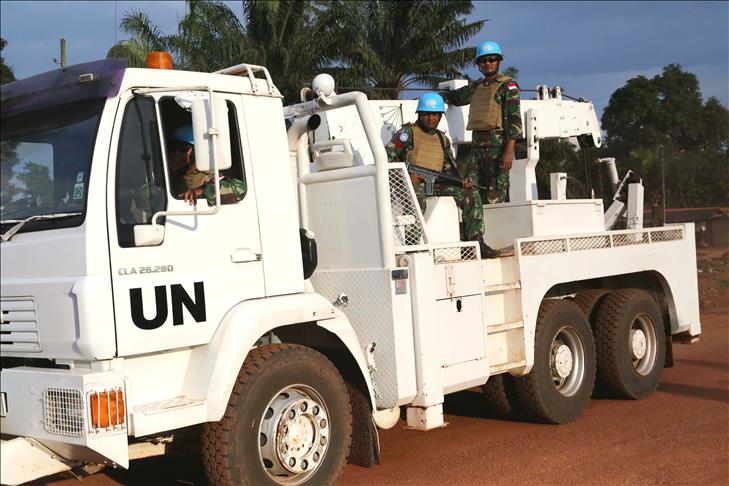
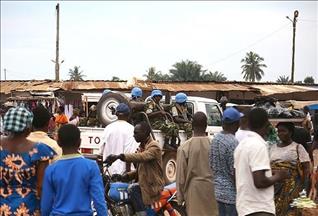
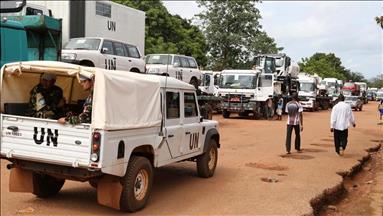
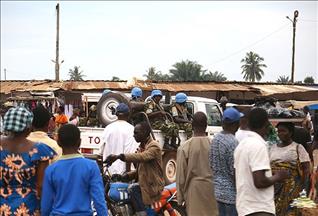
At least six people were killed and several others wounded on Thursday in clashes between Muslim youths and troops from the United Nations Multidimensional Integrated Stabilization Mission in the Central African Republic (MINUSCA) in the country's northwestern Bambari region, eyewitnesses have said.
Muslim youths, witnesses said, sought to avenge the death of a young Muslim who was recently burned alive in his truck 30km east of Bambari by members of the predominantly Christian anti-Balaka militia.
Muslim youths, witnesses said, headed to where a number of anti-balaka militiamen were present with the aim of attacking them.
"Soon, however, MINUSCA troops opened fire, killing at least six people and wounding others," eyewitnesses told Anadolu Agency without specifying the victims' affiliations.
A former spokesman for the predominantly Muslim seleka alliance said a Muslim man had been burned alive in his truck on Wednesday by anti-balaka militiamen.
"This angered the Muslim community," Amat Ibrahim Nedjad told AA. "Their anger was not easy to contain, making the intervention of MINUSCA troops… necessary."
Religious leaders, the authorities and NGO workers, Nedjad said, were expected to meet later on Thursday to mull ways of restoring calm to the city.
MINUSCA has so far declined to comment on the incident.
Controlled by the predominantly Muslim seleka militia, Bambari has long been immune to the sectarian tensions that have plagued other parts of the country.
The seleka militia has taken the city for its main base of operations. This has sparked tensions, given that the rival – mostly Christian – anti-balaka militia is based nearby.
The city has been the scene of violent confrontations between seleka fighters and French peacekeepers stationed inside the city as part of a government initiative to disarm the militia.
Since last year, the Central African Republic has been plagued by tit-for-tat sectarian violence between Christian anti-balaka militiamen and Muslim seleka fighters.
Anti-Muslim violence escalated after the country's president, Michel Djotodia, stepped down in January. He was replaced by Catherine Samba-Panza, a Christian who had formerly served as mayor of capital Bangui.
Christians, who account for the majority of the country's population, accuse Muslims of supporting former seleka rebels blamed for attacking Christian homes, looting property and carrying out summary executions.
Since last December, some 173,000 people have been internally displaced by sectarian violence, while 37,000 others have fled to neighboring countries, according to U.N. refugee agency UNHCR.
Over 30,000 have reportedly sought refuge in the nearby Democratic Republic of Congo, while Chad and Cameroon now host roughly 5,600 and 1,000 respectively, according to UNHCR figures.
englishnews@aa.com.tr
www.aa.com.tr/en