Mucahithan Avcioglu and Gokhan Ergocun
17 March 2026•Update: 18 March 2026
ISTANBUL
A broad range of international airlines have extended suspensions of flights to destinations across the Middle East as regional tensions continue to disrupt air travel, prompting carriers to revise schedules and limit operations on key routes.
The latest extensions reflect the broadening impact of the conflict on commercial aviation, with carriers continuing to adjust schedules because of security concerns, restricted airspace and operational uncertainty across key Middle East corridors.
The disruptions have affected routes linking Europe, North America and Asia to major regional hubs, with some airlines opting for full suspensions, while others have maintained only limited services.
European airlines
European airlines account for a significant share of the latest extensions. British Airways has suspended flights to Dubai, Abu Dhabi, Amman, Bahrain, and Tel Aviv until May 31, and to Doha until April 30.
Lufthansa has halted flights to Dubai, Abu Dhabi, Amman, Beirut, and Erbil until March 28, to Riyadh until April 5, to Tel Aviv until April 9 and to Tehran until April 30.
SunExpress has suspended flights to Dubai and Bahrain until March 23.
KLM has halted flights to Dammam, Riyadh and Dubai until March 28, and to Tel Aviv until April 11.
Eurowings has suspended flights to Amman until March 22, Erbil until March 28, Beirut until March 29, Tel Aviv until April 2, and Abu Dhabi and Dubai until June 27.
Swiss has halted flights to Dubai until March 28 and to Tel Aviv until April 9. AirBaltic has suspended flights to Dubai until late October.
US carriers
US carriers have also prolonged disruptions on regional routes. Delta Air Lines has suspended flights to Tel Aviv until April 30.
American Airlines has halted flights to Tel Aviv, Abu Dhabi, Amman, Bahrain, Doha, Dubai and Larnaca until May 31.
United Airlines has suspended flights to Dubai and Tel Aviv until April 19.
Turkish, regional airlines
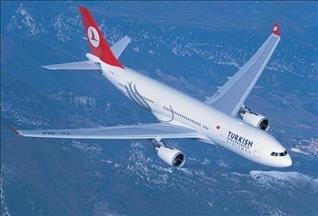
Among Turkish and other regional carriers, Turkish Airlines has suspended flights to Iran, Iraq, Syria, Lebanon, Jordan, Qatar, the United Arab Emirates, Kuwait, and Bahrain until the end of March.
Oman-based SalamAir has halted flights to Iraq, Lebanon and Iran until April, and to Kuwait, Doha and Dammam until March 31.
Oman Air has suspended flights to Dubai, Amman, Bahrain, Doha, Dammam, Kuwait, Copenhagen, Baghdad and Khasab until March 31.
Asian airlines
Asian carriers have also announced route suspensions. Singapore Airlines has suspended flights to Dubai until March 28 and to Jeddah until March 17.
Gulf carriers Qatar Airways and Emirates announced they will continue to operate generally limited services until the end of April.
The flight disruptions come as the Middle East faces heightened security risks and operational uncertainty linked to the ongoing regional conflict, which has also affected energy markets, shipping lanes and investor sentiment. Airlines have cited safety concerns, airspace restrictions and operational reviews in adjusting their schedules, while the prolonged suspensions have added to pressure on regional travel and connectivity.
The US and Israel have continued a joint offensive on Iran since Feb. 28, killing around 1,300 people so far, including Supreme Leader Ali Khamenei.
Iran has retaliated with drone and missile strikes targeting Israel, Jordan, Iraq, and Gulf countries hosting US military assets, causing casualties and damage to infrastructure while disrupting global markets and aviation.