By Hader Glang
ZAMBOANGA CITY, Philippines
An extended deadline set by the Abu Sayyaf before it beheaded a German hostage in the Philippines’ Muslim south came and went Friday, with no news if the threat had been carried out.
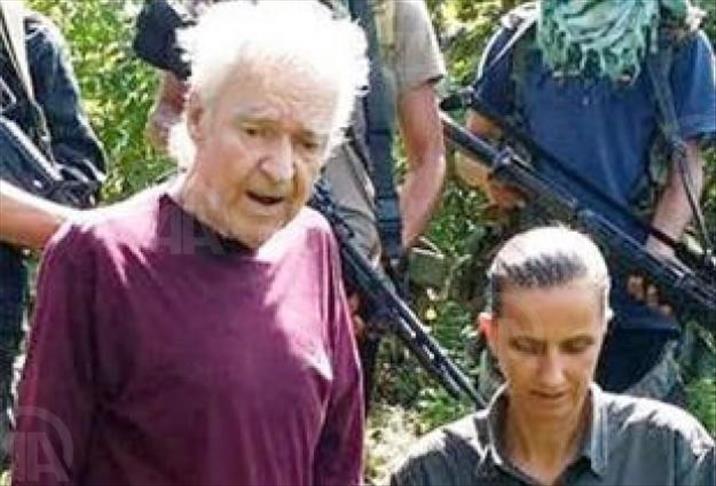
As of 18.00 local time (13.00 Turkish time) no news had been received if Stefan Viktor Okonek, 74, and his wife Henrike Dielen, 55 - seized on their yacht off the coast of the Philippines’ southern Palawan Island in April - were still alive.
The Abu Sayyaf had demanded a Php250 million ($5.5 million) ransom to free the couple as well as calling on Germany to stop supporting the United States-led campaign against the Islamic State of Iraq and the Levant (ISIL) in Iraq and Syria.
Spokesperson Abu Rami had earlier said that the group would behead Okonek at 15.00 local time in an undisclosed jungle area of Sulu province – an Abu Sayyaf stronghold - if Germany did not cease its support.
"We are willing to extend the deadline for two hours if we get a call that ransom will be paid," Abu Rami had told the Radio Mindanao Network in a telephone call.
As of 18.00 local time Friday, however, no messages had been received from the Abu Sayyaf.
But a reliable source, who declined to be identified, told local reporters that a call from a close aide of Abu Rami had been received, saying that the beheading of Okonek did not push through.
The source refused to elaborate further.
In Manila, army public affairs chief Lt. Col. Harold Cabunoc told defense reporters that the military remained firm in its stance against negotiating with – or paying ransoms to - the Abu Sayyaf or any terrorist or criminal group.
Cabunoc assured the public that ground commanders are aware of the group's location, and would start preparing for law enforcement operations - which could happen anytime soon.
The German foreign ministry has repeatedly said that threats are not an appropriate way of influencing the country’s foreign policy, and that the ministry's crisis management department was working on the case.
Since 1991, the Abu Sayyaf -- armed with mostly improvised explosive devices, mortars and automatic rifles -- has carried out bombings, kidnappings, assassinations and extortions in a self-determined fight for an independent Islamic province in the Philippines.
It is notorious for beheading victims after ransoms have failed to be paid for their release.
ISIL has captured large swathes of land in Iraq and Syria, later declaring the territories under its control an Islamic "caliphate."
The U.S. and its Arab allies began bombing ISIL targets inside Syria in late September, after conducting airstrikes in Iraq since August.
www.aa.com.tr/en