ANKARA
By Satuk Bugra Kutlugun
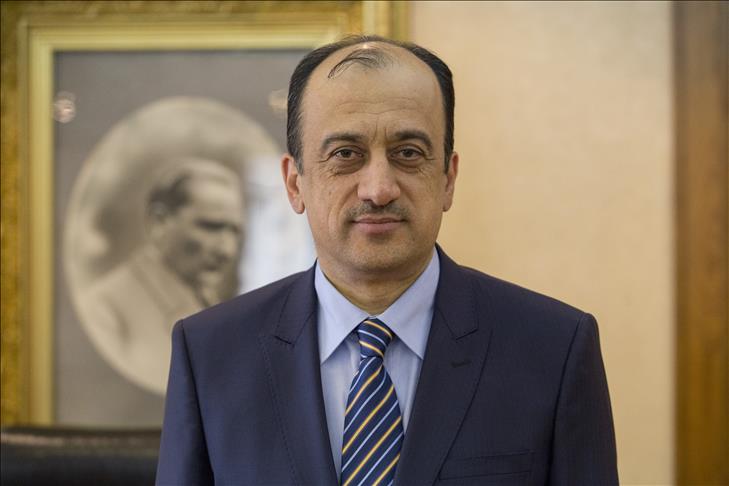
Turkey and Russia have a "unique" bond that remains unaffected because of divergence of views over Crimea, Turkey's new Ambassador to Moscow Umit Yardim told The Anadolu Agency on Monday.
Yardim said relations between the two countries were not directly related to Russian ties with the West.
"No matter what sanctions are imposed on Russia, we will continue to have unique relations," he said.
The envoy, who last served in the Iranian capital, Tehran, said both sides continue to exchange views on a wide variety of topics, including the Middle East and Ukraine.
Habibe Ozdal, an analyst with the Turkish think-tank International Strategic Research Organization, said the two countries considered themselves as "key partners" within the scope of regional security.
Ozdal said Turkey was only a member of the Customs Union, not the European Union, so it did not have to fulfill the EU restrictions.
"We know that Turkey does not hold any space in the European Union's decision mechanism, so it may not implement any sanctions coming from the EU," Ozdal said.
Moreover, economic ties between the two sides continue to grow despite the EU and the U.S. imposed sanctions on Russia because of the Ukraine unrest and pro-Russian influence in Crimea.
While sanctions prevent Russia from seeking financial investment from western banks and institutions, the trade volume between the two countries increased to $32 billion in 2014 from only $5 billion in 2012.
Also, she said the energy-centric economic cooperation intensified between the two countries after 2000.
Turkey depends highly on the natural gas supply from Russia, which is operated mostly by the state-owned Petroleum Pipeline Corporation.
Also, Turkish energy minister had revealed mid-October that Turkey was seeking a discount from Russia on the price of natural gas.
Moreover, in May 2010 Turkey signed an agreement with Russia to build the Akkuyu Nuclear Power Plant -- the country's first -- on its Mediterranean coast.
Crimea
While the two friendly countries get along on many issues, Crimea is where the paths seem to diverge.
The Ukraine crisis was triggered in November 2013 when former president Viktor Yanukovych abandoned a trade agreement with the EU and chose to pursue closer ties with Russia.
The crisis led Russia to hold a referendum in Crimea in April, which the international community considered “illegal,” after annexation of the peninsula in March. Since April, the stalemate in Ukraine between the government and the separatists has left more than 4,000 dead and over 9,000 others wounded.
Turkey continues to denounce Crimea's annexation. President Recep Tayyip Erdogan has said Turkey had never accepted or recognized Russia's "seizing" of the peninsula.
Analyst Ozdal said Turkey might never recognize Crimea's annexation. "The main thing is to manage the contradictions," she said.
"Turkey is making Crimean people voice be heard by explaining the situation in every platform, but also is avoiding every possible action to jeopardize its relations between Russia. This is the art of managing contradictions, to cherish a very delicate balance between countries," she added.
www.aa.com.tr/en