By Sare Selvi Ozturk
ISTANBUL
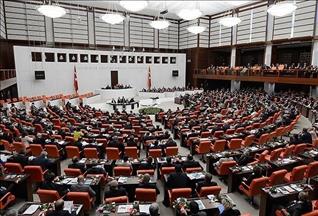
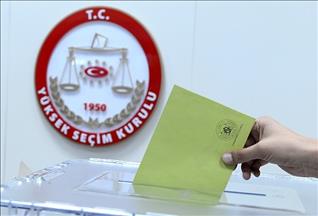
In the run up to its general election in June next year, Turkey is once again weighing up scrapping its controversial 10 percent electoral threshold which some experts see as an obstacle blocking the creation of an “advanced democracy” in the country.
The debate came to a head when Constitutional Court head Hasim Kilic revealed in early December that the body was considering applications calling for the axing of the 10 percent threshold in the Turkish electoral system.
Under the current system political parties in Turkey must win at least 10% of votes nationwide to gain parliamentary representation.
The International Crisis Group's Turkey director, Hugh Pope, says lowering the threshold would encourage more people to choose candidates they actually want to vote for, ending the common feeling people have that their votes may be “wasted.”
“It will allow the HDP (Peoples' Democratic Party, a pro-Kurdish group) to enter party politics normally and build itself up as an institution. But the problem of political parties themselves, and reversing the top-down way in which they are organized, is the next step in full democratization. Only then will the profession begin to attract the right kind of young talent,” he adds.
The HDP is the closest party to the 10 percent limit, as it put forward independent candidates to circumvent the threshold in the east and southeast of Turkey; these independent deputies later founded a group in parliament.
It is widely thought by many observers that lowering the threshold would also contribute to the country’s ongoing “solution process” which Turkish government launched last year, aiming to secure an end to the decades-long conflict with the outlawed Kurdistan Workers’ Party or PKK.
The conflict has claimed the lives of more than 40,000 people.
Underlining that the current 10 percent threshold is the highest in Europe, a regulation which keeps smaller parties out of parliament, Pope says Turkey would look more democratic and all major parties would be represented in parliament.
The Turkish Constitutional Court statement said that a judicial rapporteur had already completed the application with regards to the Turkish electoral threshold and that the files had been sent to the court’s general assembly.
Sahin Alpay, assistant professor at the Department of Political Science and International Relations at Bahcesehir University in Istanbul, said the election threshold was put in the constitution after a military coup in 1980 in an effort to prevent Islamic and Kurdish-focused parties getting into parliament, especially the “National View” movement.
Turkey’s current ruling Justice and Development (AK) Party’s roots lie in National View, which was led by former prime minister Necmettin Erbakan.
“The Islamic-rooted AK Party has been in power since 2002 and pro-Kurdish HDP’s vote rate is exceeding 10 percent. What we see today is that this political calculation didn’t work. That’s why Turkey needs to reform its political system,” Alpay says.
Elaborating on whether constitutional court’s expected verdict would be binding, Alpay says Turkey would need to bring forward new legislation if the court rules that the threshold is a violation of freedom and rights.
In 2007 the European Court of Human Rights had ruled that Turkey's election threshold did not violate the right to free elections and is not a violation of human rights, but it said it was “desirable” to lower it.
www.aa.com.tr/en