ANKARA - Turgut Alp Boyraz, Muhammed Bilal Kenasari
Recent allegations that the Turkish government are supporting al-Qaeda-linked groups in Syria are part of a "smear campaign" to portray Turkey as a backer of radical organisations, according to Turkish analysts.
Turkish government has been accused of supporting al-Qaeda-linked groups in Syria by supplying arms, since the beginning of uprising in March, 2011.
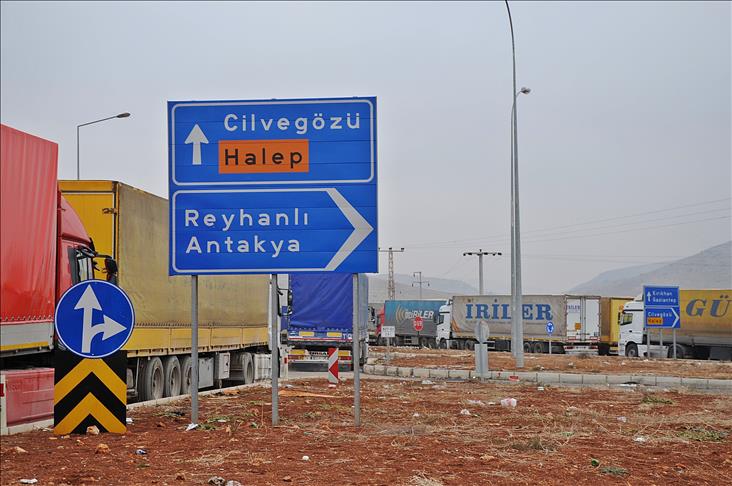
Earlier this month, Turkish paramilitary forces stopped a truck in the southern province of Hatay on the Turkish-Syrian border on the suspicion that it was carrying illegal arms to Syria. Ahmet Davutoglu, the Turkish foreign minister, dismissed those allegations saying that "the truck was carrying humanitarian aid to embattled Turkmens in Syria."
In another incident late in November last year in the southern province of Adana, Turkish police confiscated nearly 1,000 pieces of what appeared to be empty mortar shells and howitzer bullet casings in a truck reportedly destined for Syria.
"The reason behind al-Qaeda's existence in Syria is not Turkey, but the 'hands-off policy' of the US," Mehmet Sahin, a Turkish scholar, said to Anadolu Agency.
He said western countries try to prevent legitimate Islamist political parties' rise to power through free elections by suggesting that they are linked to al-Qaeda.
"Turkey is the only country in the world to support the democratization process in the Middle East, regardless of which organization comes into power," Sahin added.
Another analyst drew comparisons between Egypt's declared "fight against terrorism" -- an argument the country's army-backed government frequently uses to justify the military crackdown on opposition groups in the country after the ouster of president Mohamed Morsi in July last year -- and allegations that Erdogan’s government backed al-Qaeda.
"Al-Qaeda has been used to demonize elected governments, justifying the disruption of the democratic process in Muslim Countries," said Ufuk Ulutas, from the Foundation for Politics, Economic and Social research (SETA) in Ankara, the Turkish capital.
He said Fethullah Gulen -- an influential Islamic scholar living in self-imposed exile in the US who is the leader of the Hizmet movement -- is trying to make good use of this al-Qaeda campaign, representing his movement as the moderate one, while portraying Erdogan as a radical Islamist.
Prime Minister Recep Tayyip Erdogan has said a recent anti-graft operation -- which led to the arrest of two dozens of high-profile bureaucrats, politicians and businessmen, including the sons of two former cabinet ministers -- was a plot aimed at undermining the Turkish government and weakening Turkey's international reputation, blaming the Hizmet movement of establishing "parallel state".
The government has sacked or changed the positions of hundreds of senior police officers in key posts who carried out the December 17 anti-graft operation in a move that drew fierce criticism from the Hizmet Movement.
- "Turkey’s influence in Mideast creates unhappiness in the West'
Yasin Aktay, a Turkish academic and head of Strategic Thinking Institute analyst, said the US is not happy with Turkey’s influential position in the Middle East and is trying to create a perception that the Turkish government is providing military support to radical armed groups.
"It seems that all parties who don't support change in Syria also don't want Turkey to play a greater role in the Middle East," said Aktay.
He said oppressive regimes have always found it useful to play the Al-Qaeda card to suppress the legitimate demands of people and the US accepts this policy.
"US is scared of elected Islamist parties in the Mideast more than it is scared of al-Qaeda. That's why America is conducting a policy which enables al-Qaeda to boost its existence across the region," Aktay said.
englishnews@aa.com.tr