29 January 2016•Update: 29 January 2016
By Roy Ramos
ZAMBOANGA CITY, Philippines
The United States ambassador to the Philippines has admitted that the U.S. played a role in last year's botched operation to target one of Southeast Asia's wanted men that threw into disarray a peace process between the government and the country's one-time largest rebel group.
The admission comes as the senate reopens an investigation into the incident in the remote town of Mamasapano in the south's conflict-ridden Maguindanao province in which 44 police Special Action Force commandos, 18 rebels and 5 civilians were killed.
Ambassador Philip Goldberg said in local radio and television interviews Friday that there was a "cooperation" between the two countries in the Jan. 25 operation to capture Zulkifli bin Hir -- alias Marwan -- dead or alive, but stressed that it was within a Visiting Forces Agreement the two countries had signed.
"There is cooperation, that all of these is done within the legal framework, and that there are agreements, and everything was done consensually or at the request of the Philippine government," GMA News quoted Goldberg as saying.
He underlined, however, that the operation was Philippine-designed and carried out.
"This is not an American operation," Goldberg told radio dzMM, adding that contrary to earlier reports there were no U.S. casualties.
He did not elaborate further.
In the wake of the operation, residents of Mindanao had said they saw "white" men evacuating wounded police commandos on a helicopter that flew in from Mamasapano town.
The U.S. also later helped the Philippines confirm that Marwan was killed during the operation through DNA testing.
On Wednesday, Senate Minority Leader Juan Ponce Enrile called on the government to clarify the role of the U.S., while stressing that the Visiting Forces Agreement only covers activities with the Philippines military.
"It does not cover police operations which is actually nothing more than the enforcement of the criminal laws of the Philippines handled by the police organization of the country,” Enrile said.
The Philippine National Police's Board of Inquiry has also mentioned in its report that the U.S. provided real-time intelligence during the operation.
Goldberg, however, said during a GMA News radio interview that the U.S. did have agreements with the Philippine National Police.
"We have agreements that cover the police as well and our cooperation with Special Action Force has to do with international terrorism. We have dealt with the Special Action Force," he said, insisting that the U.S. role was within the legal framework of both countries.
Reports have claimed that a U.S. drone believed to have originated from its drone facility in Zamboanga City at the foot of the South also filmed the operation.
On Friday, Goldberg refused to confirm or deny the presence of the drone.
"I'm not going to discuss specifics of a very sensitive matter publicly," he said, adding that information about the role of the U.S. had been provided to investigating bodies, including the Senate.
He said that the only physical role was for "casualty evacuation”.
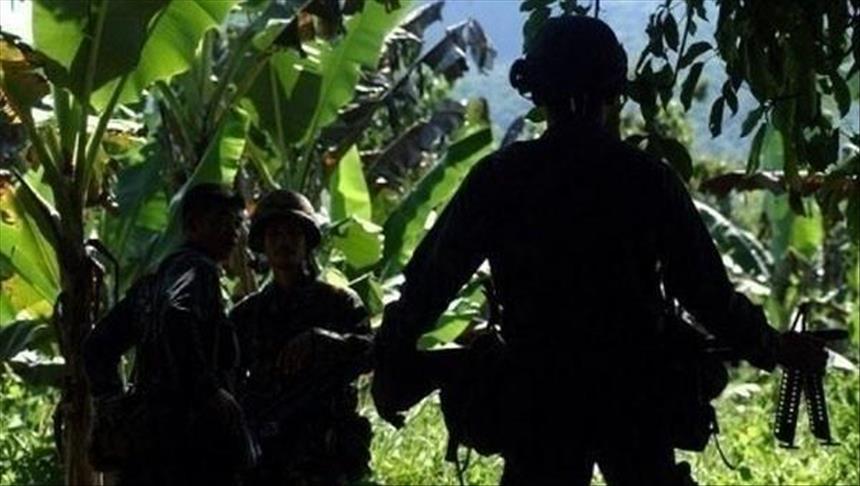
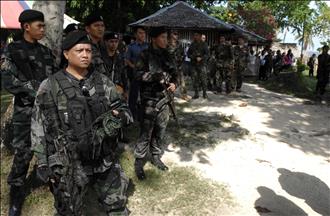
On Jan. 25 last year, police commandos descended on the remote town of Mamasapano in the south's conflict-ridden Maguindanao province to arrest two wanted militants.
The officers ran into the Moro Islamic Liberation Front (MILF) and splinter group, the Bangsamoro Islamic Freedom Fighters.
The involvement of the MILF had threatened to derail the peace process in Mindanao and resulted in Congress halting the passage of Bangsamoro Basic Law -- which seals a peace agreement signed by the government and the MILF in 2014 that aims to bring an end to 17 years of negotiations, while granting Muslims greater political autonomy.