Michael Hernandez
25 February 2016•Update: 26 February 2016
By Michael Hernandez
WASHINGTON
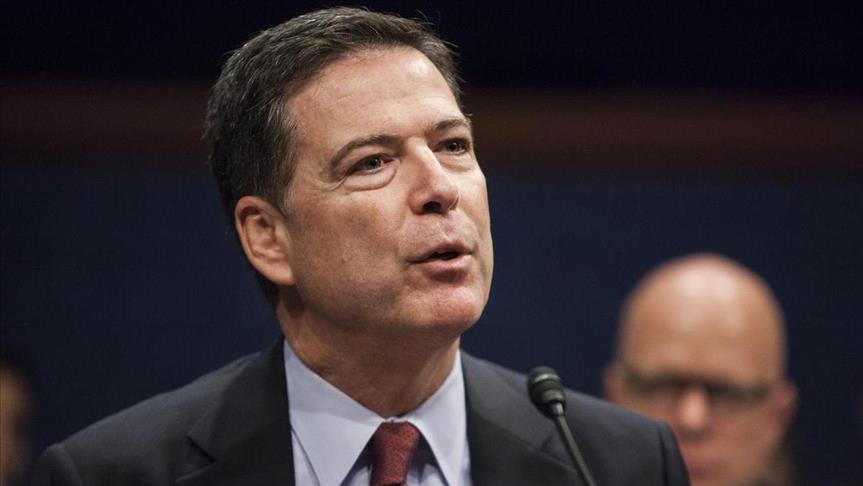
The FBI’s dispute with Apple over a locked iPhone has been the “hardest question I’ve seen in government”, the agency’s director James Comey said Thursday.
At issue is the Justice Department’s request that Apple write software to allow investigators to unlock an iPhone that was used by Syed Farook, who along with his wife, Tafsheen Malik, killed 14 people and injured 22 others in San Bernardino, California, in December.
Comey, a career attorney and former President George W. Bush’s Deputy Attorney General, told the House Intelligence Committee that the case strikes to the very core of how Americans define themselves.
“It's really about who do we want to be as a country and how do we want to govern ourselves,” he said.
A federal judge in California ordered Apple to help the FBI unlock the phone, but Apple has warned that writing the code that the FBI requested could imperil devices far beyond the one that the bureau is asking to access.
The Obama administration has repeatedly insisted that it is not asking Apple to write what amounts to a “backdoor” to the iPhone.
Apple CEO Tim Cook described the software request “as sort of the equivalent of cancer” that would ultimately be “bad for America”.
“We would never write it. We have never written it -- and that is what is at stake here,” he said in an interview with ABC News. “We believe that is a very dangerous operating system.”
Speaking to lawmakers, Comey insisted the Justice Department is not seeking to establish a precedent with tech companies.
“It's about trying to be competent in trying to investigate something that is an active investigation,” he said.
Apple has cooperated fully with the FBI, Cook said.
“This case is not about one phone -- this case is about the future,” Cook said. “What is at stake here is: can the government compel Apple to write software that we believe would make hundreds of millions of customers vulnerable around the world, including in the U.S.?”
Comey said that there have been "plenty" of negotiations with the tech giant, and that Apple has been "very cooperative", but rejected Cook's claim that the software could jeopardize users worldwide.
"The idea of it getting it out in the wild and working on my phone or your phone, at least the experts tell me, is not a real thing," he said.
Cities and states around the country are paying close attention to the proceedings, hoping to see if a court ruling will help them unlock devices they have so far failed to access.
The Manhattan District Attorney reportedly said that his office has 175 phones that it can't unlock because of encryption.
A recent poll by Pew Research found 51 percent of Americans agree that Apple should help the Justice Department unlock the phone with just 38 percent opposing the step.
- ‘It's really about who do we want to be as a country,’ James Comey says