Michael Sercan Daventry
23 February 2016•Update: 25 February 2016
By Michael Sercan Daventry
LONDON
“Stalemate” has been the word on the lips of most Irish political pundits in the last week of Ireland’s short general election campaign.
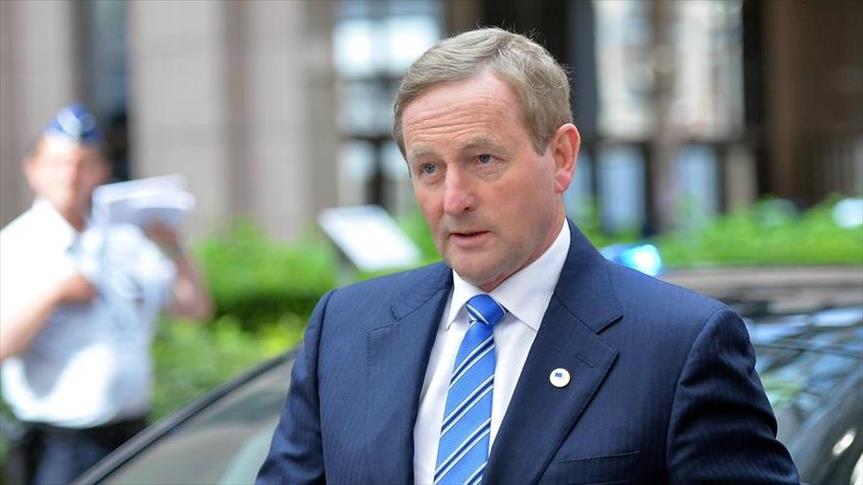
As far as opinion surveys are concerned, Irish Prime Minister Enda Kenny’s victory in the election this coming Friday is near certainty. His liberal Fine Gael party has topped every poll published this year by a wide margin.
That is despite anger among some voters at a government that was forced to implement a tough austerity deal with the International Monetary Fund and European Union to rescue Ireland’s economy immediately after it took office in 2011. The surveys suggest it will be the Labour Party, Kenny’s coalition partner, which will suffer the most losses in Friday’s election – possibly to the extent that Joan Burton, its leader, loses her seat.
Kenny has spent the campaign urging voters to exercise caution now that the economy has begun growing again.
“This election is about who will keep that recovery going based on stability and progress. It is a clear choice between continuing on the path of recovery with Fine Gael, or putting your hard earned progress at risk by handing it over to those who wrecked our country in the past, or those who would wreck it in the future,” he said as he called the election three weeks ago.
His comments were a thinly-veiled criticism of his center-right opponents, the Fianna Fail party, which was in government when a near-simultaneous collapse of Ireland’s banking and housing sectors left the country on the brink of bankruptcy.
Despite his party’s association with the economic disaster, leader Micheal Martin – foreign minister in the last Fianna Fail government – has fought a confident campaign, with some strong performances in Ireland’s televised leaders’ debates.
He has also attacked Fine Gael’s claims of economic competence, arguing tens of thousands of young Irish people who emigrated to Britain and Europe in recent years for work had not come back.
The polls show Fianna Fail trailing a distant second to Fine Gael, and Ireland’s complex multi-party system means it is increasingly likely neither party will be able to form a government with anyone other than each other.
For Noel Whelan, a political pundit for the Irish Times, one of the reasons for divided voter loyalties is Fine Gael’s attempt to emulate the winning strategy of Britain’s Conservative Party, which won a surprise majority last year on a platform cautioning voters not to risk the economic recovery.
Whelan wrote in the newspaper Friday that Enda Kenny’s party had not applied the Conservative “playbook” to the Irish context.
“Fine Gael spokespersons talk incessantly about keeping a recovery going even though half of the electorate says it feels no recovery.
“The Taoiseach [Prime Minister] and his ministers claim a necessity to keep them in power to sustain that recovery but the voters know the reasons for Ireland’s rapid emergence from the economic crisis are more complex than claimed,” Whelan wrote.
One symptom of this complexity has been the surge in support for Sinn Fein, the Irish nationalist party that has been in power in Northern Ireland – which is part of the United Kingdom – for nearly nine years and is hoping for a taste of power in the Irish Republic.
Party leader Gerry Adams – for decades a controversial figure in Ireland and Britain over his alleged links to the IRA – commands around one-fifth of the vote, making him a key figure in post-election coalition negotiations.
In Spain, a country which has faced similar economic turbulence to Ireland, politicians have still not formed a government – two months after elections in December produced a hung parliament with little political appetite to form a coalition.
The many unpredictable strands of Ireland’s election – the collapse in Labour’s vote, the surge for Sinn Fein, and the many independent and smaller party lawmakers likely to win seats – makes the prospect of a Spanish-style impasse in Dublin this week very real.