PENNSYLVANIA, U.S.
The Gulen movement is perceived as an American project in many countries, including Iran, Russia and a number of central-Asian states, the director of a new documentary on the group said.
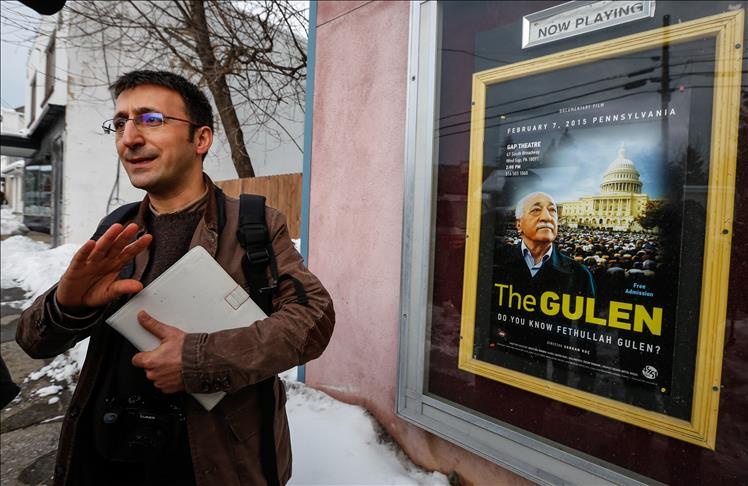
Serkan Koc directed “The Gulen” documentary, which premiered in Pennsylvania last weekend. He told The Anadolu Agency that many countries see the schools linked to Gulen movement as NATO and CIA components.
Koc said he began researching the idea three years ago to find out which powers are behind the Gulen movement, visiting many central-Asian countries in the process.
He said Russia had issued permits to Gulen schools but later closed them one after the other.
“Why did they close them? Because they saw them as components of NATO,” Koc said.
The filmmaker also said that countries like Uzbekistan and Turkmenistan closed these schools after they allegedly learned that CIA agents found shelter in them.
Koc said that Iran’s attitude regarding these schools is very interesting.
“We see the Gulen movement like this,” Koc quoted an unnamed Iranian adviser to religious leader Khomeini as saying. “Opening a Gulen school in Iran is like opening a U.S. base in Tehran.”
Turkey’s foreign ministry spokesman said on Feb. 3 that the Turkish government told U.S. authorities on Jan. 26 that Gulen’s passport had been canceled because he provided false statements.
Previously, an Istanbul criminal court issued an arrest warrant on Dec. 19, 2014 for Gulen as part of a probe into the "parallel state" operation.
Koc said he does not think the U.S. administration would extradite Gulen since America needs his movement to increase its influence in many regions around the world.
“The Gulen movement is not just a Turkey movement,” Koc said. “More than just a formation used by the U.S. and the West for operations in Turkey, this is an international movement.”
Koc said the U.S. needs to increase its influence in Africa and Asia, especially in China and Indonesia.
Gulen has been in the U.S. since leaving Turkey in 1999 for “medical reasons.” Shortly after his departure, Turkish prosecutors opened a case against him for incitement to attacking the state. He was acquitted in 2008.
Turkey’s current government accuses the Gulen movement of forming an illegal foreign-linked "state within the state," mainly within the police and the judiciary, which allegedly eavesdropped on thousands of people and sought to target the government.