16 November 2015•Update: 19 November 2015
By Max Constant
BANGKOK
A rights group has warned that young Muslims in the south who sign up to the police force in a junta-sponsored effort to encourage them to spy on the local community could be putting themselves at risk.
Sunai Pasuk, Thailand’s representative for Human Rights Watch, told Anadolu Agency on Monday that it was important that students targeted for roles as non-commissioned officers are not seen as enemies when they go back to their communities.
"They could easily be seen as traitors by hardline insurgents," he added.
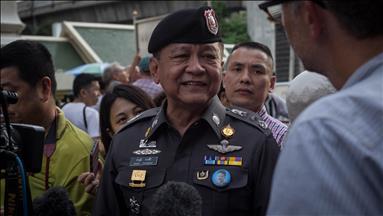
On Monday, the Bangkok Post reported that the Southern Border Provinces Police Operation Center -- the main police agency in the south -- has been working with the Police Education Bureau to take students from local Islamic schools in the three border provinces of Pattani, Yala and Narathiwat.
Center chief Gen. Chalermphan Arjonboon told the Post that the first class of 100 students had graduated just last month after one year of training.
The graduates are to soon be deployed at police stations in the three provinces.
“Police from ponoh [Islamic schools] will help communicate with villagers in the local dialect. This is a channel where villagers can be brought to work with the police,” the Post reported him as saying.
He added that the move to bring "youngsters at risk of being unemployed and then lured to join the rebel movement" as crucial to improve intelligence gathering.
“If the villagers pass on information they have learned, police could help avert attacks while they are still in the planning state,” he underlined to the Post.
The southern Thai insurgency is rooted in a century-old ethno-cultural conflict between Malay Muslims living in the provinces of Pattani, Yala, Narathiwat and some districts of Songhkla and the Thai central state where Buddhism is considered the de facto national religion.
Armed insurgent groups were formed in the 1960s after the then-military dictatorship tried to interfere in Islamic schools, but the insurgency faded in the 1990s.
In 2004, a rejuvenated armed movement -- composed of numerous local cells of fighters loosely grouped around the BRN -- emerged. Since then, the conflict has killed 6,400 people and injured more than 11,000, making it one of the deadliest low-intensity conflicts on the planet.
A peace dialogue was engaged by the elected government of Yingluck Shinawatra in 2013, but was suspended in December of that year because of the political tensions in Bangkok.
In May, Thailand's ruling junta -- which overthrew Shinawatra in a coup May 22, 2014 -- restarted peace talks with an umbrella organization called MARA Patani, which is composed of mostly old rebel groups based overseas.
At the beginning of October, a representative of the National Revolutionary Front or BRN, the most active insurgent group on the ground, rejected the talks, but said that his organization would be open to a new process if the international community were involved.