23 February 2016•Update: 25 February 2016
By Max Constant
BANGKOK
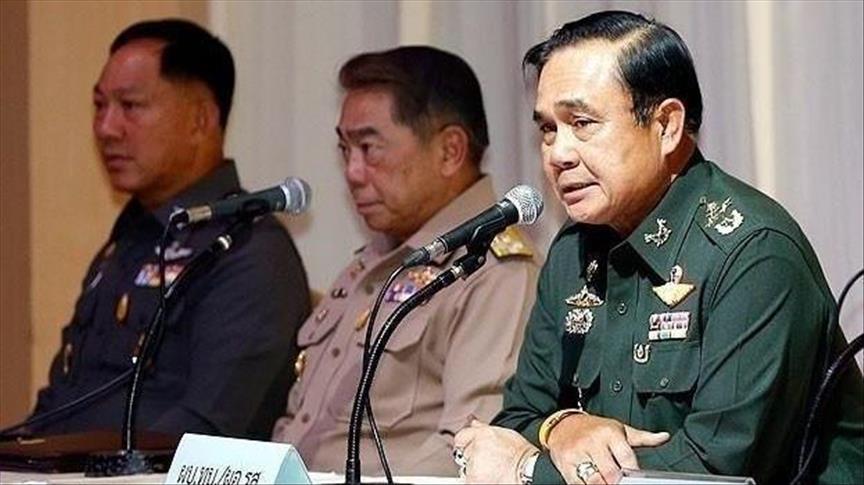
Thailand’s military government has rejected a talks offer by former Prime Minister Thaksin Shinawatra – who has lived in exile since 2008 – saying he fled abroad to escape a conviction for abuse of power and must first report to police, local media reported Tuesday.
Deputy Prime Minister General Tanasak Patimapragorn told the Bangkok Post, “it is difficult for authorities to talk with a person wanted in criminal cases.”
In an interview Sunday with the Financial Times and the Wall Street Journal, Thaksin had called for talks with the junta that seized power in a May 2014 coup against the elected government of his sister Yingluck Shinawatra.
“I am not looking for revenge,” he told the Financial Times. “I offer any kind of discussion or talk. I am ready.”
Thaksin, a billionaire telecommunications tycoon who became a politician in the 1990s, served as prime minister from 2001 until he was overthrown in a coup in Sept. 2006.
His leadership was marred by corruption scandals and abuses against human rights, but his populist policies were widely popular in the kingdom’s rural provinces.
He left Thailand in 2008 before being sentenced a few months later to two years in prison on charges of taking advantage of his position to help his then wife in a land deal.
While seemingly extending an olive branch in Sunday’s interview, the former PM took swipes at a draft constitution released last month by a junta-appointed committee of legal experts.
“It is a charade to show the world that Thailand is returning to democracy,” he said.
“But in reality, Thailand would be like Myanmar before its political reforms. There would be a prime minister, but the real power would be in some politburo above him and the economy would suffer,” he added. “No other government would want to touch Thailand.”
The military government’s spokesperson, General Sansern Kaewkamnerd, told the Post that Thaksin’s comment on the constitution were unbecoming.
“This charter is written to combat corrupt people, so they should not be allowed to jointly draft or hold talks on it,” he said.
“If Thaksin still puts himself above the law, any of his suggestions for the charter drafting will certainly be unacceptable,” he added.
The Shinawatra political clan has been on a media offensive over the last few weeks, with Thaksin’s younger sister Yingluck speaking to foreign correspondents at her Bangkok house in the first press conferences of their kind since her government was overthrown 19 months ago.
In her Feb. 12 interview, she had mostly commented on an ongoing criminal case against her in relation to a rice-subsidies scheme that accumulated $15.8 billion dollars of losses during her term between June 2011 and May 2014.
“The investigation committee said that at the policy level, there was no wrong. They said that the people who implemented the policy did not do any wrong. So how the person who ordered the policy could be wrong?” she asked.
If found guilty, she could face a maximum jail term of 10 years.
A political source in the Puea Thai (For the Thais) party, the political vehicle of the Shinawatra clan, told the Bangkok Post that the party had a deliberate strategy to cast Yingluck in a democracy icon role.
“We will drive home the message that the junta is undemocratic,” said the source. “The international community will agree that Mrs. Yingluck is being backed into a corner by the military government in the same way Aung San Suu Kyi once was.”
Nobel Peace Prize winner Aung San Suu Kyi had been placed under house arrest by Myanmar’s junta for most of the period between 1989 and 2010.
She was released in 2011 and her former opposition party, the National League for Democracy, is set to form the country’s new government in April after winning the general election last November by a landslide.