JOHANNESBURG, South Africa
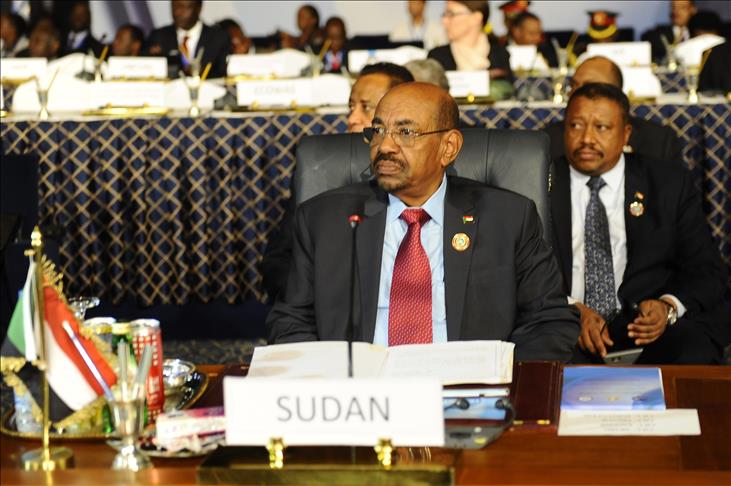
Sudanese President Omar al-Bashir has blasted a Sunday ruling by a South African court calling on the local authorities to prevent him from leaving the country, saying that African leaders were free to make their own decisions.
Al-Bashir told Anadolu Agency on Sunday that African leaders “reject guardianship” and were “masters of their own decisions”.
He added that The Hague-based International Criminal Court (ICC) – which has issued a warrant for his arrest for crimes allegedly committed in the Darfur region – was “finished”.
The Sudanese president went on to describe the AU summit, which is slated to wrap up on Monday, as the international tribunal’s “funeral and burial ceremony”.
Al-Bashir also voiced satisfaction with the ongoing summit, praising host country South Africa and describing Sudan’s relations with South Africa – and the AU in general – as “excellent”.
On Sunday, Pretoria High Court Judge Hans Fabricius issued a ruling calling on the authorities to prevent al-Bashir from leaving South Africa. The move came after the Southern Africa Litigation Center, an NGO devoted to human rights, submitted an application calling for the Sudanese leader's arrest.
Al-Bashir, 71, has served as Sudanese president since 1993. He stands accused by the ICC of having committed crimes against humanity, war crimes and genocide in the country’s volatile Darfur region – allegations he has consistently denied.
The ICC recently called on South African authorities to arrest al-Bashir following media reports that he planned to attend the AU summit in Johannesburg.
Violence broke out in Darfur in 2003 between government troops and several armed groups, especially the Sudanese Liberation Movement/Army and the Justice and Equality Movement, which complains that the region has suffered decades of marginalization by the Khartoum government.
The United Nations Human Rights Council, for its part, alleges that the Sudanese government and its allies committed genocide during the fighting.
While the UN says more than 400,000 people were killed in the conflict, Sudanese officials say the figure is much lower.