DOHA, Qatar
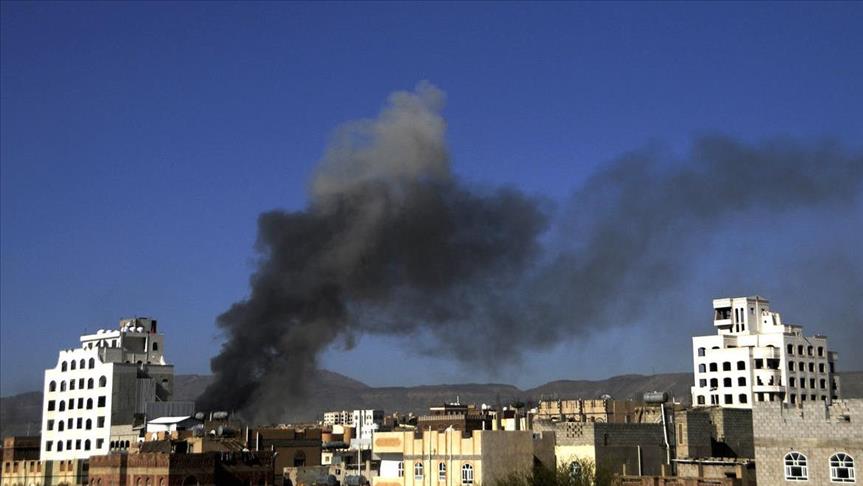
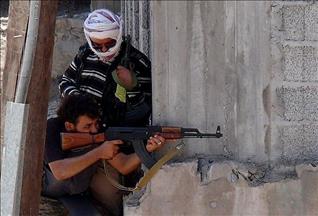
For the past eight months, a Saudi Arabia-led coalition has been waging a military campaign in Yemen against the Shia Houthi militant group and forces loyal to Yemen’s former president, Ali Abdullah Saleh, in an effort to prop up the government of the country’s current president, Abd Rabbuh Mansur Hadi.
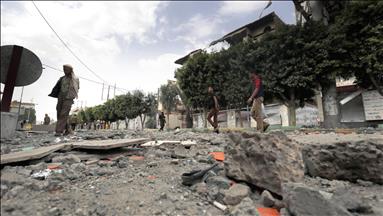
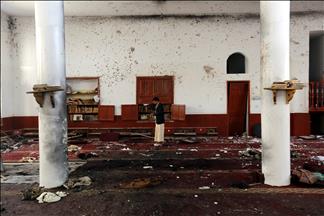
Since the campaign began on March 26, coalition forces have managed to retake five of Yemen’s southern provinces captured earlier by the Houthis, neutralize most of the air-defense systems that the group had seized from the Yemeni government, and destroy more than 80 percent of the militant group’s arms depots.
Recent setbacks sustained by the Houthis and their allies have prompted the latter to agree to participate in planned peace talks slated for mid-November, which will likely take place in either Geneva or the Omani capital Muscat.
On Oct. 28, Saudi Foreign Minister Adel al-Jubeir said the ongoing military campaign in Yemen would likely wind down soon, noting that the Houthis and Saleh had both accepted UN Security Council Resolution 2216, which will form the basis of the upcoming talks.
Despite al-Jubeir’s assertions, however, clashes have continued to rage in several parts of Yemen and the planned peace talks may still easily be derailed.
With the scheduled negotiations around the corner, Anadolu Agency attempts to shed light on the ongoing Saudi-led military campaign, including its objectives, results and primary participants.
Along with leader Saudi Arabia, the campaign began with the participation of Yemen, the United Arab Emirates, Kuwait, Bahrain, Qatar, Egypt, Jordan, Morocco and Sudan.
It has been waged in two stages, the first of which was “Operation Decisive Storm” (from March 26 to April 21), which involved the imposition of a naval blockade on Yemen and intensive airstrikes on Houthi positions.
The campaign’s second stage, “Operation Restoring Hope”, began on Sept. 13 and has involved the deployment of ground troops to the war-torn country. With the launch of this phase, Senegal and Malaysia both joined the coalition.
Over the course of the two operations, the Saudi-led coalition managed to retake Yemen’s Aden, Lahij, Abya, Ad Dali and Shabwah provinces from the Houthis and pro-Saleh forces.
During this period, coalition forces sustained 154 military casualties, including 84 Saudis, 63 Emiratis, five Bahrainis, one Qatari soldier and one Moroccan pilot, along with 20 civilians of various nationalities, according to a tally by Anadolu Agency.
However, the Saudi-led military campaign was not only waged to “protect Yemen and its people from the Houthi militias”, as was initially declared by the coalition leadership.
Rather, there were seven main reasons for the two-phase campaign, which were as follows:
1) A lack of trust in the Houthi leadership, which had rejected the results of a national dialogue held in January of last year. This distrust was compounded by the Houthi’s forcible takeover of state institutions in capital Sanaa last year and an attempt to force President Hadi to resign -- a move that was rejected by the Gulf States and a number of other Arab and Western countries.
2) Fear of extremist groups, including Daesh. This fear was engendered by memories of the situation in Yemen following Saleh’s ouster in 2011, when Al-Qaeda stepped up attacks on the Yemeni army and bolstered its influence in the southern provinces.
3) Mounting concern in the Gulf states -- which largely regard the Houthis as an Iranian proxy -- regarding the potential spread of Iranian and Shia influence in the region.
4) The Gulf states’ fears that airlifts conducted earlier this year from Tehran to Sanaa -- ostensibly for commercial purposes -- might also be used to transfer weapons and fighters from Iran to Yemen.
5) The Gulf states were also alarmed in March when the Houthis staged a series of military maneuvers in Yemen’s northern Saada province, which borders Saudi Arabia.
6) The final straw, however, was the Houthi takeover of Yemen’s strategic Aden province on March 19, to which Hadi had fled from capital Sanaa six months earlier.
7) In the same month, Houthi leader Mohamed al-Bekhiti warned Riyadh that Saudi military intervention in Yemen -- waged with the aim of propping up Hadi, who had fled to Riyadh along with his government -- would result in the “overthrow” of Saudi Arabia’s ruling dynasty.
Legal basis
The Saudi-led campaign claims as its legal basis Article 51 of the UN Charter, which guarantees the right of collective self-defense. This was referred to in a March 24 statement by Hadi, in which he requested military intervention by the Gulf states “to protect Yemen and its people from Houthi aggression”.
In April 14, the UN Security Council endorsed Resolution 2216, which imposed sanctions on the Houthis and banned the provision of weapons to the militant group and its allies.
The resolution further called on the Houthis and pro-Saleh forces to withdraw from cities under their control -- most importantly capital Sanaa -- and to lay down their arms and take part in peace talks.