ANKARA
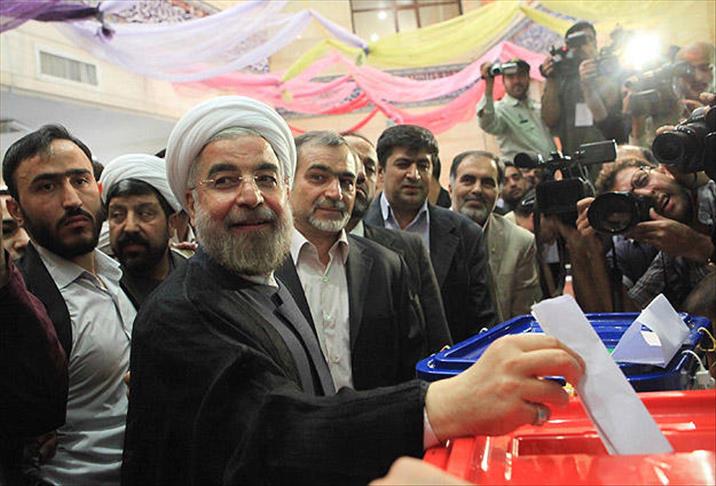
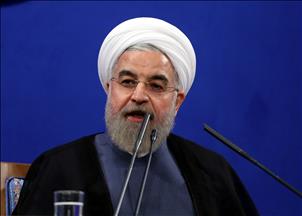
Iran's president-elect reformist-centrist Hassan Rowhani's new policies are issue of wide international concern. Despite being defined as moderate, a radical change on nuclear policy, relations with the West and Syria. Experts speaking to Anadolu Agency (AA) evaluated Rowhani's possible policy course.
- "A stunning victory"
Washington-based National Iranian American Council's President Dr. Trita Parsi, defined the election of Rowhani despite clear efforts by the ruling elite to secure a conservative victory, as "stunning".
Parsi emphasized that narratives stating that "Ayatollah Ali Khamenei and the IRGC are all-powerful" and "Green Movement as dead was premature and misguided" should be revisited.
Highlighting that the Green Movement was originated from underlying sentiments of majority of Iranians – the discontent with the direction of the country, repression, mismanagement, "While the manifestation may change, die out, and re-emerge, the underlying sentiments have remained intact. Four years ago, they manifested themselves in the Green movement. Now, they manifested themselves in a vote for Rowhani" said Parsi.
Regarding future course of Rowhani, Parsi said, "Rowhani will likely try to move to the middle now and be a unifying president. But there are also speculations that he will try to deliver on his promises to "break the securitized atmosphere" and release the leaders of the Green movement from house arrest. If so, this would not be negligible change."
While on foreign policy realm, Rowhani's positive steps would be limited by the West's response.
- "No change on nuclear program"
Associate Professor Mehmet Sahin from Gazi University in Ankara, Turkey said, the first job of Rowhani would be fixing the relations with the world, damaged during 8 years of Ahmadinejad tenure.
Rowhani's main focus could be solving the problems derived from the nuclear program, however, his efforts would remain as lipservice as the real authority is religious leader Ali Khamanei.
Sahin also said, it is wrong to name Rowhani as "reformist" because he was not among reformists in 2009 elections.
Sahin stated that the biggest challenge that facing Rowhani will be whether to appease Khamanei or the reformist constituency.
- Ideology is not bringing benefit anymore"
Assistant Prof. Bayram Sinkaya from Yildirim Bayazit University, Ankara, Turkey said, he expected change in Iran's foreign policy under Rowhani as he got votes of both conservative and reformist circles.
Elections provided room for maneuver for Iran, which might bring relaxation of the economy to some extent.
Sinkaya reminded, Rowhani, who was nuclear chief negotiator during Khatami's tenure and the secretary general of Iran Security Council, won the elections by only emphasizing a simple economy and moderation in foreign policy.
His best advantage is his ability to address the conservatives at the same time as he has a trust-based relationship with Khamanei.
- "Conjuncture determined Turkish-Iranian relations"
Prof. Dr. Ertan Efegil from Sakarya University said, he did not expect a real change in foreign policy since the president does not have enough power to do so.
Efegil also touched upon Turkish-Iranian relations, and said "Events in the Middle East lead Turkey and Iran into different directions. Iran's nuclear program bothers Turkey, while the situation in Syria meant self-survival to Iranian regime, therefore affects our relations negatively."
Efegil added, he did not predict any rapprochement in the bilateral relations.
Reporting by Selen Tonkus, Yusuf Hatip