By Don Pathan
PATTANI
In the months leading up to the first official visit to Malaysia by Thailand's military prime minister, concerns rose he would seek to undermine the Muslim country’s role as a facilitator in talks to resolve an insurgency in the Thai south that has seen more than 6,000 people killed in the last decade.
But General Prayuth Chan-ocha soon put to rest any doubts concerning that role, declaring during a visit to Kuala Lumpur Dec. 1 “Malaysia is the only and only,” and then three days later vowing to bring peace to the Muslim-dominated south within a year
But even with Malaysia at the table, there appears to little public room to maneuver and bring such peace to a region where resistance to Buddhist rule has existed for decades.
The latest talks were launched without condition early 2013 by the elected government of Yingluck Shinawatra, with the military largely kept out of the planning process. But they ground to a halt in Dec. 2013, when political tensions in Bangkok intensified and the lower house of parliament was dissolved.
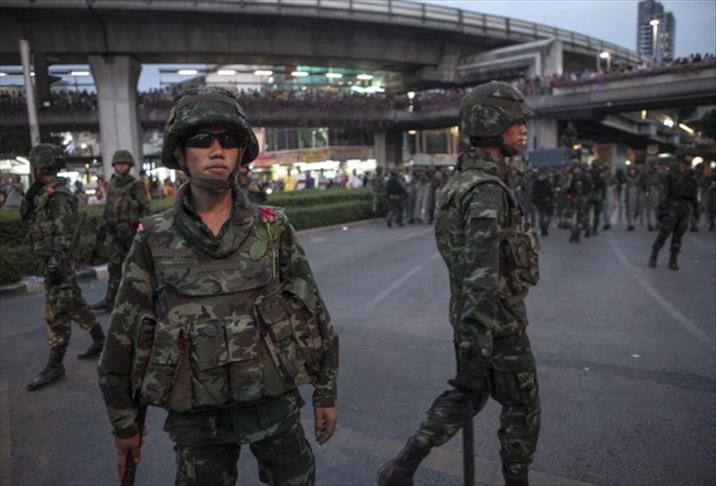
The government was then ousted in a May 2014 coup by Chan-ocha in an effort to end what the military termed massive bloodshed between rival political factions.
Since then, the PM has adopted a different strategy to overcome the insurgency, attempting to dictate terms to Muslim separatist movements "should they want to talk peace.”
During his visit to the Malaysian capital, he underlined that the half dozen or so separatist movements must have a common platform before coming to the negotiating table. He also stated that there must be “a period of peace” before talks could resume.
In July 2013, a major demand from the most prominent separatist group involved in the talks - the Barisan Revolusi Nasional (BRN) - was the release of all detained militants and official recognition of the three southernmost Thai provinces - the troubled areas of Pattani, Yala and Narathiwat - as a Malay historical homeland.
The area was an independent sultanate until the 19th century, and was only formally annexed by Buddhist-majority Siam (Thailand's previous name) under the terms of a 1909 Anglo Siamese agreement. 80 percent of the population, however, remains Muslim, maintaining Malay as its first language.
The insurgents argued during the previous nine-month dialogue that with such a strong historical claim and the area's continuing Muslim identity, political autonomy should be a key element of any potential settlement. But the junta has clearly indicated that any such movement would be considered an unacceptable violation of the "territorial integrity" of the country.
A source in the BRN this week told the Anadolu Agency that that the latest demands from Bangkok have become virtually impossible to agree on with other separatist groups, because there is now no unity among their leaders.
"There is no consensus about dropping demands for independence from Thailand and settling for something less,” the source - who did not wish to be named out of matters of personal security - told AA.
He added that of more immediate concern for his group is to move away from the local level and strengthen their political wing globally, thus giving them a valuable platform to publically engage with the international community.
He said that they are also looking to develop a better understanding of international norms and practices on negotiating procedures before they resurface, or return to the negotiating table.
"Until the conditions are better conducive for talks, the best Thailand can hope for is talking to an interlocutor," he told AA.
He also highlighted the lack of continuity in peace initiatives between the separatist groups and the Thai state and saud that the BRN now wants the government to provide legal backing for the process, to guarantee a continuation of talks regardless of changes in government.
"With each new government in Bangkok comes a completely different negotiating team and agenda," he underlined.
Asst. Professor Panitan Wattanayagorn - a security expert on Thailand from the country's prestigious Chulalongkorn University - told AA that it has been a challenge for the current government to form a coherent team and formulate a strategy, while at the same time not giving too much away to the separatist movements.
He said that a major problem lies in that by simply sitting down and talking to the separatists, it provides the insurgency with some legitimacy. Besides, he added, Chan-ocha has issued an executive order to appoint a chief negotiator to the process, which should offer some continuity, although it is a far cry from the demand that it should have some legal and legislative basis.
Historically, Thailand's army has preferred to engage in clandestine meetings with such movements - particularly in the 1980s. These led to a blanket amnesty in the early 1990s, and a subsequent end to the wave of armed insurgency that surfaced in the mid-1960s.
But the historical narrative remains unchanged - the Southern Thai Malays continue to see themselves as colonial subjects in an occupied territory. Within the decade that followed the first wave of insurgency, a new generation of armed separatist militants had surfaced to take up arms again.
With the junta now seemingly unwilling to make concessions and the BRN not prepared to come to the table it appears the violence that has seen 6,200 people killed and over 11,000 wounded since January 2004 will continue for the foreseeable future.
One positive note, however, is that the number of violent incidents has been steadily declining. The army has also been banking on a new strategy to combat militancy by outsourcing some security work to local villagers, while at the same time stepping up long-range reconnaissance patrols to hunt down militants cell by cell.
Panitan told AA that he believes that the army is also pinning its hope on back-channel dialogue with individual separatist organizations. Such meetings will be small and kept out of public sphere, just as they were in the 1980s, he added.
BRN confirmed that it had not ruled out such backdoor discussion as it could act as an opportunity "to do some horse-trading" with the Thais.
It is dismissive of the claim that the decline in incidents is evidence that the Thai army has been making process, however, saying one can not ignore the intensity of the attacks on the ground, which continues to make the insurgents as relevant a force as ever.
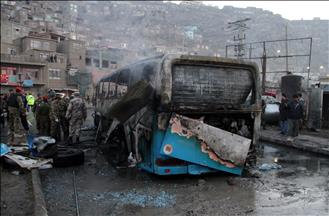
At the beginning of November, for instance, a spate of gun attacks took the lives of five people in Pattani and Songkhla provinces.
Moreover, the insurgents have also demonstrated that they can expand their operations to areas left untouched during the last decade's violence, when the current wave of insurgency resurfaced.
A BRN source highlighted the presence of a massive double bomb found hidden in the back of a pickup truck parked behind a police station in Phuket - a popular destination for international tourists - in December 2013.
Thai intelligence sources have said that the device was expertly assembled and had a blast radius of 500 meters.
The source, however, claimed that the detonator was left off on purpose, the device left purely "to demonstrate to the Thais their capability."
news_share_descriptionsubscription_contact

contact_the_ombudsman
is_there_an_error_in_this_story