BERLIN
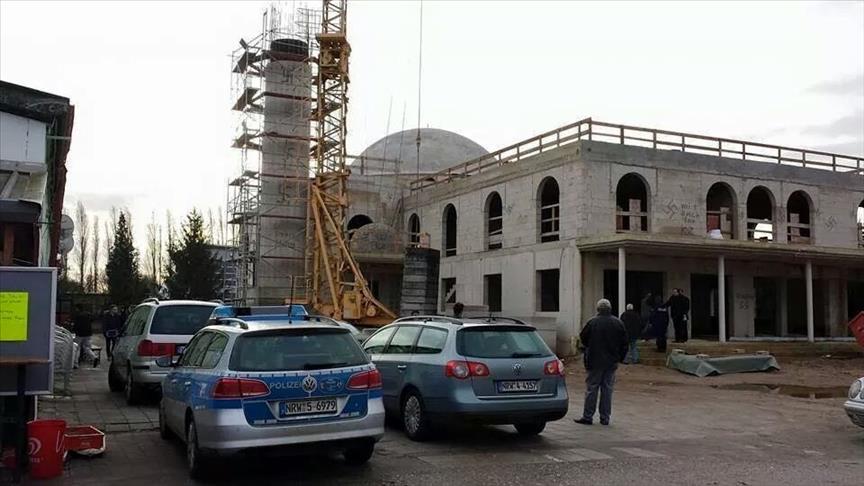
Police in Dresden have called for help from the public after a mosque was vandalized in the east German city amid a growing intolerance against Muslims in the country.
Police said Friday they had launched an investigation after insulting messages concerning Prophet Mohammad were written on the walls of the Marwa mosque in Dresden, a stronghold of the recently founded anti-Islam movement PEGIDA, early Thursday morning.
Officers said they had no concrete information about the attack and urged the public to help locate the vandals.
The mosque had been named after the late Egyptian Muslim Marwa Elsherbiny, who was killed in Dresden six years ago by a right-wing fanatic.
'Dangerous climate'
Social Democrat lawmaker Henning Homann blamed PEGIDA for the attack, arguing that the right-populist movement has fuelled hate against immigrants and Muslims.
"This act is just another indication of the dangerous climate in Dresden which was fueled by the recent xenophobic, Islam-critical marches," Homann told local daily Dresdner Morgenpost.
"This act shows that hate leads to violence. There should be no tolerance against that. We are condemning this in the strongest way," he said.
A recent study by Germany’s public broadcaster ARD revealed attacks against immigrants and refugees have significantly increased in the last three months following the organization of anti-Islam rallies by PEGIDA and copycat groups in other cities.
At least 76 attacks against immigrants and Muslims have recorded since Oct. 20 when PEGIDA organized its first rally.
Restrictive policies
Between July and September, 33 attacks were recorded.
Far-right populist movement PEGIDA made headlines in Germany and abroad as it gathered thousands in anti-Islam rallies organized in Dresden.
About 25,000 protesters joined PEGIDA’s rally on Jan. 12 in the city in the aftermath of the attack on satirical magazine Charlie Hebdo in Paris in which 12 people died.
PEGIDA has demanded a restrictive and controlled immigration policy, legally enforced measures for the integration of immigrants and the expulsion of Islamists and radical extremists living in Germany.
The group has failed so far to draw similarly high numbers in rallies organized in other German cities.
The movement was also thrown into disarray after its founder, Lutz Bachmann, announced his resignation on Jan. 21, amid a row over a photo he posted on Facebook in which he was dressed as Adolf Hitler.
Unemployment and poverty
Five leading members of the PEGIDA announced Thursday that they had left the group and were planning to found a new organization, which would be named the Movement for Direct Democracy in Europe.
PEGIDA also canceled a planned rally in Dresden on Feb. 2, but announced it would continue with weekly protests, with the next planned for Feb. 9.
PEGIDA’s stronghold Dresden is the capital of the state of Saxony, which was part of former East Germany between 1949 and 1989.
High levels of unemployment and poverty remain a serious problem in the state, 25 years after the unification of West and East Germany.
Germany is home to four million Muslims with 98 percent of them living in West Germany.
Growing fear
In Saxony, where anti-Islam movements have drawn strong support, only 0.7 percent of the population is Muslim.
Right-wing populist movements have sought to benefit from a growing fear of Islam, which was largely influenced by reports of murders and atrocities being committed by terrorist groups including the Islamic State of Iraq and the Levant.
A recent study by the Bertelsmann Foundation has revealed that 57 percent of Germany’s non-Muslims perceive Islam as a threat -- a four percent increase since 2012.
Leading Muslim organizations in the country say the source of the radicalization of some young Muslims is not Islam itself, but sociological problems they face, such as discrimination, unemployment or a lack of future prospects.