Tonguçnaz Seleme Baştürk
13 January 2016•Update: 13 January 2016
By Roy Ramos
ZAMBOANGA CITY, Philippines
The Philippines’ presidential peace adviser reiterated Wednesday the need to pass a law aimed at sealing peace in the country’s conflict-ridden Muslim south, underlining that it would curb the growing threat of religious extremism both locally and internationally.
“The completion of the peace negotiations can show the global ummah [Muslim community] that even Muslim minorities can thrive and contribute to development through the mutually-beneficial interaction of distinct cultures,” Secretary Teresita Quintos Deles said in a statement.
The passage of the Bangsamoro Basic Law (BBL) would seal a peace agreement signed by the government and the Philippines’ one-time largest rebel group Moro Islamic Liberation Front (MILF) in 2014 that aimed to bring an end to 17 years of negotiations, while granting Muslims greater political autonomy.
If ratified, it would create a new region to replace the existing Autonomous Region in Muslim Mindanao and bring much needed wealth to a region that is among the country’s most underdeveloped due to the decades-old conflict.
The law’s expected passage has been delayed by at least ten months amid disagreements among lawmakers, who have nine full Senate session days after Jan. 18 before adjourning for the general election in May.
Deles stressed Wednesday that the peace process -- if successful -- would demonstrate that an Islamic movement can address its grievances and pursue its interests through a legitimate mode of democratic political engagement, while protecting Muslim culture and identity and maintaining a country’s territorial integrity and constitutional framework.
She underlined how delays in passing the BBL were a source of concern for communities in Mindanao.
“With every passing day of delay, they grow more anxious. With each new unmet deadline, they ask -- will this mean a return to war? With firm hope and unwavering courage, we say: no, not under our watch,” she added.
The government peace advisor also drew attention to the international community’s support for the peace process as expressed in a joint statement released by top diplomats from at least 24 countries last year.
Referring to the European Union’s pledge to provide 275 billion pesos ($5.8 billion) to assist the transition process, she appealed to European officials for continued moral and material support.
“We cannot give up, because families cannot be torn by war yet again; because communities on the verge of recovery cannot revert to their broken state,” Deles said.
“We remain courageous in the face of challenges. We continue to work and pray hard so that in our remaining months in office, the peace process can move closer and closer – Insha’Allah – towards its successful conclusion, towards a bright new dawn of peace, of prosperity, of harmony, for the Bangsamoro, for Mindanao, and for the Philippines,” she said.
Deles stressed the need for democracy to “devalue brute force and violence” and dialogue to “discredit extremism’s claim that there is no alternative to terror”.
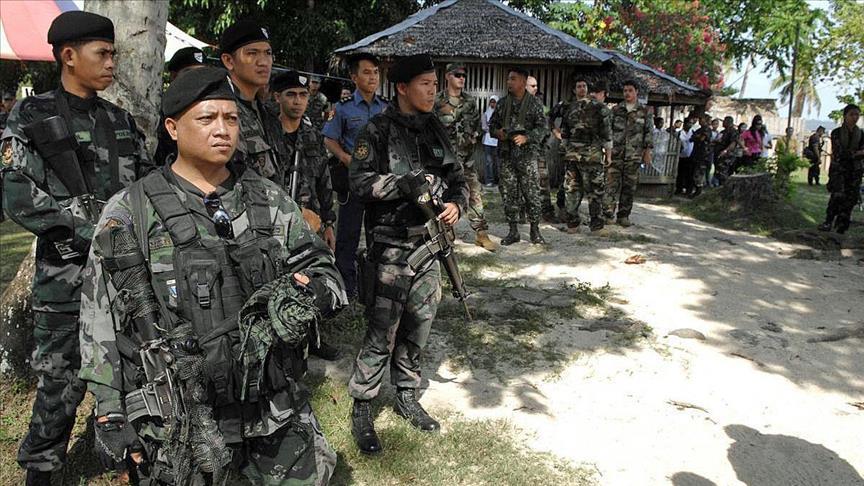
The bill’s passage faced a major setback after a botched raid left 44 police commandos dead in Jan. 2015 in an incident the government has termed a “misencounter”.
On Jan. 25 last year, elite police commandos descended on the remote town of Mamasapano in conflict-ridden Maguindanao province to arrest two wanted militants, one of whom was killed in the raid.
The officers ran into members of the MILF and splinter group the Bangsamoro Islamic Freedom Fighters, resulting in the deaths of 44 commandos, 17 MILF members and five civilians.
The involvement of the MILF had threatened to derail the peace process in Mindanao and resulted in Congress halting the passage of the BBL.
Lawmakers opposed to the BBL -- led by Senator Ferdinand Marcos Jr., the son of Ferdinand Marcos who ruled the Philippines for 21 years -- have also presented a substitute bill to Congress that includes amendments to around 80 percent of the original draft.
The MILF has said that it will not accept a diluted version, and at one point threatened to end decommissioning if a watered down version is passed.
Last week, Benigno Aquino III reiterated his government’s continuing commitment to its promise “to leave Mindanao in a better situation”, calling for the BBL’s passage as soon as possible to ensure “inclusive governance”.
“We will continue to focus the national coffers towards infrastructure development so that those who have historically been left behind are given a boost up so they can catch up,” he said.