18 September 2014•Update: 21 February 2017
WASHINGTON
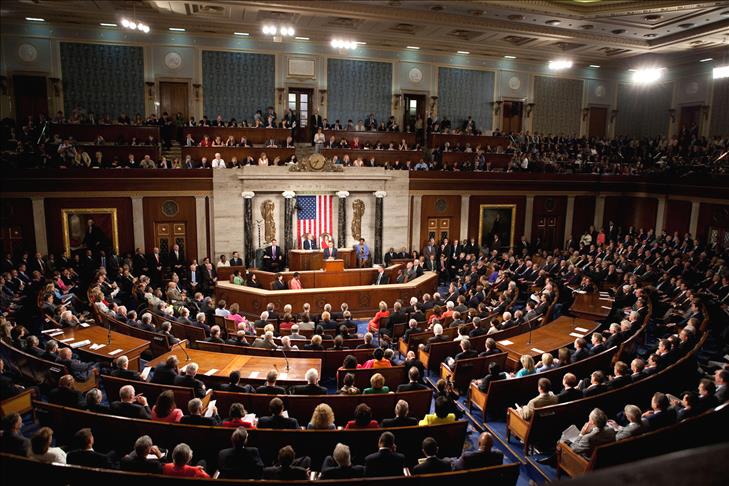
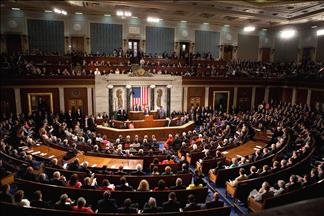
The U.S. House of Representatives has approved Barack Obama's plan to train the Syrian moderate opposition as part of his strategy to fight the Islamic State of Iraq and the Levant (ISIL). The bill was passed by a large majority of 273 votes to 156 on Wednesday and is expected to be adopted by the Senate.
A vote is expected as early as Thursday. If passed, the bill will go to the president to be signed into law.
Obama first requested the authority to arm the rebels on June 26 under a $500 million program. The Pentagon intends to train, equip and resupply more than 5,000 Syrian fighters per year at facilities in Saudi Arabia.
In the Congress, the Democrats are concerned about the possibility of the U.S. being dragged into a new war in the Middle East. The Republicans, however, say that Obama’s strategy is limited and is not sufficient to defeat ISIL.
There is also a bipartisan concern that the arms to be provided to Syrian opposition may possibly fall into “wrong” hands and the end of the these arms may be pointed at the U.S.
Democrat Representative Barbara Lee of California voiced the fears of many when she said; "How will we ensure that the United States weapons we are providing to Syrian rebels will not get into the wrong hands, as they did with the rebels we supported in Libya?" she said.
Another Democrat Representative Loretta Sanchez also expressed her concern whether an armed Syrian opposition would be a reliable ally to the U.S.
"We don't know if somehow down the line they will turn our guns right back on us," said Sanchez who is also a member of the House Armed Services Committee.
This concern has even been worded by the lawmakers who voted “yes”.
Democrat Representative James Moran of Virginia called his vote to be "the best choice of the worse options.”
“It’s because there are no better alternatives and I don’t think it’s responsible nothing,” he said.
Some lawmakers are also concerned that the Obama administration may possibly use the bill out of its purpose and target the Assad regime in Syria rather than ISIL.
One of the constant critics of Obama administration Republican Senator John McCain of Arizona said the Syrian opposition might fight the regime of Syrian dictator Bashar al-Assad, rather than ISIL.
"You don't think that the Free Syrian Army is going to fight against Bashar Assad, who has been decimating them?" McCain asked Joint Chiefs of Staff Chairman Martin Dempsey during a hearing at Senate.
"You think these people you're training will only go back to fight against ISIL? Do you really believe general?" he asked.
- The bill is an to spending bill
The bill was drafted as an amendment to the spending bill to keep the government funded past September 30 last year, which will December 11 this year.
This also means that the authorization will expire in December. Thus, the bill seems to be one of the top issues on the agenda of the Congress after the midterm elections to be held in week of November.
The content of the bill is also vague as it does not signify what kind of arms would be provided to the Syrian rebels or whether they would be provided with heavy weaponry or not.
However, there are reports on some American media outlets that besides small arms, the Syrian rebels would be provided with heavy arms including artillery, anti-tank rockets.
Republican Representative Tom Cole of Oklahoma, also a member of the House Defense Appropriations Subcommittee, said that arms supply to the rebels could start with small arms and then possibly move to heavier weapons, including armored personnel carriers, artillery, real air defense capability.
-No budget for the the program
The bill also does not include a total amount arming and training of the Syrians while Obama had asked for $500 million from the Congress.
The Congress also put certain limitations and an effective control mechanism on administration into the bill.
It stipulates that U.S. Secretary of Defense Chuck Hagel will have to inform lawmakers 15 days before training begins, and would have to guarantee that the fighters receive appropriate vetting.
The Defense Department will also have to update Congress every 90 days after the arming and training begins.
www.aa.com.tr/en