CAIRO
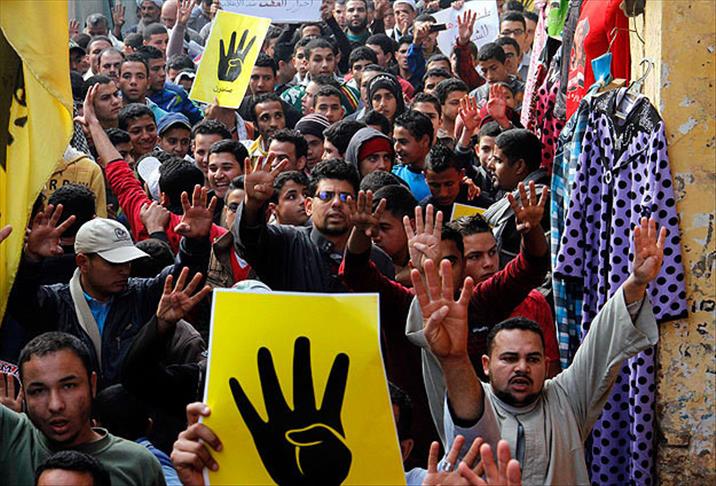
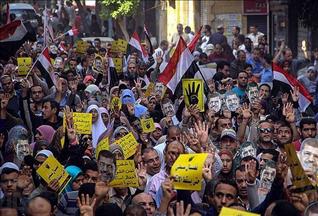
A group of political activists have launched a new campaign to lobby for the release of people thrown in Egypt's jails on the heels of political unrest that gripped the country since the ouster of president Mohamed Morsi last year.
Dubbed "Freedom for Brave Men," the founders of the new campaign said that they plan a series of protests to put pressure on the government to release the detainees, most of them opposed to the military-backed interim administration.
Political activist Khalid Abdel-Hamed said the new campaign will put pressure on the authorities to release all political detainees, but it would first focus on those arrested on January 25, the third anniversary of the revolution that ousted longstanding ruler Hosni Mubarak in 2011.
The Egyptian Interior Ministry said on January 25 that it had arrested 1,079 people on charges of rioting.
Abdel-Hamed said the campaign comes in response to what he described as the "indiscriminate" arrest of revolutionaries and activists who demand change and freedom.
"The campaign calls for the immediate release of all political detainees and the suspension of indiscriminate arrests," Abdel-Hamed said during a inaugural conference in Cairo on Thursday.
He said he and his colleagues in the campaign will demand the release of all detainees, including Muslim Brotherhood detainees who have not yet been indicted in any cases.
The Egyptian authorities repeatedly said there are no political detainees in prison, adding that the arrested protesters face criminal charges, including unlicensed protesting and incitement to violence.
In a televised address last month, interim President Adly Mansour called on the prosecutor-general to review the cases of detainees and release those who did not commit crimes, particularly university students.
Some people considered this demand to be recognition on the part of the interim president of the presence of political detainees in the prisons.
However, presidential spokesman Ihab Badawi said immediately after the televised presidential address that by "detainees" the interim president meant anybody who has been detained for questioning.
He added that there are no detainees in Egypt in the legal term of the word explained by the emergency law.
Student arrests
Ahmed Ezzat, the director of local NGO Association for Freedom of Thought and Expression, which hosted the conference on Thursday, said the conditions of freedom of expression in Egypt had become even worse than the time of ex-president Hosni Mubarak.
He accused the authorities of violating the rights of the nation's students and journalists. Even with the president's speech, Ezzat said, more than 200 students have been arrested after the revolution anniversary, bringing the total number of detained university students to 900 in total.
"How can policemen arrest students from the university campuses and then deprive hundreds of them of the right to perform their exams?" Ezzat asked during the conference.
He said the rights of some of the arrested journalists were violated only because they belong to the Muslim Brotherhood, the movement from which ousted president Morsi hails.
Political activist George Ishaq, who is also a member of the state-run National Council for Human Rights, said he had prepared a list of the names of the detainees and presented it to the prosecutor-general.
Ishaq said he had given the prosecutor-general a one-week deadline to clarify the status of these detainees.
Demonstrations against Morsi's ouster have rocked several universities throughout the country since Egypt's academic year began in September.
The most violent protests have been seen at Cairo's Al-Azhar University, a traditional stronghold of students affiliated with the Brotherhood.
englishnews@aa.com.tr