Moscow will not allow a new Cold War: Lavrov
Russian Foreign Minister calls on Western countries to return to path of 'constructive cooperation' amid increasing tensions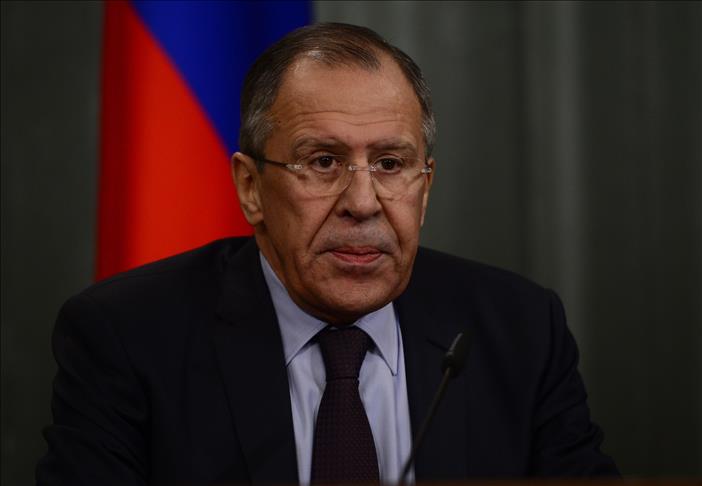
MOSCOW
U.S.-led efforts to isolate Russia are futile as Moscow "will not allow another Cold War", Russian Foreign Minister Sergei Lavrov has declared.
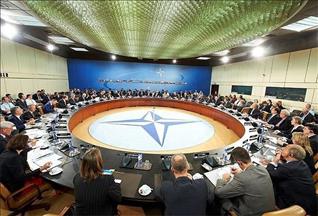
Addressing conference delegates in an annual speech at the Russian Foreign Ministry in Moscow on Wednesday, Lavrov blamed NATO member states for ratcheting-up tensions with Russia.
He said: "Relations between Moscow and Washington were seriously aggravated in 2014 ... NATO chose a confrontational path."
"The speed with which NATO members cut off all contacts with the Russian Federation shows that the mentality of the Cold War has not disappeared, and that they still see the alliance as a tool to promote unilateral interests."
He went on: "We call for a return to the path of constructive cooperation both in bilateral relations and in the international arena."
"But the dialogue is possible only on the basis of equality and taking into account each other's interests."
US 'seeking world domination'
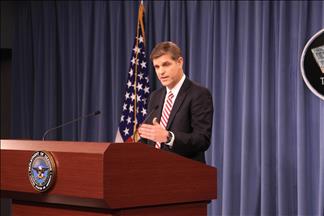
Referring to U.S. President Barack Obama’s State of the Union Speech a day earlier, Lavrov said it showed Washington wanted to dominate the world using "aggressive" and "outdated" foreign policy.
He said: "We hear from our Western partners that Russia has to be isolated ... specifically, Barack Obama has just repeated that."
"These attempts won’t be effective. Russian President Vladimir Putin said that Russia will never resort to self-isolation."
Obama had declared in his sixth State of the Union speech on Tuesday night to a Congress controlled by his Republican opponents: "Well, today it is America that stands strong and united with our allies, while Russia is isolated, with its economy in tatters."
"That's how America leads — not with bluster, but with persistent, steady resolve."
But Lavrov said: "Americans are absolutely non-critical in assessing their own steps, and yesterday’s speech by Obama shows that the core of their philosophy is; 'We are number one' and all the rest should accept that."
Peace moves
Referring to the conflict in Ukraine, often cited as the main cause behind the deterioration of relations between Russia and NATO, Lavrov repeated his government's denials of support for separatists in the Donbas region of Ukraine.
He said those who claimed the opposite should prove their point, adding: "I say it every time: if you are so sure in stating that, confirm it with facts - but no one can or wants to provide them."
Lavrov said Moscow desired a political solution to the conflict by implementing the Minsk protocol signed on Sept. 5 by representatives of Ukraine, the Russian Federation, Donetsk People's Republic and Lugansk People's Republic, saying: "We insist on the need to implement the protocol."
He stressed several times that the removal of heavy weapons from the front lines in eastern Ukraine was essential for moves towards a substantive truce.
Lavrov said he would try to negotiate an immediate ceasefire at talks in Berlin later on Wednesday, involving the foreign ministers of Ukraine, Germany and France.
The foreign minister also spoke briefly about upcoming peace talks on Syria which are to be held in Moscow from Jan. 27-29, stating he hoped they would involve representatives from all sides of the opposition coalition.