By Zabihullah Tamanna
KABUL
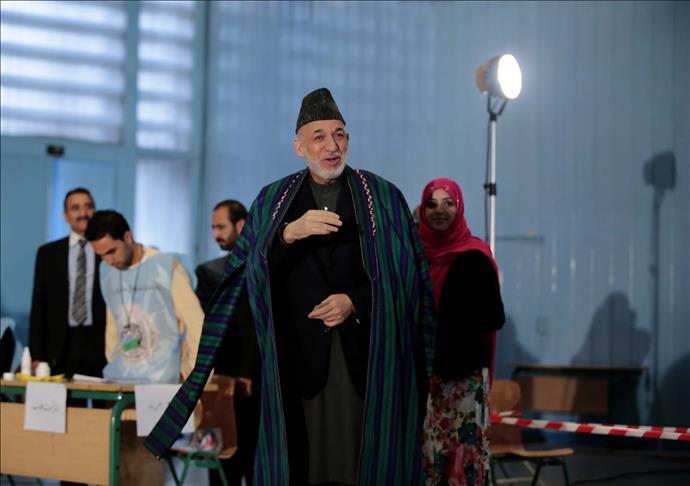
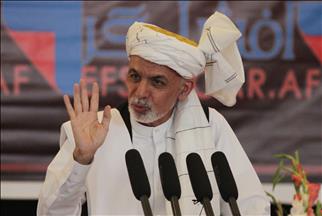
Outgoing Afghan President Hamid Karzai has called on the country’s citizens and the new government -- which will be inaugurated Monday -- to strive for enduring peace.
Karzai was addressing the nation Sunday ahead of a grand presidential inauguration with well-known economist and former World Bank official Ashraf Ghani Ahmadzai taking over as foreign forces plan to pull out their troops by the end of 2014.
"Definitely peace will come but our endeavor will speed it up," Karzai said on the eve of presidential inauguration. The ceremony will be the country's first democratic and peaceful transition of power in Afghanistan’s history.
"When I took responsibility for this country 13 years ago, I inherited a failed economy, destroyed institutions, poverty, anarchy and a reign of strangers," Karzai said.
He said that there was no greater happiness than witnessing children going to school and reciting the national anthem of an independent Afghanistan.
Karzai, who was constitutionally barred from a third term in office, said he is opening a new phase of his life and would support the new president, constitution and future government of Afghanistan.
- 'Unifying figure'
Hamid Karzai, who established his government in 2001 on ruins inherited from the Soviet invasion, civil war and latterly the Taliban insurgency, has portrayed himself as a unifying figure that kept the country together and brought different factions and ethnic groups into government.
Karzai's critics claim that anywhere between 25 and 40 percent of Afghans are jobless and that the government has failed to renovate or expand basic infrastructure needed for further economic growth.
Nevertheless, looking back on the past 13 years, there is no doubt that economic development has been a focus and many changes have been made since Taliban times.
Afghanistan's trade and commerce ties have expanded dramatically since the days of isolation under the Taliban regime. Road and highway construction, while still in the early stages, has increased exponentially since 2001.
Perhaps the most drastic changes have taken place in the Afghan banking sector and telecommunications industry. According to some statistics, more than 17 million Afghans now use mobile phones.
Under the Taliban regime, which lasted between 1996 and 2001, girls were banned from education and women were not allowed outside unless wearing an all-covering burqa and accompanied by a man.
In 2014, over 11 million children were in education and thousands of schools have been built or at least renovated.
During 13 years of Karzai's government, Afghanistan drafted one of the most modern constitutions in the region. Karzai also eliminated regional powerbrokers and established a powerful centralized government.
Karzai had a rocky relationship with the U.S.-led NATO military coalition and other international backers who pumped billions of dollars into the war-wracked country, but he struck a conciliatory tone in his final days in office.
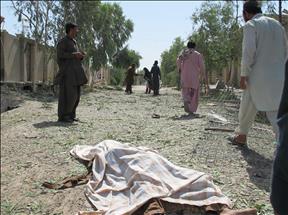
Over the course of his second term Karzai become more bitterly critical of U.S. strategy, particularly the night raids on Afghan villages and their accompanying civilian casualties.
With his second and final terms as president set to expire in 2014, Karzai declined to sign the Bilateral Security Agreement that would have authorized a continued U.S. presence in Afghanistan.
Corruption was the biggest challenging problem for Karzai’s government as he inaugurated his reign in this country.
Inside and outside of Afghanistan, he was accused of ignoring reports of corruption in his administration, including charges leveled at members of his own family.
Opium production and trade remains another challenge for the next government. Afghanistan’s booming narcotics trade risks splintering the country into a fragmented, criminal state if the government and its Western allies do not step up efforts to tackle opium production and the illicit economy it supports.
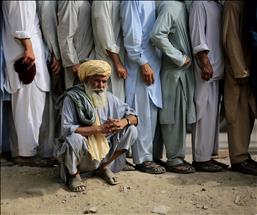
Meanwhile, poverty also remains a great task in the country, in spite of millions of dollars pouring in from Western states. According to a UN report, nine million Afghans -- 36 percent of the population -- are believed to live under the poverty line and a further 37 percent live only slightly above that level.
www.aa.com.tr/en