SANAA
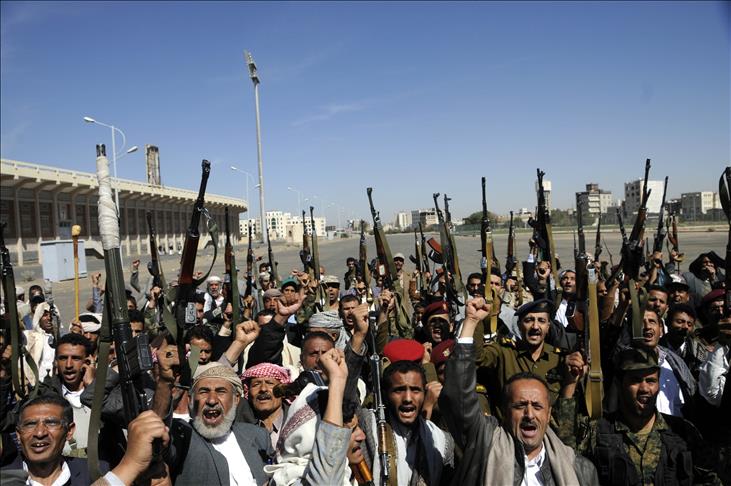
Six guards of resigned Defense Minister Mahmoud al-Subaihi were killed in an ambush by Houthi militants on Sunday as he fled the group's grip in Sanaa and fled to southern Aden city, reliable sources said.
According to the sources, who asked to remain anonymous, the Houthi militants attacked the convoy of the minister in Khokha region in Al-Hudaydah province as he was on his way to Aden.
Six guards were killed and another was injured in the attack, the sources told The Anadolu Agency, noting that the bodies of the slain guards have arrived to al-Subaihi's hometown in Subeiha region in the southern Lahij province.
A government source had told The Anadolu Agency earlier that militants affiliated with the powerful Houthi movement kidnapped five of the minister's guards and injured another.
Al-Subaihi arrived in Aden earlier Sunday after fleeing capital Sanaa, according to high-ranking sources.
The sources, however, did not clarify how al-Subaihi managed to flee Sanaa.
Al-Subaihi's arrival in Aden is expected to boost embattled President Abd Rabbuh Mansour Hadi's efforts to reinstate his rule from Aden.
The development comes two months after the government of Prime Minister Khaled Bahah tendered its resignation as Houthi militants seized the presidential palace in Sanaa, where the government was headquartered.
Weeks after the government's resignation, Hadi fled Sanaa – where he had been kept under house arrest by Houthi militants – to Aden.
Since his arrival in Aden, Hadi – who enjoys wide support from Gulf states and the international community – has been working on reinstating his government with the backing of loyal army units.
Upon his arrival, Hadi dismissed as "null" and "illegitimate" all recent Houthi-issued decrees. He also wrote to Yemen's parliament withdrawing a resignation he had tendered earlier.
He also declared Aden as the country's temporary capital on Saturday after designating Sanaa as an "occupied capial."
The Houthis, for their part, issued what they describe as a constitutional declaration dissolving parliament and establishing a 551-member transitional council.
The declaration, however, was rejected by most of Yemen's political forces – along with some neighboring Gulf countries – which described it as a coup against constitutional legitimacy.