By Rafiu Ajakaye
LAGOS
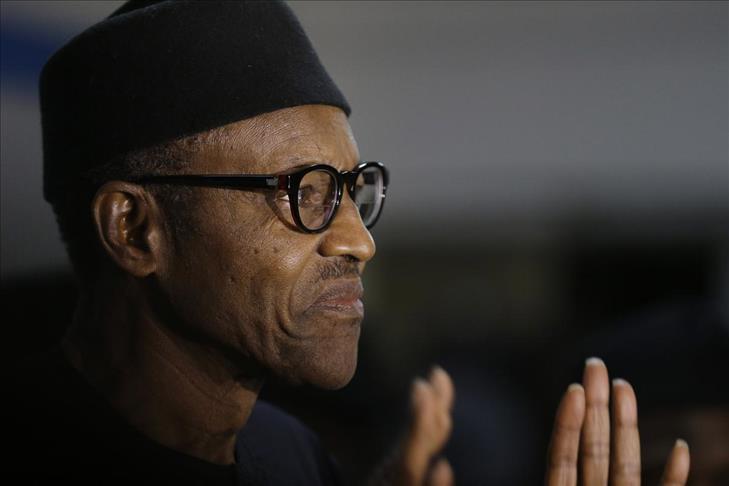
Nigeria's President-elect Muhammadu Buhari has his work cut out for him.
Analysts say he will inherit a country in dire need of fixing, whose woes include an epileptic power supply; a comatose economy, due in part to dwindling oil revenue and corruption; insecurity arising from an ongoing insurgency in the northeast; ethnic militias in parts of the south and the central region; and rampant banditry.
He has an army of unemployed or underemployed citizens hoping for delivery by his "messianic" government.
And he will need to live up to his image as a man with zero tolerance for corruption – a scourge that Buhari himself has warned would kill Nigeria if left unchecked.
The last time Buhari ruled as a military dictator, he bequeathed a legacy of discipline, probity and transparency.
He left office with his integrity intact, as he was able to give orders and mete out punishment anytime and however he wished.
But this time around, the retired army general will govern Nigeria as a democratically elected president whose every step will be regulated by law.
He will work with a team of fellow party men and women – in both government and parliament – who, analysts say, will determine the success or failure of his administration.
Nigerians are looking forward to seeing who will fill key positions of Buhari's government, which will be inaugurated on May 29.
All eyes are on who will get key portfolios, such as chief-of-staff, secretary to the government, and the justice, finance and defense ministries, among others.
"[Buhari's] choice of political appointees will go a long way to shaping the character of his government. It is important that the president-elect takes his time to appoint like-minded people to his government," Austin Umoh, a lecturer at Lagos State University, told AA.
"His choices will determine to a large extent what he does and how he does it," he said.
"The choice of cabinet members will determine how he tackles the problems he promised he would tackle," added Umoh.
Ayo Olaolu, a political science professor at Benue State University, agrees.
"Who gets what position in his government will show how far he will go," he told AA.
"The media have started promoting some names who I know represent everything evil," he added.
He hopes such people will not have the chance to dictate the direction of Buhari's government.
"While saints exist nowhere in the world, I do not expect him to spoil public optimism by bringing on board fellows who are synonymous with corruption and anti-social tendencies," said Olaolu.
Buhari has been touted as an anti-corruption crusader and praised for his astuteness, discipline and military background – qualities most Nigerians believe are necessary to save the country from socio-economic collapse and rampant insecurity.
In his acceptance speech last week, Buhari vowed to stamp out corruption, which, he asserted, had brought Nigeria to its knees.
"We shall strongly battle another form of evil that is even worse than terrorism – the evil of corruption," he declared.
Nigeria ranks high on the list of the world's most corrupt nations, with a litany of recent corruption cases having been swept under the rug.
Transparency International ranked Nigeria 136th out of 174 countries in its 2014 Corruption Perception Index, which also ranked it the third most corrupt country in West Africa after Guinea and Guinea Bissau.
Festus Okoye, a constitutional lawyer and executive director of the Human Rights Monitor, a rights group based in Nigeria's northwestern Kaduna State, says Buhari's key appointments will decide the direction of his government.
"Appointments to key offices of finance, foreign policy, trade and investment, and energy will be a direct reflection of the economic and foreign policy direction of the government," he told AA.
Mixture
The Nigerian constitution requires that each of the country's 36 states and six geopolitical zones be fairly represented in the national cabinet to "reflect the national character" – a phrase often employed to convey the country's ethno-religious complexities.
Tairu Adebayo, an Abuja-based lawyer, hopes Buhari will strike a balance when making key appointments.
"He mustn't start out on shaky ground," Adebayo told AA. "Who gets what [position] will send a message about what to expect from his government."
Umoh, the Lagos State University lecturer, hopes the new president will look beyond mere party loyalties when selecting his cabinet lineup.
"He should shop for people with competence and integrity, even from outside his party," he told AA.
"There are ministers in the outgoing government that are known to be great guys. It would not be out of place if Buhari brought them into his government," the expert suggested.
Okoye, the lawyer and rights advocate, wants to see the new government stocked with technocrats and professional politicians.
"A good mix will be a fighting cabinet made up of technocrats and politicians and key stakeholders in the political process with a clear mandate to deliver on key policies and programs," he told AA.
Tunde Akanni, a journalism teacher and public commentator, expects the president-elect to make some mistakes on cabinet selections.
"Many names are already flying around. I feel it would be a mistake to hand such persons key government positions," he told AA.
Akanni believes, nonetheless, that having a president like Buhari will help repair such problems.
"He won't ask anyone to hide anything for him, and you can expect him to wield the stick where and when necessary," he said. "If appointees mess up, they can always be called to order."
Buhari spokesman Garba Shehu declined to comment when asked by AA about cabinet selections.
Parliament
Equally important will be the leadership of the national assembly, which will be inaugurated on June 4.
With Buhari's All Progressives Congress (APC) winning nearly 64 seats in the 109-member Senate and roughly 206 seats in the 360-member House of Representatives, the party is poised to take over leadership of the assembly.
Many of its elected members have shown an interest in taking up the post of senate president or house speaker, along with other top positions.
Analysts say Buhari must pay attention here, too, particularly since party support will be crucial for candidates vying for these offices.
Umoh, the Lagos State University lecturer, believes that Buhari also needs a friendly national assembly – one that shares his vision for the country.
"He needs people who share his ideals at its helm, otherwise it will be difficult to get his proposals through," he told AA. "He needs people of good character and integrity, otherwise he will be sabotaged."
Okoye, the lawyer and rights advocate, agreed.
"Strong institutions engender strong democracies. The character and composition of the National Assembly is a fundamental component of a democratic government," he told AA.
"A strong, courageous and principled leadership in the National Assembly will make good laws that will impact the people's wellbeing," he told AA.
He added: "And it will assist in checking excesses by the executive."
news_share_descriptionsubscription_contact

contact_the_ombudsman
is_there_an_error_in_this_story