07 May 2016•Update: 11 May 2016
By Todd Crowell
TOKYO
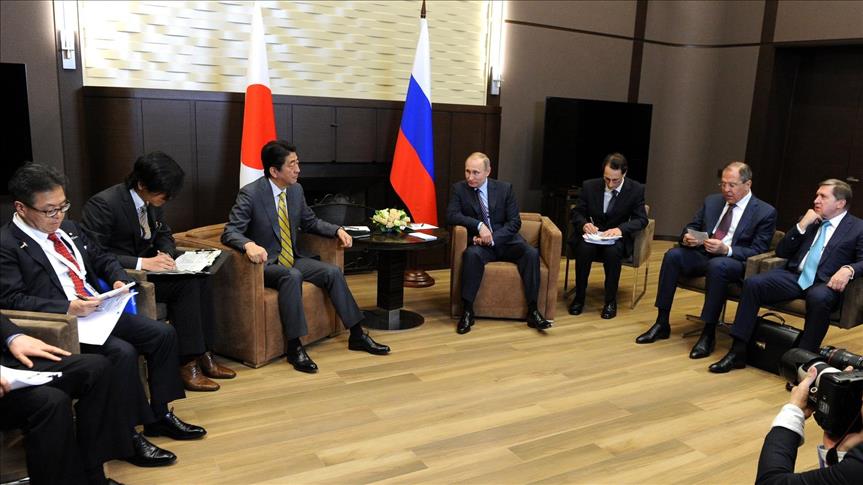
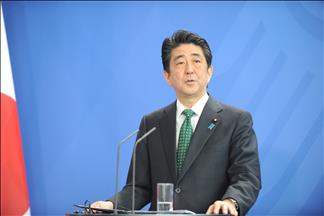
Seeking friends in an increasingly unfriendly neighborhood, Prime Minister Shinzo Abe and Russia’s President Vladimir Putin have met briefly in the Black Sea resort of Sochi.
For Abe, Friday's meeting came at the tail end of a week-long tour of European nations to sound out leaders prior to the meeting of the Group of Seven nations that gather together May 26-27.
Japan is hosting the international meeting, and Abe is intent on making that meet a big success so that he can spring board from it into the upper house election in July.
For years these meetings took place as the Group of Eight, but Russia was not invited to the last two meetings because of Putin’s annexation of the Crimea and support for Ukraine separatists.
Japan followed Washington’s lead in imposing sanctions against Moscow for its activities in the Ukraine.
Washington opposed the meeting but put a best face on it. “We believe that a country like Japan can have close relations with us and close relations with Russia," said state department spokesman, Mark Toner.
Putin reportedly offered Abe an invitation to attend an economic forum to be held in Vladivostok in September.
The meeting was the first face-to-face encounter between Abe and Putin since Japan followed its ally, the United States, into imposing sanctions against Russia for its actions in the Ukraine.
Gradually, however, Tokyo has been seeking to improve relations through high-level visits. In January, Inada Tomoni, a high ranking party official often touted as Abe’s successor, travelled to Russia.
Foreign Minister Fumio Kishida met his counterpart in April.
The meeting came at a time when Moscow is considering strengthening its defenses over the four disputed islands off the tip of northern Hokkaido that the Japanese call “the Northern Territories”.
Russia’s Defense Minister Sergei Shoigu said in March that it is exploring the idea of turning one or more of the islands into a naval base for the Russian Pacific Fleet defended with coastal anti-ship missiles.
The Northern Territory issue (the Russians refer to the islands as the Southern Kurils) has been a thorn in the relationship virtually since the end of World War II, during which Russia occupied them as war prizes.
Moscow has in the past suggested it was willing to turnover two of the islands Shikotan and the Habumai islands, the latter a small collection of uninhabited rocks off the coast of Hokkaido.
The trouble is that the two islands Moscow is supposedly ready to relinquish make up less than 10 percent of the land mass of the Northern Territories. The rest belong to two much larger islands: known in Japan as Etuforu and Kunashiro.
In the past, Tokyo has consistently rejected the Russian offer and held out for all four islands.
Japan maintains that the islands were recognized as belonging to Japan in the 19th century. Russia maintains they were legitimate spoils of war. Before the surrender about 17,000 Japanese lived on the islands and were relocated to Japan.
The two sides agreed Friday to work to resolving the dispute, which has prevented them from signing a formal treaty of peace resulting from World War II.
Before leaving, Abe also called for a "future-oriented" relationship "free of past ideas" while Putin invited him to participate in the East Economic Forum in Vladivostok in September.
Abe and Putin have met a dozen times, including a state visit in 2013 and at various international functions. Abe has only met with President Barack Obama seven times.