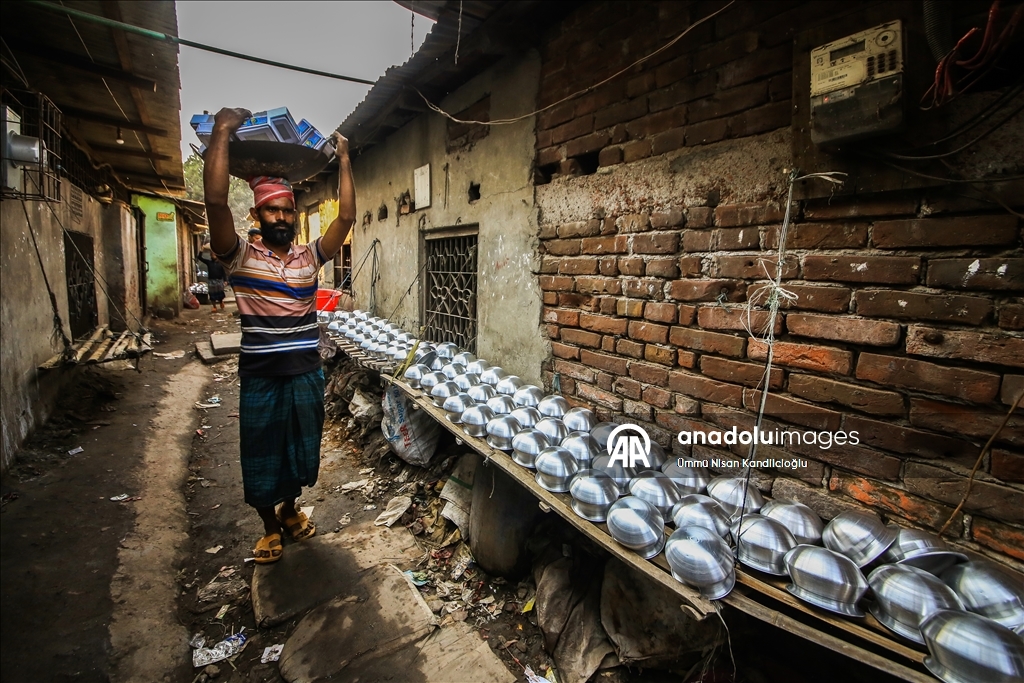
DHAKA, BANGLADESH - DECEMBER 15: A man carries bundles of aluminum cookware produced through recycling in Dhaka, Bangladesh, where most aluminum production relies on melting scrap household items, window frames, and engine parts in small workshops, on December 15, 2025. The lightweight and low-cost pots, pans, cauldrons, and water containers are widely used, with production and sales largely based on family labor. Women and children transport the aluminum goods to markets and streets, while workers in small-scale workshops face health risks due to high temperatures and a lack of protective equipment. ( Ümmü Nisan Kandilcioğlu - Anadolu Agency )

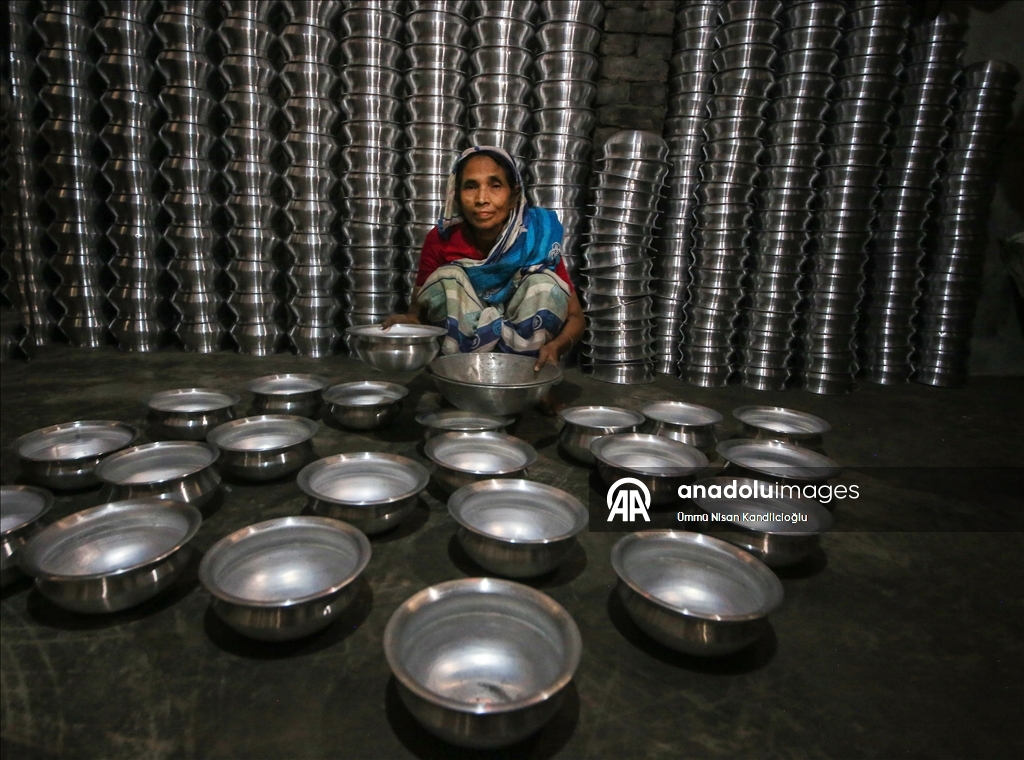
DHAKA, BANGLADESH - DECEMBER 15: A woman is seen with aluminum cookware produced through recycling in Dhaka, Bangladesh, where most aluminum production relies on melting scrap household items, window frames, and engine parts in small workshops, on December 15, 2025. The lightweight and low-cost pots, pans, cauldrons, and water containers are widely used, with production and sales largely based on family labor. Women and children transport the aluminum goods to markets and streets, while workers in small-scale workshops face health risks due to high temperatures and a lack of protective equipment. ( Ümmü Nisan Kandilcioğlu - Anadolu Agency )
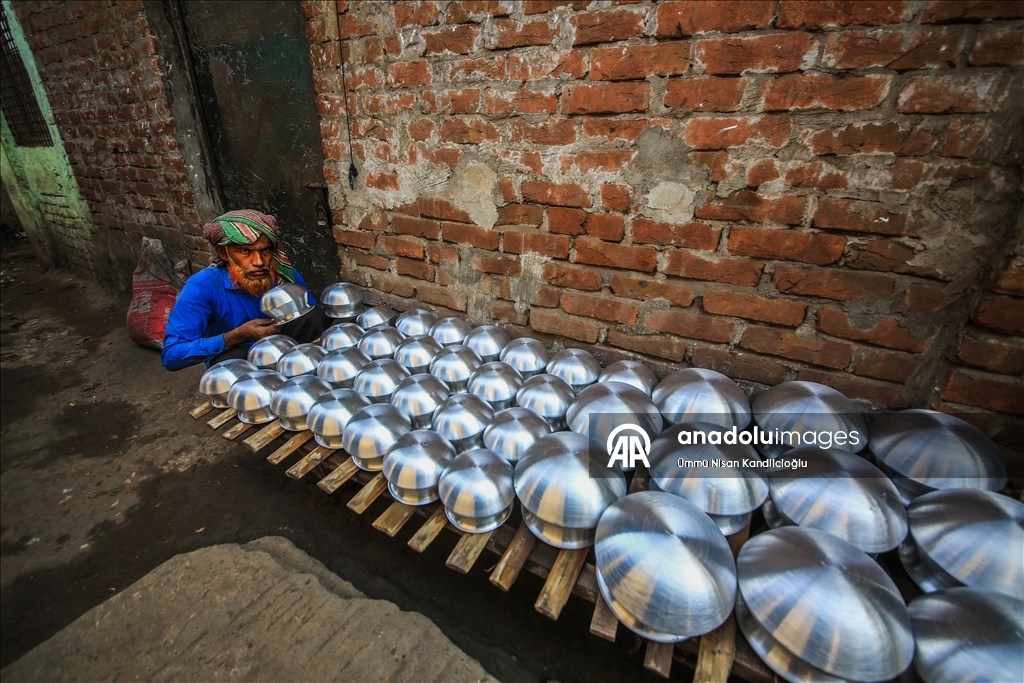
DHAKA, BANGLADESH - DECEMBER 15: A man is seen with aluminum cookware produced through recycling in Dhaka, Bangladesh, where most aluminum production relies on melting scrap household items, window frames, and engine parts in small workshops, on December 15, 2025. The lightweight and low-cost pots, pans, cauldrons, and water containers are widely used, with production and sales largely based on family labor. Women and children transport the aluminum goods to markets and streets, while workers in small-scale workshops face health risks due to high temperatures and a lack of protective equipment. ( Ümmü Nisan Kandilcioğlu - Anadolu Agency )
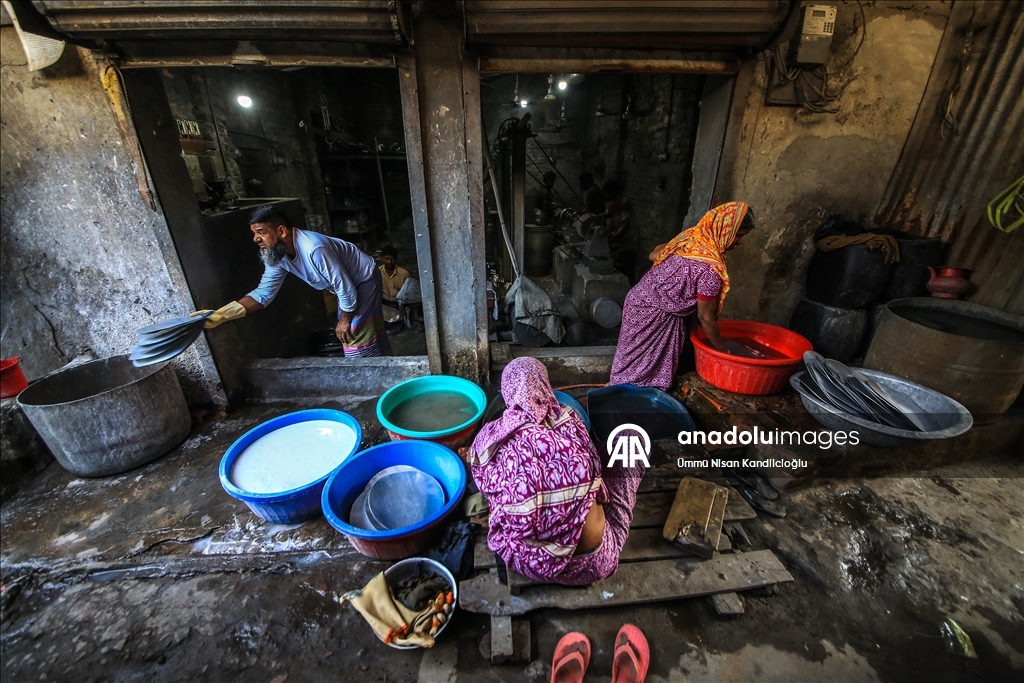
DHAKA, BANGLADESH - DECEMBER 15: People are seen working to produce aluminum cookware through recycling in Dhaka, Bangladesh, where most aluminum production relies on melting scrap household items, window frames, and engine parts in small workshops, on December 15, 2025. The lightweight and low-cost pots, pans, cauldrons, and water containers are widely used, with production and sales largely based on family labor. Women and children transport the aluminum goods to markets and streets, while workers in small-scale workshops face health risks due to high temperatures and a lack of protective equipment. ( Ümmü Nisan Kandilcioğlu - Anadolu Agency )
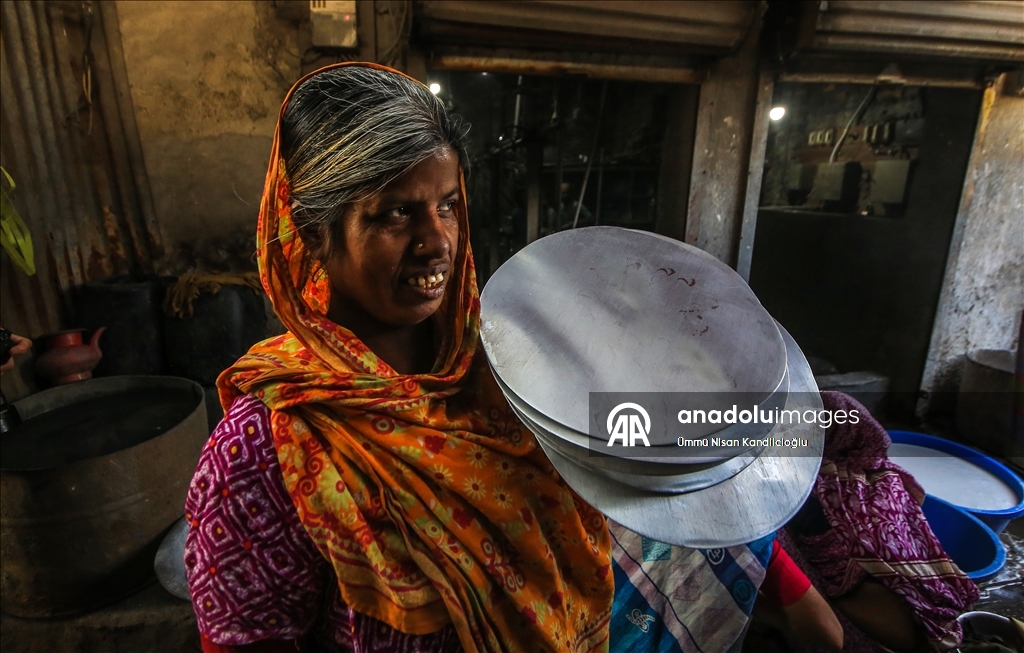
DHAKA, BANGLADESH - DECEMBER 15: People are seen working to produce aluminum cookware through recycling in Dhaka, Bangladesh, where most aluminum production relies on melting scrap household items, window frames, and engine parts in small workshops, on December 15, 2025. The lightweight and low-cost pots, pans, cauldrons, and water containers are widely used, with production and sales largely based on family labor. Women and children transport the aluminum goods to markets and streets, while workers in small-scale workshops face health risks due to high temperatures and a lack of protective equipment. ( Ümmü Nisan Kandilcioğlu - Anadolu Agency )
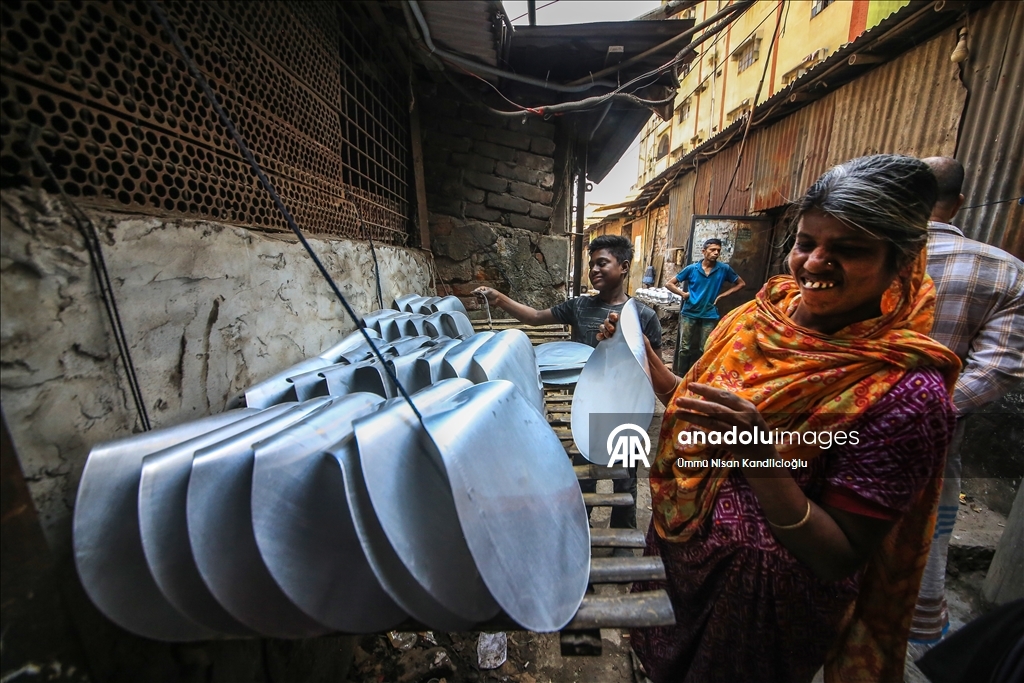
DHAKA, BANGLADESH - DECEMBER 15: People are seen working to produce aluminum cookware through recycling in Dhaka, Bangladesh, where most aluminum production relies on melting scrap household items, window frames, and engine parts in small workshops, on December 15, 2025. The lightweight and low-cost pots, pans, cauldrons, and water containers are widely used, with production and sales largely based on family labor. Women and children transport the aluminum goods to markets and streets, while workers in small-scale workshops face health risks due to high temperatures and a lack of protective equipment. ( Ümmü Nisan Kandilcioğlu - Anadolu Agency )
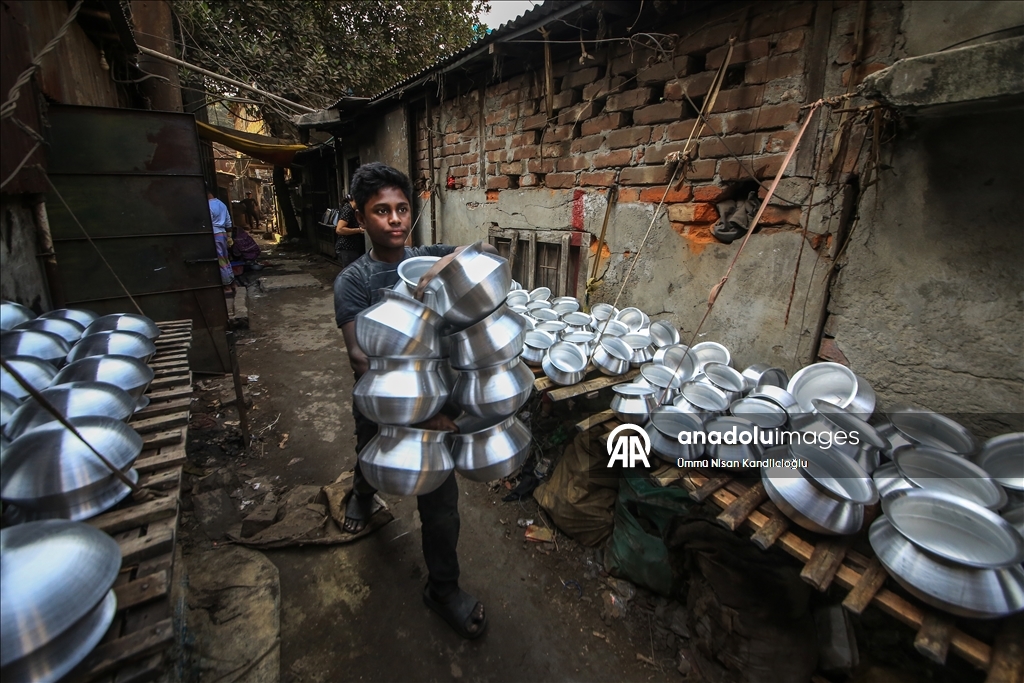
DHAKA, BANGLADESH - DECEMBER 15: A young boy carries bundles of aluminum cookware produced through recycling in Dhaka, Bangladesh, where most aluminum production relies on melting scrap household items, window frames, and engine parts in small workshops, on December 15, 2025. The lightweight and low-cost pots, pans, cauldrons, and water containers are widely used, with production and sales largely based on family labor. Women and children transport the aluminum goods to markets and streets, while workers in small-scale workshops face health risks due to high temperatures and a lack of protective equipment. ( Ümmü Nisan Kandilcioğlu - Anadolu Agency )
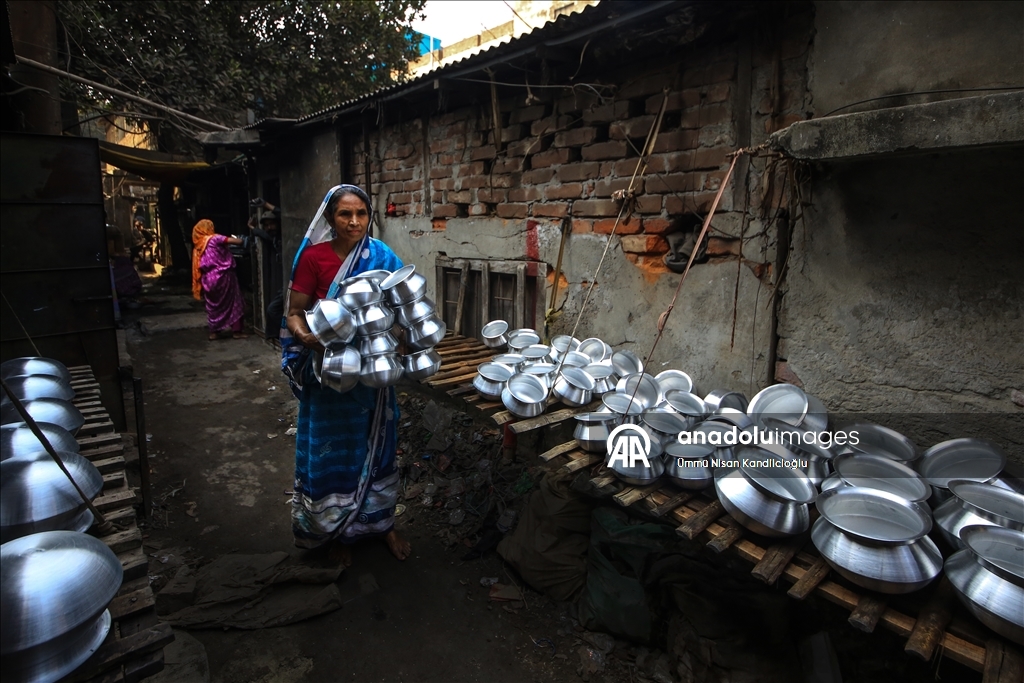
DHAKA, BANGLADESH - DECEMBER 15: A woman carries bundles of aluminum cookware produced through recycling in Dhaka, Bangladesh, where most aluminum production relies on melting scrap household items, window frames, and engine parts in small workshops, on December 15, 2025. The lightweight and low-cost pots, pans, cauldrons, and water containers are widely used, with production and sales largely based on family labor. Women and children transport the aluminum goods to markets and streets, while workers in small-scale workshops face health risks due to high temperatures and a lack of protective equipment. ( Ümmü Nisan Kandilcioğlu - Anadolu Agency )
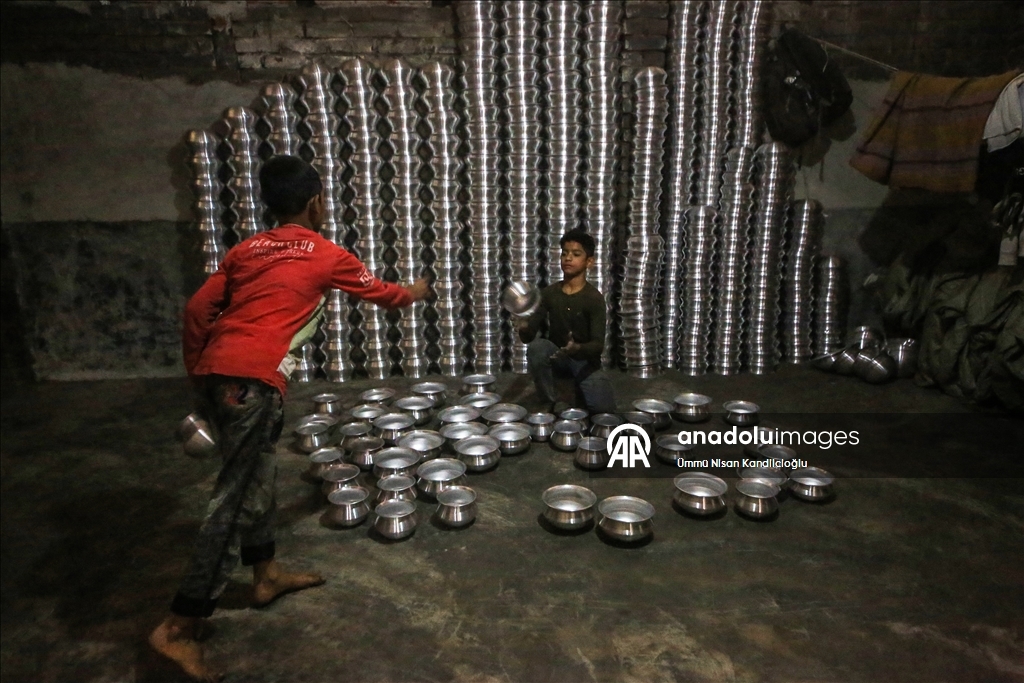
DHAKA, BANGLADESH - DECEMBER 15: Children arrange aluminum cookware produced through recycling in Dhaka, Bangladesh, where most aluminum production relies on melting scrap household items, window frames, and engine parts in small workshops, on December 15, 2025. The lightweight and low-cost pots, pans, cauldrons, and water containers are widely used, with production and sales largely based on family labor. Women and children transport the aluminum goods to markets and streets, while workers in small-scale workshops face health risks due to high temperatures and a lack of protective equipment. ( Ümmü Nisan Kandilcioğlu - Anadolu Agency )
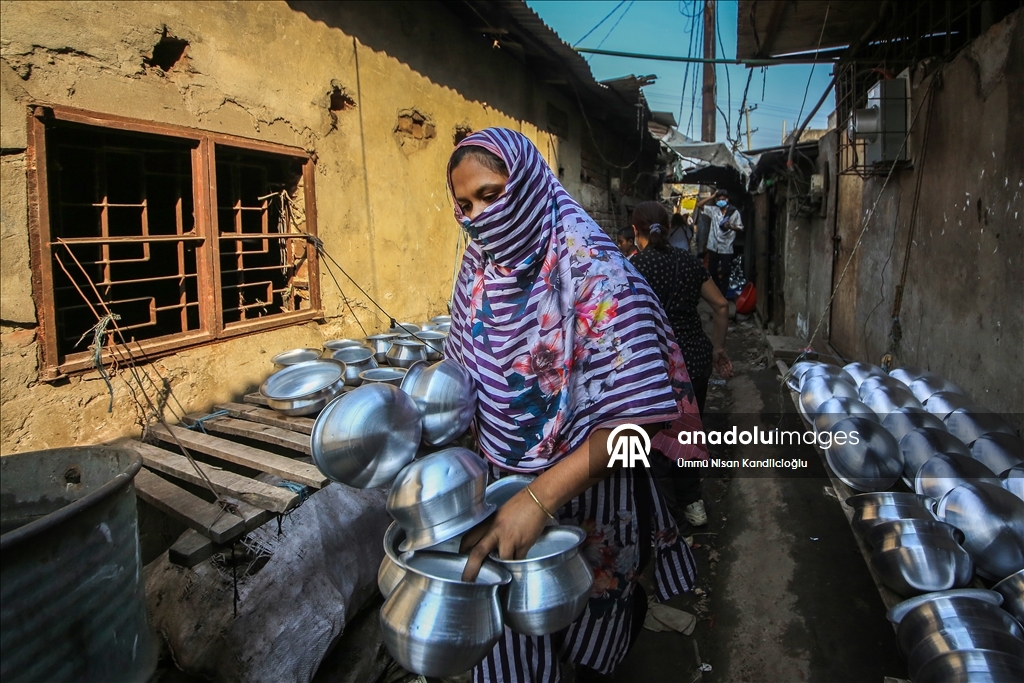
DHAKA, BANGLADESH - DECEMBER 15: A woman carries bundles of aluminum cookware produced through recycling in Dhaka, Bangladesh, where most aluminum production relies on melting scrap household items, window frames, and engine parts in small workshops, on December 15, 2025. The lightweight and low-cost pots, pans, cauldrons, and water containers are widely used, with production and sales largely based on family labor. Women and children transport the aluminum goods to markets and streets, while workers in small-scale workshops face health risks due to high temperatures and a lack of protective equipment. ( Ümmü Nisan Kandilcioğlu - Anadolu Agency )
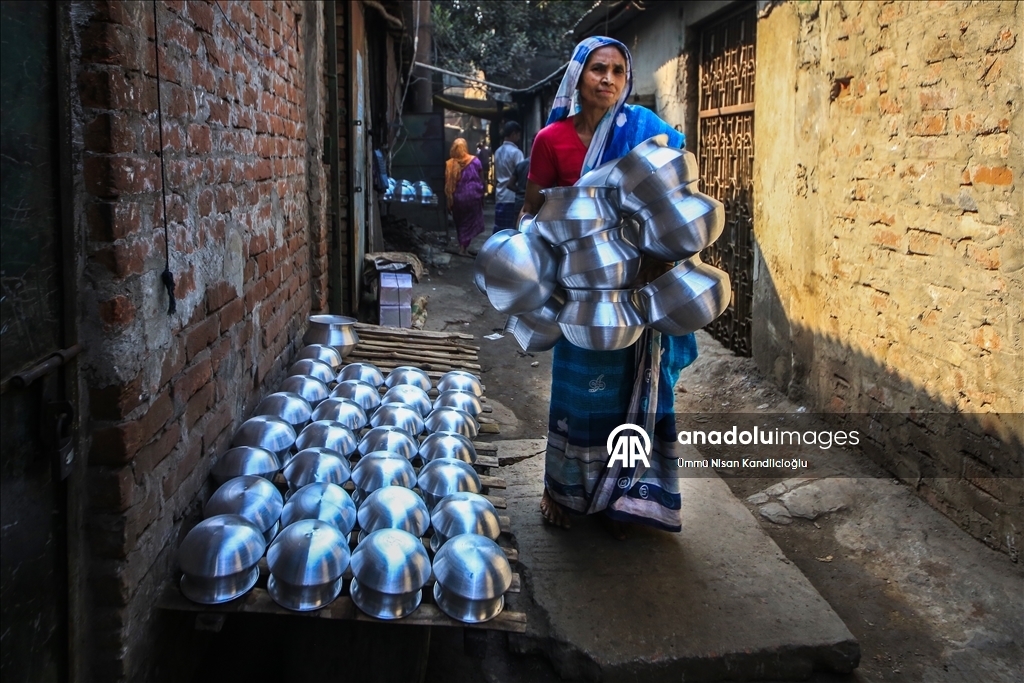
DHAKA, BANGLADESH - DECEMBER 15: A woman carries bundles of aluminum cookware produced through recycling in Dhaka, Bangladesh, where most aluminum production relies on melting scrap household items, window frames, and engine parts in small workshops, on December 15, 2025. The lightweight and low-cost pots, pans, cauldrons, and water containers are widely used, with production and sales largely based on family labor. Women and children transport the aluminum goods to markets and streets, while workers in small-scale workshops face health risks due to high temperatures and a lack of protective equipment. ( Ümmü Nisan Kandilcioğlu - Anadolu Agency )
Trending



Follow us on Instagram for the most striking images from the very center of life in the air and the land, in Turkey and the rest of the World.