OPINION - From Hormuz to Anatolia: How Development Road matters in a turbulent Middle East?
Development Road project is not merely a transport initiative but a strategic land corridor with the potential to reshape global supply chains and produce long-term effects on regional power balances, trade volumes, and security architecture
The author is a political scientist with a Ph.D. in Political Science and International Relations at the University of Vienna.
ISTANBUL
Ongoing conflicts in the Middle East once again demonstrate that global trade and energy flows are heavily dependent on a few strategic chokepoints. The global order is being reshaped not only through power balances but also through trade routes, financial infrastructures, and strategic connectivity networks. In this context, the risks emerging around the Strait of Hormuz, one of the world's most critical energy transit points, should push regional actors to reconsider alternative trade and connectivity corridors.
The Strait of Hormuz: Economic front of war
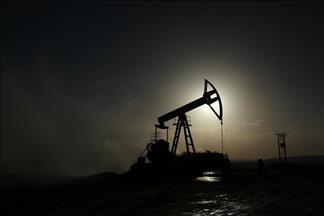
Recent developments in the Strait of Hormuz highlight the fragility of the global economy. US and Israeli strikes against Iran have not only escalated military tensions but have also caused a significant contraction in one of the world's most vital trade arteries. Although Iran has not officially declared a closure of the strait, it has severely restricted transit. Under normal conditions, hundreds of vessels pass through daily, accounting for roughly 20% of global oil trade. The drop in traffic to near-zero levels for weeks underscores the severity of the situation.
This demonstrates that wars are not confined to battlefields; they also extend into economic and logistical networks, affecting the entire world. Disruptions in this crucial route — particularly for energy transportation — have the potential to trigger chain reactions in global oil and natural gas markets, a process that has already begun. Rerouting ships and the inability to transport certain cargo signal further strain on global supply chains.
Moreover, Iran's potential retaliatory actions and restrictions on transit have deepened uncertainty in the region, exacerbating the risk of an oil crisis. This uncertainty complicates not only trade but also regional economic planning. Ultimately, the decline in activity in the Strait of Hormuz reveals how delicately balanced the global system truly is.
The strategic importance of Development Road
The Development Road Project is a multimodal transportation and logistics corridor planned to extend from the Port of Al-Faw in the Basra Gulf through Iraq to Türkiye, and onward to Europe. The project aims to establish a new connection between the Gulf and Europe through an extensive infrastructure network that includes railways, highways, and logistics hubs.
This corridor is not merely a commercial transport project; it also aims to strengthen Iraq's integration into the regional economy and to diversify the geography of energy and trade flows in the Middle East. At a time when dependence on maritime chokepoints is increasing, the Development Road's potential to provide a land-based alternative makes it a significant element of regional geopolitics. While it cannot fully replace the Strait of Hormuz in terms of energy transport, strengthening land and rail connections can enhance the resilience of regional economic systems by diversifying trade networks.
Türkiye's geopolitical position
By connecting the Basra Gulf to Europe via Türkiye, the project has the potential to transform the country into a major transit hub in global trade networks.
Considering Türkiye's existing position within the Middle Corridor, energy transit routes, and regional logistics systems, the Development Road could further reinforce its geopolitical significance. This would not only bring economic gains but also create new opportunities in regional diplomacy and energy policy.
Additionally, the project could contribute to Iraq's economic reconstruction, with important implications for regional stability. Transforming Iraq from an economy heavily dependent on energy exports into a trade and logistics hub could redefine its geopolitical role.
A new arena of geoeconomic competition
However, the implementation of the Development Road Project will not be easy. Political instability in Iraq, financing challenges, and regional competition remain major obstacles. Competing initiatives such as China's Belt and Road Initiative and the India–Middle East–Europe Corridor also present alternative frameworks within the same geography.
Nevertheless, the strategic vision behind the Development Road remains highly significant and establishing alternative trade and transport routes is no longer purely an economic matter but also a component of security policy.
For this reason, the Development Road should be seen not only as a new logistics corridor but also as a reflection of an emerging strategic mindset reshaping the geopolitical landscape of the Middle East. While the Strait of Hormuz will remain a critical chokepoint in the global energy system, a new land corridor extending from Basra to Anatolia may signal long-term shifts in regional trade and power dynamics.
The impact of Iraq's internal dynamics on the project
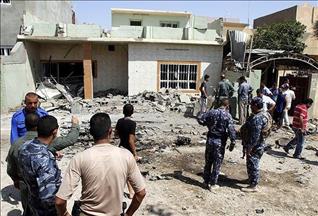
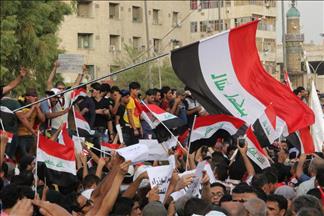
Since 2003, Iraq has struggled to resolve issues of political legitimacy, which remains a core driver of instability. External interventions, military coups, and sectarian and ethnic-based politics have hindered the development of a strong civilian political culture. The influence of Shiite religious leadership, Kurdish autonomy demands, and weak state capacity have deepened internal fragmentation. Furthermore, governments' inability to effectively utilize economic potential has exacerbated unemployment and infrastructure problems, weakening state legitimacy.
Relations between the Iraqi central government and the Iraqi Kurdish Regional Government (KRG) represent one of the most critical dimensions of these internal dynamics. Disputes over customs revenues, border control, and oil resources have created a persistent power struggle. Therefore, lasting stability in Iraq requires cooperation and compromise between these actors.
Out of the crisis: Development Road
The Development Road Project is a crucial initiative that must be realized, particularly by overcoming the internal challenges within Iraq. As a land-based project, it is not an alternative to maritime routes but a complementary one, capable of sustaining trade flows during times of crisis.
It is essential for Iraq's internal actors to adopt a constructive perspective and clear direction regarding the project, and for all stakeholders to act collectively and decisively. The project should be implemented.
By connecting the energy resources of Gulf countries and Asian markets to Europe, the project aims to establish a high-capacity, uninterrupted transportation corridor between the logistics hubs of the Middle East and the production and consumption centers of Europe. In this sense, the Development Road is not merely a transport initiative but a strategic land corridor with the potential to reshape global supply chains and produce long-term effects on regional power balances, trade volumes, and security architecture.
*Opinions expressed in this article are the author's own and do not necessarily reflect Anadolu's editorial policy.