Hazel Belkıs Belge
14 June 2026•Update: 14 June 2026
The International Committee of the Red Cross (ICRC) has warned that thousands of Palestinians believed to be buried beneath Gaza's rubble may never be identified, as recovery efforts continue to face major obstacles, according to a report by The Guardian.
The report said rescue and recovery operations remain slow despite a fragile US-brokered ceasefire that took effect in October, while the passage of time is increasing the likelihood that human remains will deteriorate beyond recognition.
"There is no doubt that these bodies could soon become difficult to identify," Pat Griffiths, the Red Cross spokesperson in Jerusalem, said. "The longer it takes for human remains to be recovered, the more difficult it can be to identify them. The longer the deceased lie beneath the rubble, the more likely they will be in advanced stages of decomposition – even skeletonised – when eventually recovered."
He added: "Forensic experts lose access to circumstantial evidence that can be used to corroborate their identity."
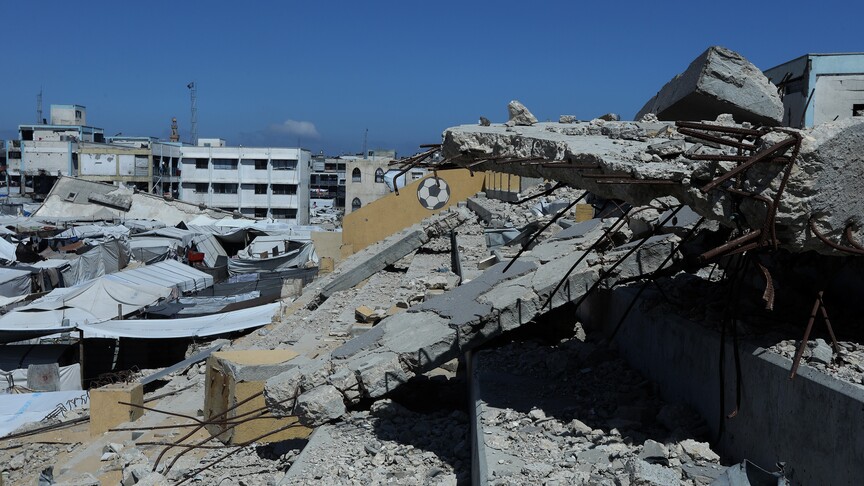
Palestinians have begun searching through an estimated 61 million tons of debris accumulated during the war. Health officials in Gaza estimate that at least 10,000 people remain buried beneath the rubble, while some experts believe the number could be as high as 14,000.
The newspaper reported that rescue teams have largely relied on basic tools, including shovels, pickaxes, wheelbarrows, rakes and hoes, as well as their bare hands, to retrieve remains.
Repeated requests to allow the entry of excavators and other heavy machinery needed to accelerate recovery efforts have not received approval.
"Search and recovery teams need access to all sites where human remains are thought to be located," Griffiths said. "We know that much of this machinery and equipment remains almost impossible to bring into Gaza right now. And it remains our call, and part of our ongoing direct dialogue with the relevant authorities, to allow the entry of these items and equipment into Gaza."
Israeli officials contacted by The Guardian said there was no approval to bring equipment used to recover bodies into Gaza.
The Red Cross said prolonged delays could undermine future identification efforts, as environmental conditions, displacement of remains and the loss of personal belongings may erase critical forensic evidence.
"We see the scale of the task and we see what’s at stake. Thousands of families are still seeking answers in this way. That’s what at stake: their right to know the fate of those they love," Griffiths said.