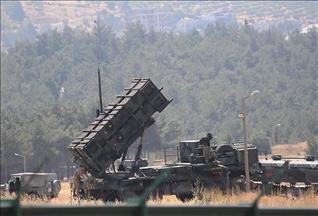
- Experts say Israel is urging Washington to sustain any military operation long enough to inflict maximum damage
- ‘When and if an operation begins, Israel will want the US to go for broke,’ says Rob Geist Pinfold, international security expert at King’s College London
ISTANBUL
As tensions between Washington and Tehran intensify, analysts say Israel is pushing for aggression against Iran while relying heavily on US military power due to its own defense deficiencies.
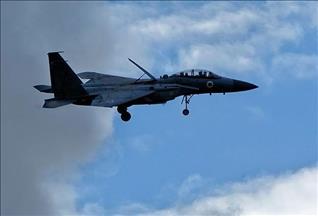
Washington has significantly reinforced its military presence in the region, deploying the USS Abraham Lincoln carrier strike group and sending the USS Gerald R. Ford toward the Middle East alongside additional fighter jets. The buildup comes as US and Iranian officials prepare to meet in Geneva for another round of talks on Tehran’s nuclear program.
Last week, US President Donald Trump said it would soon become clear whether a deal is possible, warning Washington could escalate if diplomacy fails.
Against this backdrop, analysts say Israel is gunning for decisive US action.
“If the US does strike Iran, the Israelis will likely cheer them on and advocate for the operation continuing as long as possible to do the maximum damage,” Rob Geist Pinfold, a lecturer in international security at King’s College London, told Anadolu.
“In short, when and if an operation begins, Israel will want the US to go for broke,” he said.
The analyst added that, despite years of lobbying for tougher measures against Iran, Israel is not currently pushing for an immediate strike.
“The Israelis are now in a strange position where the US is being more hawkish than they are,” Pinfold said.
He emphasized that Israel’s hesitation reflects a lack of preparedness rather than a change in strategic outlook: “This is not because of a strategic or ideological pivot, but because they feel like they aren’t ready for this kind of operation yet.”
According to the analyst, Israel’s missile defense stocks remain depleted following last year’s 12-day war with Iran, while its military focus has been stretched across multiple fronts.
‘Any campaign will be destructive for Israel’
Even if Israel does not initiate hostilities, analysts say it is unlikely to remain on the sidelines if the US attacks Iran.
Last week, Israeli media reported Prime Minister Benjamin Netanyahu instructed rescue agencies and the Home Front Command to prepare for a potential war with Iran.
Tehran has repeatedly warned it would retaliate against any US strike by targeting Israel, so Tel Aviv has “no incentive or desire to stay away,” said Pinfold.
Ahron Bregman, an Israeli political analyst, said that while US forces may focus on nuclear facilities, Israel would likely target Iran’s missile systems and production capacity.
“If Israel does engage in the conflict, it is almost certain that Iran will retaliate against Israel.”
He warned the cost would be high: “The Iranians are right that any campaign will be destructive for Israel; there will be many civilian casualties, particularly if this is a prolonged campaign.”
Israel’s defensive limits
Israel remains one of the world’s top 20 military powers, according to Global Firepower, with highly advanced air, land and naval capabilities.
If conflict erupts, analysts expect Israel to follow a strategy similar to last year’s confrontation with Iran: strengthening civil defense and missile interception while conducting targeted strikes on pre-identified Iranian assets.
Pinfold said this would involve bolstering home-front resilience alongside precision attacks inside Iran.
Bregman emphasized the role of Israel’s multi-layered missile defense system.
“This defense system includes the Iron Dome, which intercepts short-range threats; David’s Sling, which addresses medium-range threats; and the Arrow systems, which are aimed at long-range ballistic missiles.”
However, he cautioned that even advanced defenses cannot guarantee complete protection.
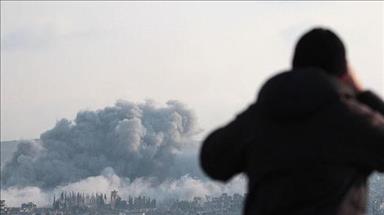
During a recent visit to Israel, Bregman said he witnessed “immense damage caused by missiles that had landed during previous conflicts with Iran,” noting that while many projectiles may be intercepted, some will inevitably penetrate defenses.
Deep skepticism toward diplomacy
Analysts say Israeli leaders across the political spectrum remain deeply skeptical of diplomacy with Iran.
According to Pinfold, Israeli officials – “both pro- and anti-Netanyahu politicians” – distrust diplomatic solutions.
“Israel’s leaders were united in their opposition to the Joint Comprehensive Plan of Action (JCPOA) which they saw as a bad deal, so they now have no faith that the US can deliver a better result today, even though Iran is theoretically weaker and more isolated than ever,” he said.
Bregman pointed out that Iran is one of the few issues that commands broad consensus in Israeli society.
“What matters here is perception: even though a war will be costly for Israel, most Israelis feel like there is no other alternative than to throw their lot in with the US, especially given that Iran will attack Israel.”