- Britain has pivoted from an initial refusal of base access to a state of deep logistical and kinetic integration
- ‘Enabling a campaign is a form of participation, whatever the Downing Street language suggests,’ says AOAV director Iain Overton
LONDON
British bases are hosting US bombers, RAF fighters are intercepting Iranian drones, and the UK is seeking to play a role in reopening the Strait of Hormuz – yet the government insists Britain is not fighting a war against Iran.
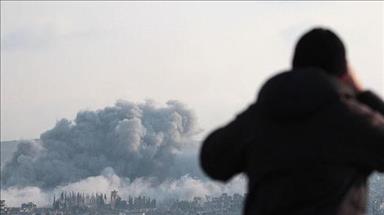
Since the high-intensity US-Israeli campaign began on Feb. 28, the UK has pivoted from an initial refusal of base access to a state of deep logistical and kinetic integration.
“While taking the necessary action to defend ourselves and our allies, we will not be drawn into the wider war,” Starmer said on Monday, adding that the UK government will continue to work toward ending the fighting.
But Britain’s expanding role in the conflict has prompted growing debate over whether that distinction is becoming increasingly difficult to sustain.
For Iain Overton, executive director of Action on Armed Violence (AOAV), the gap between political messaging and military reality is widening.
“On the question of whether the UK is in a war, the honest answer is: politically, ministers are trying very hard to say ‘no.’ Operationally, it looks increasingly like ‘yes,’ in all but name,” Overton told Anadolu.
The ‘defensive’ argument
The government’s legal position rests on a nuanced distinction: Britain did not participate in the initial US-Israeli strikes on Iranian leadership targets and missile infrastructure, which UN officials and some legal experts suggest violated the prohibition on the use of force.
However, on the day the strikes began, Starmer also said the UK had planes “in the sky.”
Following retaliatory strikes on March 1, London authorized the use of British military assets for what Starmer described as “specific and limited defensive purposes.”
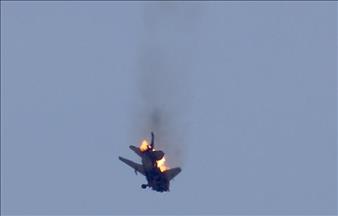
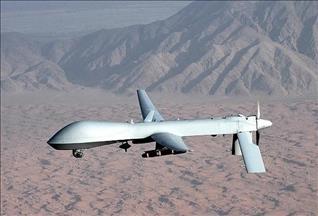
This included the deployment of additional RAF Typhoon fighter jets to intercept Iranian drones over Jordan and Iraq.
British territory has also become a logistical hub for allied operations. The Royal Air Force (RAF) Fairford base has hosted US B-52 and B-1 bombers, while the US-UK base on Diego Garcia in the Indian Ocean has supported long-range strikes on Iranian missile facilities.
RAF Akrotiri, a major British air base in the Greek Cypriot Administration, has also played a particularly central role. Even before the conflict escalated, the UK deployed six F-35 fighter jets to the base in early February.
Energy Secretary Ed Miliband on Sunday also confirmed that Britain was considering sending naval vessels and mine-hunting drones to the region to help secure the Strait of Hormuz, a critical global energy corridor.
In legal terms, the government argues that such actions fall short of direct participation in the war.
“In the narrow sense of formal co-belligerency, the government can argue Britain is not at war if UK forces are not conducting offensive strikes and if any interceptions are framed as self-defense,” Overton said.
“But the moment the UK provides bases, logistics, intelligence and air-defense cover that make allied strikes possible, Britain is no longer a bystander,” he added.
Blurring the lines
Legal scholars and security analysts say the distinction between defensive support and participation in hostilities is increasingly difficult to maintain in modern warfare.
“Entering the theater of conflict and shooting down Iranian drones and missiles that are unlawfully targeting regional allies may be laudable. But in a sense, doing so already makes the UK a party to the conflict – at least the conflict between Iran and those regional states – however defensive the UK’s role may be,” Marc Weller, an expert in international law, argued in an article published by Chatham House.
The legal ambiguity is compounded by the growing integration of British assets into the broader US campaign.
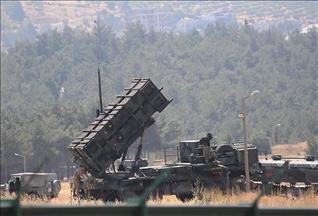
While the Royal Navy does not currently have a full carrier strike group deployed in the region, its contributions – including Wildcat helicopters armed with Martlet missiles – are essential nodes in the US-led coalition.
“Under the laws of armed conflict, lawyers disagree on exactly where that threshold lies,” Overton said. “But the direction of travel seems pretty damn clear: enabling a campaign is a form of participation, whatever the Downing Street language suggests.”
Mediterranean launchpad
The debate has become especially sensitive in the Greek Cypriot Administration, where Britain maintains two sovereign military bases dating back to the end of colonial rule.
RAF Akrotiri, located near Limassol, has become one of the main staging grounds for allied air operations in the region.
On March 1-2, the base was targeted by an Iranian-made Shahed drone, highlighting the risks associated with its role in the conflict.
The incident strengthened London’s legal argument that it was acting in self-defense under Article 51 of the UN Charter. But it also confirmed that Tehran now views British facilities as a legitimate target.
The use of Akrotiri has triggered local protests, with demonstrators in Nicosia accusing Britain of exposing the island to retaliation without consulting local authorities.
For Starmer, the reliance on legalisms may be a tool for domestic management, but it offers little protection against regional escalation.
"That legalistic posture is politically familiar, especially from someone like Starmer,” Overton said. “It is how governments try to manage domestic consent while keeping Washington close.”
“Yet it is also precarious,” he added. “Once your territory is being used as a launchpad, and your assets are actively engaged in ‘defensive’ shoot-downs, your adversary is unlikely to respect the semantic distinction.”
Questions over British capability
Even if the government were willing to expand Britain’s involvement, analysts say the country’s military capacity would impose practical limits.
Matthew Savill, director of military sciences at the Royal United Services Institute (RUSI), said the conflict has renewed scrutiny of the UK’s defense posture.
According to him, the size of Britain’s armed forces would make large-scale participation in a war with Iran difficult, even aside from potential policy disagreements with Washington.
The escalation in the Middle East, he argued, has also reopened debate about Britain’s broader relevance in international affairs.
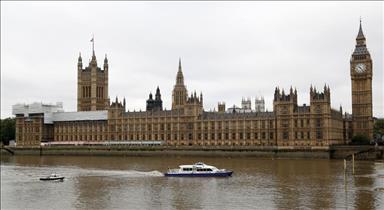
A report by the House of Commons Defense Select Committee last year warned that the UK has “no plan for defending the homeland” and is failing to adequately prepare for rising global threats.
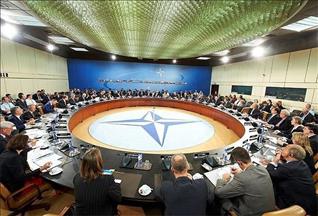
Although the UK remains one of Europe’s leading military powers, the committee said its ability to sustain that position is under pressure, citing challenges facing NATO and growing security threats from countries such as China, Iran and North Korea.
Britain currently spends around 2.3-2.4% of GDP on defense – comfortably above NATO’s longstanding 2% target but below frontline states such as Poland, Estonia and the US.
Savill said calls for Britain to take a larger role in the conflict may continue to grow, but the government would face difficult choices about resources and strategic priorities.
In practice, he suggested, Britain’s involvement is likely to remain limited by the capabilities of its armed forces.
The debate has also spilled into domestic politics, with figures from both the right and left arguing that Britain should avoid being drawn into another Middle Eastern conflict.
“We cannot get involved directly in another foreign war. We don’t have a navy,” said Nigel Farage, leader of the far-right Reform UK party. “We can’t even defend our own military base.”
In terms of public opinion, a YouGov poll from March 9 found 59% of respondents opposed the military action the US took on Iran compared to 25% of people who said they support it.