- 'Decision made by new leadership sets a very worrying precedent and raises real questions about their fidelity to how Human Rights Watch does its work,' says Shakir
- 'The organization was unwilling to call for the right of return out of concerns that they would be seen as challenging the Jewishness of the Israeli state,' argues the Stanford alumnus
ISTANBUL
A senior official at Human Rights Watch (HRW) has resigned, saying the organization's decision to halt publication of a report on Palestinian right of return sets a “very worrying precedent” and raises concerns about commitment to its founding principles.
Omar Shakir, who served as the rights group’s Israel-Palestine director, said he stepped down after leadership blocked the fully vetted report that deemed Israel's denial of Palestinian refugees' right of return a crime against humanity.
"I resigned over the executive director's decision to halt the publication of a report on the right of return for Palestinian refugees and his continued refusal to publish it in a principled way," the former HRW researcher told Anadolu in a video interview.
Shakir, who had been working for HRW for the past 10 years, said the unpublished report had already cleared the New York-based advocacy group's vaunted review procedures.
"It was translated, coded to the website, set to be released and the decision was made without a basis in fact and law to pull this report from publication on the eve of its release," he said.
Along with Shakir, the program's assistant researcher, Milena Ansari, also stepped down in protest.
The resignations come at a time when HRW’s new executive director, Philippe Bolopion, whom Shakir has cited as being responsible for blocking the report, begins his tenure.
"This was a decision made by a new leadership that I think really sets a very worrying precedent and raises real questions about their fidelity to how Human Rights Watch does its work," said Shakir.
Palestinians' right to return
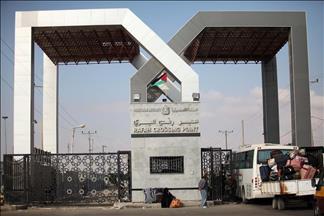
The report terms Israel’s decades-long refusal to allow Palestinian refugees to return to their homes as a “crime against humanity” under international law.
More than 700,000 Palestinians were expelled or forced to flee their homes during the 1948 war, the events which are referred as the Nakba, or "catastrophe" in Arabic.
Shakir, a Stanford alumnus, called the right of return as "a basic principle of international law enshrined in foundational human rights treatises reaffirmed by the International Court of Justice, set up by Human Rights Watch and numerous publications."
He explained that the crime against humanity determination against Israel is based on a similar finding that HRW had reached in the context of the forced displacement of Chagossian people by the UK and US governments in Chagos Islands in 2023, and has also made in several other publications.
According to him, the methodology in his report is consistent with similar publications including interviews with dozens of refugees and visits to the refugee camps and none of the arguments withstand scrutiny.
He added that the organization's leadership did not allow revisions or resubmission.
"In light of this decision and the continued unwillingness of the organization to allow us to even make edits to the report and put it back in the system, I felt I could no longer continue to represent and serve the organization." He said the move reflected the new leadership's "lack of fidelity to the organization's founding values."
According to Shakir, the HRW has not put in writing the reasons for its decision to halt the publication of the report, and that it just recently conveyed orally that concerns centered mainly on legal findings.
“But of course, this doesn't withstand scrutiny," he said.
Israeli objections
Israeli officials and supporters have long rejected the Palestinian right of return, arguing that allowing millions of refugees and their descendants to return would alter the country’s demographic balance and threaten its identity as a Jewish-majority state.
Shakir said those concerns shaped internal discussions.
“In the end, my months-long engagement with the organization made very clear that the organization was unwilling to in essence call for the right of return in this particular way out of concerns that they would be seen as challenging the Jewishness of the Israeli state.”
Other concerns wanted the report to focus on displacements after October 2023, when Israel launched a war in the Gaza Strip, rather than on Palestinian expulsion during the Nakba. HRW confirmed in December 2024 that Israel, by depriving adequate access to water, was committing genocide in the Palestinian territory.
"Some are also concerned about the focus on refugees in light of the genocide and atrocities happening in the occupied Palestinian territory and failed to sort of understand the holistic nature of the assault on refugee status from the emptying of camps in the West Bank to erasure of camps in Gaza to the attacks on UNRWA," he said.
Shakir said the staffers failed to understand the urgency of using the denial of return over many years and decades as a cautionary tale, highlighting the need to allow refugees to return not only to their homes in the occupied territory but also to the homes they were expelled from in 1948.
"This report offered an opportunity to open a pathway for justice for refugees through the crimes against humanity determination given the difficulty [in] ... pursuing what happened during 1948 and kind of lack of legal precedent," he said. "But here, a denied return is a crime against humanity offers a pathway for justice for refugees."
Ultimately, he believes, HRW thought the report "was potentially going to bring risk to the organization" and "decided not to publish" it.
'Constant scrutiny'
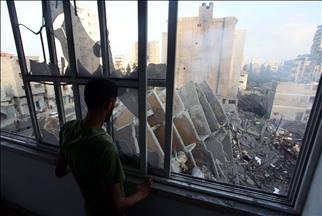
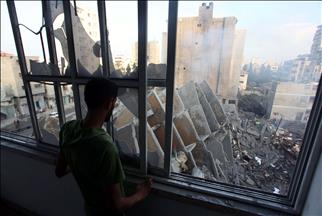
The HRW internal dispute highlights growing tensions within major rights groups as they face political pressure and closer scrutiny over their reporting on Palestine during Israel's assault in Gaza, which killed more than 71,000 Palestinians and reduced the enclave to rubble.
Shakir, a US citizen, said there were challenging moments for him while working for the Israel-Palestine program. He was based in Jerusalem before his expulsion in 2019. Israel had alleged he supported the boycott, sanctions and divestment (BDS) movement, a claim he and his employer denied.
"When you're the Israel-Palestine director at one of the world's most prominent organizations, there is constant scrutiny and pressure," he said. "There are attempts by different people in the organization to as a result of bias or cowardice or other reasons to try and manipulate the findings of the research."
He, however, said the review process at HRW always safeguarded the integrity of their work and ensured it was based on facts in law.
HRW response
In a statement to Anadolu, HRW said it received the resignations of two colleagues who worked on the draft report.
"The report in question raised complex and consequential issues. In our review process, we concluded that aspects of the research and the factual basis for our legal conclusions needed to be strengthened to meet Human Rights Watch’s high standards," the statement read.
It said that for this reason, the publication of the report was paused pending further analysis and research, and that the process is ongoing.
"Human Rights Watch has a long history of conducting strong, impactful research and advocacy on Israel-Palestine," the group said, "and we remain committed to this work."