Tarek Chouiref
22 May 2026•Update: 22 May 2026
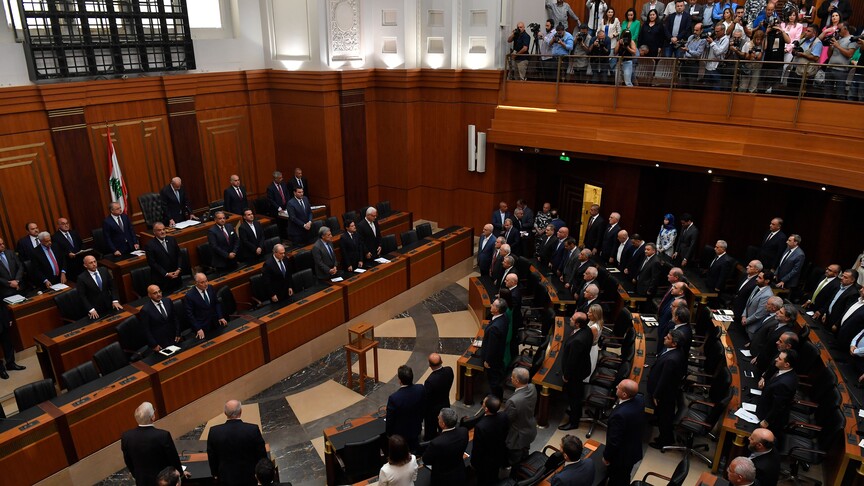
Hezbollah said Thursday that newly imposed US sanctions targeting members of its parliamentary bloc and Lebanese security officials were meant to boost Israel after what it described as failures in Lebanon.
In a statement, the group said the measures imposed by the US Departments of State and Treasury represented an attempt to intimidate “the free Lebanese people” and support Israeli actions against the country.
It said the sanctions were intended to give Israel a “political boost” after the failure of its actions to deter the Lebanese people from exercising their legitimate right to resistance.
The group said the sanctions would have “no practical impact” on its political choices or on the work of its officials.
It also said that targeting Lebanese officers on the eve of Lebanese-Israeli meetings at the Pentagon represented an attempt to intimidate official security institutions and subject the Lebanese state to US pressure.
The statement called on Lebanese authorities to defend the country’s constitutional, military and security institutions.
The Amal Movement led by Lebanese Parliament Speaker Nabih Berri also criticized the sanctions, calling them “unacceptable and unjustified.”
Earlier Thursday, the US Treasury Department imposed sanctions on nine individuals it said enabled Hezbollah to “undermine Lebanon’s sovereignty” and designated them “for obstructing the peace process in Lebanon and impeding the disarmament” of the group.
Those sanctioned included Hezbollah lawmakers Ibrahim al-Moussawi, Hussein Al-Hajj Hassan, Hassan Fadlallah and former minister Mohammed Fneish, along with Lebanese military and security officials accused by Washington of sharing “important intelligence” with Hezbollah.
The move comes amid continued Israeli attacks across Lebanon despite a US-mediated ceasefire that formally came into effect on April 17 and was later extended until the beginning of July.
Since March 2, Israel has carried out a large-scale offensive on Lebanon that has killed 3,073 people, wounded 9,362 others and displaced more than 1.6 million, about one-fifth of the country’s population, according to Lebanese officials.