WHO to begin trial of 2 Ebola therapeutics in Congo next week
French humanitarian doctor infected after returning from mission in Congo is 'well' with 'mild symptoms'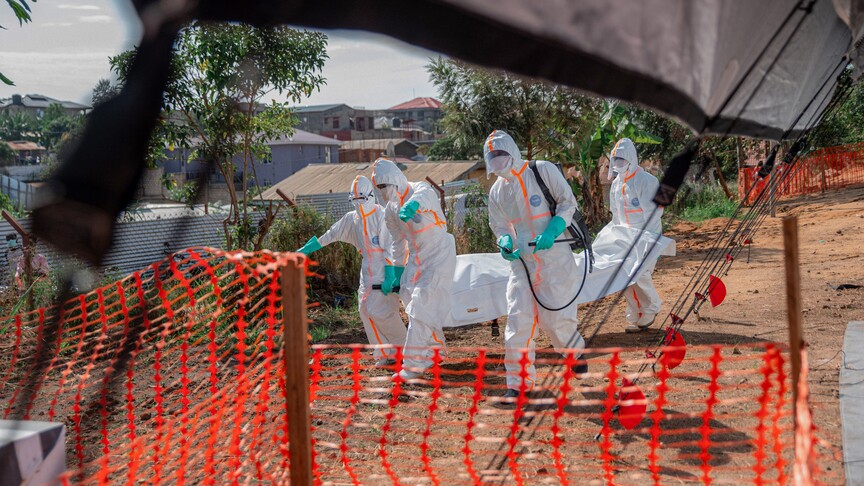
The World Health Organization (WHO) said on Wednesday that a clinical trial of two potential Ebola therapeutics will begin next week in the Democratic Republic of Congo, as the outbreak continues to spread despite an expanded response effort.
Speaking at a press briefing in Geneva, WHO Director-General Tedros Adhanom Ghebreyesus said preparations have been completed for the trial, which will evaluate whether the antivirals MBP134 and remdesivir can reduce mortality among patients with Bundibugyo virus disease, either alone or in combination.
Tedros thanked the US and Gilead Sciences for donating doses for the study, adding that further details would be announced next week.
The trial will be conducted by a consortium including the Congo's National Institute for Biomedical Research, ALIMA, Oxford University and WHO.
The announcement came as France reported its first confirmed Ebola case involving a humanitarian doctor who returned from a mission in Congo after caring for an Ebola patient while working with the aid organization ALIMA.
"The patient is doing well, has mild symptoms, and fever," Abdirahman Mahamud, WHO’s director for health emergency alert and response operations, told reporters.
Mahamud said French authorities acted rapidly to identify and isolate the case, and that the WHO's assessment of the risk to France and the wider global population "remains low."
French health authorities said a full epidemiological investigation is underway to identify people who may have been in contact with the patient.
Those identified will be contacted by the regional health agency, placed under 21 days of home isolation and closely monitored during that period.
Tedros said the case serves as a reminder of the risks faced by frontline responders, noting that nearly 80 health workers have been infected during the outbreak.
According to the WHO, there are now 1,094 confirmed Ebola cases and 277 deaths in Congo.
Since the outbreak was reported five weeks ago, treatment capacity has increased from fewer than 10 beds to more than 500 across 19 health centers, while testing capacity has expanded from 30 tests a day in Kinshasa to more than 2,000 daily tests across nine laboratories in three provinces.
Despite the progress, Tedros warned that the outbreak continues to outpace the response amid funding shortages, security incidents, insufficient contact tracing and limited humanitarian access.
The Ebola outbreak, centered in the eastern province of Ituri, has spread to neighboring areas and prompted heightened surveillance in Uganda amid concerns over cross-border transmission.
Health officials have warned that the outbreak continues to pose a significant regional threat, particularly in areas affected by conflict, population displacement and weak healthcare infrastructure.
The current outbreak is being driven by the rare Bundibugyo strain of the Ebola virus, for which there is no approved vaccine. The disease causes severe hemorrhagic fever and spreads through direct contact with infected bodily fluids.