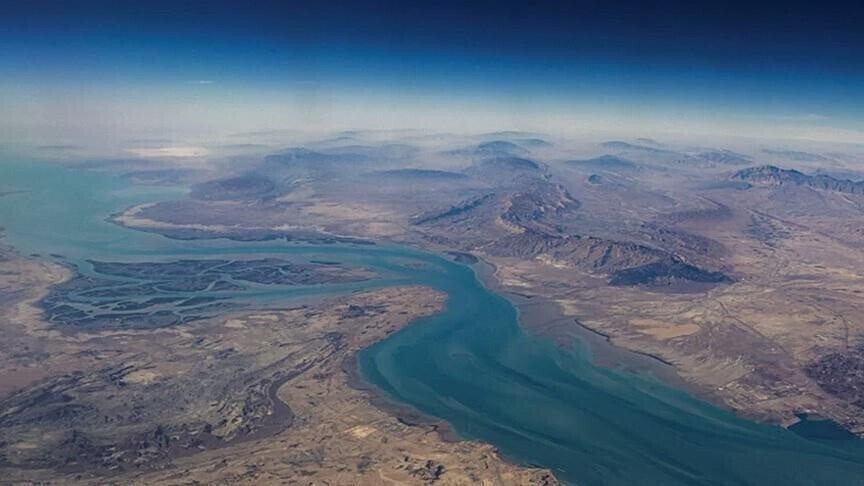
What was intended as a confidence-building measure to restore commercial shipping through the Strait of Hormuz has instead emerged as one of the most contentious provisions of the Iran-US memorandum of understanding (MoU), exposing sharply different visions in Washington and Tehran over the future governance of one of the world’s most strategic waterways.
Analysts say Article 5, which deals with freedom of navigation, demining and maritime security, deliberately left key political questions unresolved to secure the broader agreement. Those ambiguities, they warn, are now becoming one of the biggest obstacles to implementing the accord.
“Washington and Tehran attach very different meanings to Article 5,” Leonardo Jacopo Maria Mazzucco, a researcher who focuses on Gulf security affairs, told Anadolu.
The provision calls for the safe passage of commercial vessels through the Strait of Hormuz, including a 60-day period during which Iran would not charge transit fees while maritime security measures, including demining, are undertaken.
According to the Islamabad MoU, Iran will make arrangements using its “best efforts” to ensure the safe passage of commercial vessels through the Strait, free of charge for 60 days.
“The traffic of commercial vessels will immediately start, and considering the need for removing the technical and military obstacles, and de-mining by the Islamic Republic of Iran, will be instated within 30 days,” the agreement states.
Mazzucco said the clause reflects fundamentally different political objectives rather than a disagreement over shipping itself.
“For the US, the clause is best understood as laying the groundwork for future negotiations between Iran and its Gulf Arab neighbors on a shared framework for managing maritime traffic through the strait. From Washington’s perspective, those negotiations should take place on the basis of sovereign equality among all littoral states.”
Iran, however, interprets the agreement very differently.
“By contrast, Iran interprets the clause as a semi-formal acknowledgment by the US of Tehran’s primacy over the strait.
“That interpretation allows Iran to enter any future negotiations believing that Washington has already accepted a revision of the pre-conflict status quo and, by implication, Iran’s stronger bargaining position.”
Mazzucco argued that the wording of Article 5 itself is not the core problem.
“The more fundamental dispute concerns what each side believed the 60-day period was meant to achieve and what the long-term political end state should be.”
He noted that even as military tensions resumed, Iran continued negotiations through Omani mediation while combining diplomacy with calibrated naval pressure.
Another disputed element is the temporary suspension of transit charges for commercial shipping.
Mazzucco said the provision carries far greater political significance than economic value.
“Tehran interprets it as recognition that there can be no return to the pre-conflict status quo. In Iran’s view, the governance of the Strait of Hormuz has already entered a process of renegotiation, and the US has implicitly accepted that reality by agreeing to the temporary arrangement.”
He believes Washington sees the clause very differently.
“Washington would argue that the provision is a temporary confidence-building measure designed to facilitate negotiations, not an acknowledgment of Iranian primacy or of a fundamentally altered legal or political order in the strait.”
“The core disagreement, therefore, is not over the existence of negotiations but over the starting point from which those negotiations should proceed: Iran believes it is negotiating from a position of enhanced leverage, whereas the US sees Iran as one of several equal littoral states participating in a regional process.”
Seyed Emamian, an assistant professor in public policy and governance at Tehran Polytechnic University, also argued that the agreement does not oblige Iran to negotiate a permanent governance framework.
“Iranians have been committed not to charge any service fee within these 60 days only. We can find the word ‘only’ has been mentioned clearly in the text.”
He added that Iran intends to maintain its own arrangements in the strait rather than negotiate a permanent settlement.
Earlier, US President Donald Trump proposed imposing a 20% fee to protect shipping through the waterway before abandoning the idea a day later in favor of pursuing broader trade and investment agreements with Gulf states.
Article 5 also requires Iran to remove technical and military obstacles and carry out demining operations within 30 days.
Mazzucco said there is no public evidence that such efforts have begun.
“The US Navy deployed destroyers through the strait that could have supported preparations for mine-countermeasure operations, but there is no indication that a coordinated demining effort subsequently took place.”
Even if Iran fulfills its obligations, he said, restoring confidence among international shipping companies will require broader international involvement.
“Iran’s cooperation would be essential, particularly if minefield maps or other operational information were required. However, from the perspective of the international shipping industry, the involvement of Western naval forces and multinational maritime security arrangements would almost certainly be necessary to provide credible assurances that commercial traffic can safely resume.”
The agreement also assigns Oman a central diplomatic role, calling for Tehran to engage Muscat and other Gulf littoral states to discuss the future administration and maritime services of the strait in accordance with international law.
Mazzucco said Iran has sought to strengthen its negotiating position by maintaining pressure on commercial shipping while testing the resolve of the US and Gulf Arab states.
Washington, by contrast, has focused primarily on protecting freedom of navigation without outlining a broader vision for the strait’s long-term governance.
“However, Washington did not articulate a clear vision for the future governance of the strait beyond restoring navigational freedom. As a result, Oman remained the key intermediary responsible for facilitating discussions among Iran and the Gulf Arab states on what a sustainable post-crisis arrangement might look like.”
Emamian believes military pressure is unlikely to change the balance of power in the waterway: “There is no military solution for diluting Iranian control over the strait.”
news_share_descriptionsubscription_contact

contact_the_ombudsman
is_there_an_error_in_this_story