Burak Bir
14 April 2026•Update: 14 April 2026
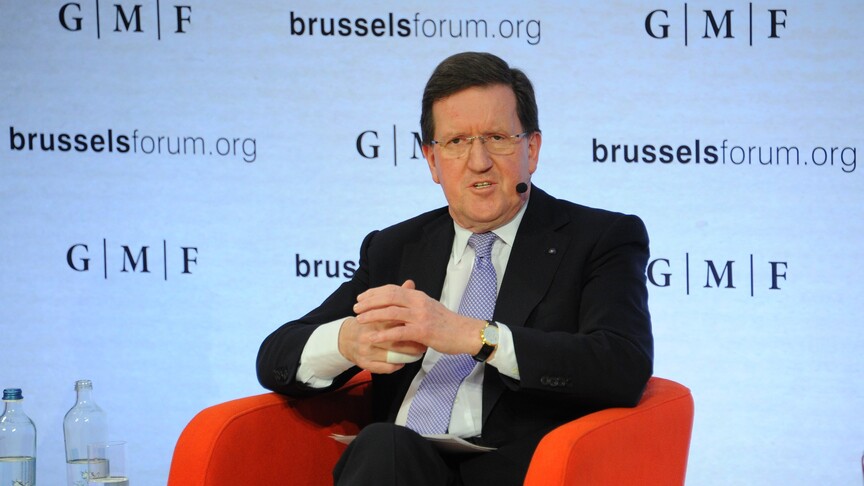
Former NATO Secretary General George Robertson is set to warn the British government that the country’s national security is in peril, according to a media report Tuesday.
During a speech in Salisbury, southwest England, Robertson, who served as NATO’s 10th secretary general from 1999 to 2003, will accuse "non-military experts in the Treasury" of "vandalism," the BBC reported.
Robertson, a former Labour defense secretary who authored the government’s Strategic Defense Review (SDR), previously told the Financial Times that Prime Minister Keir Starmer was "not willing to make the necessary investment."
The SDR was "backed by the largest sustained increase in defence spending since the Cold War, with a total of over £270 billion ($366 billion) being invested across this Parliament," a government spokesperson was quoted by the BBC as saying.
Robertson is expected to warn in his speech that "we cannot defend Britain with an ever-expanding welfare budget."
"We are underprepared. We are underinsured. We are under attack. We are not safe... Britain's national security and safety is in peril," he will warn, according to the report.
He will say there is a "corrosive complacency" in Britain’s political leadership, adding that while lip service is paid to risks and threats, meaningful action has yet to follow.
Defense spending last year stood at 2.3% of GDP, or nearly $90 billion, while the government aims to raise it to 3% by the end of the next Parliament and 3.5% on core defense by 2035.
The Strategic Defense Review, published in June last year, included 62 recommendations accepted by the government, but funding details have yet to be outlined, according to the report.
Separately, speaking to the BBC, General Sir Richard Barrons, another author of the SDR, agreed with Robertson that "there's an enormous gap between where we have to be to keep the country safe in the world we now live in and where we actually are."
Looking ahead, he said the alliance could see "a European NATO doing much more and the US doing much less."