- Scrutiny grows over UEFA’s inaction toward Israeli Football Association, despite sanctions imposed on Russia
- Differing treatment of Russia, Israel lies at the heart of the debate, says lawmaker
GENEVA
International sports federations headquartered in Switzerland have long benefited from favorable tax treatment under a federal framework clarified in 2008, when Swiss authorities formally recognized international sport as serving the public interest – including the promotion of peace, neutrality and international understanding.
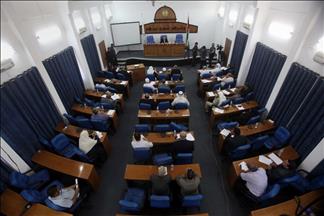
That justification is now being openly challenged in the Swiss parliament.
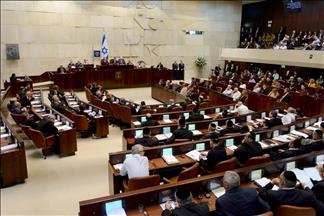
Raphael Mahaim, a member of parliament from the Green Party, is among lawmakers questioning whether organizations such as UEFA and FIFA still meet the conditions underpinning those privileges, particularly in light of their response to Israel’s war in Gaza and the lack of sanctions against Israeli sporting bodies.
Mahaim told Anadolu in an interview that opposition lawmakers have long criticized the tax privileges granted to international sports federations.
Under Swiss practice consolidated in 2008, international sports federations domiciled in Switzerland are treated as non-profit associations for tax purposes, allowing them to benefit from exemptions from direct federal tax. While bodies such as FIFA and UEFA pay some local taxes, Mahaim said their federal status remains unusually favorable given the scale of their commercial activity.
He questioned whether that status remains defensible, pointing to the billions generated through international competitions.
“If we use peace as a justification for such fiscal privileges, then we also have to act accordingly,” he said. “Obviously, this is not what is happening now with the situation in Palestine.”
Parliamentary intervention
Mahaim said the issue was formally raised through a written parliamentary intervention prepared and supported by several lawmakers.
In the submission, Mahaim asked the Federal Council how it assesses UEFA and FIFA’s differing sanctions against Russia and the Israeli Football Association and whether such selective treatment is compatible with Switzerland’s understanding of sporting values.
The parliamentary move coincides with a resolution set to be voted on in the Vaud cantonal parliament, where UEFA is headquartered.
The resolution argues that UEFA’s tax-exempt status is conditional on its role in promoting peace and combating racism and discrimination. It questions whether those conditions are still being met while the Israeli Football Association remains a member, despite fielding teams based in occupied territory.
If adopted, the resolution would require the Vaud government, through its tax authority, to formally notify UEFA and set a deadline for the organization to submit a written justification. That explanation would need to address whether maintaining the Israeli Football Association as a member and refraining from sanctions is compatible with those objectives.
The process could lead to administrative proceedings in which UEFA’s tax exemption could be maintained, conditioned or withdrawn, with any unfavorable decision subject to judicial review.
According to Ashish Prashar, a former adviser to a Middle East peace envoy and campaign director for Game Over Israel, the vote is now set for Jan. 27.
He noted that the resolution is not framed around the war in Gaza itself, but around Israel’s occupation of the West Bank, which the International Court of Justice has ruled illegal and ordered Israel to end.
"There is no way UEFA can say they're meeting the requirements of promoting peace while hosting the Israeli Football Association,” Prashar said. “We are talking about a handful of teams in the West Bank illegally playing in the Israeli Football Association, which is housed under UEFA."
Meanwhile, Mahaim said the federal government’s response to his written interpellation is expected by late February, though he does not expect a shift in position.
"No chance," he said, when asked about his expectations for a positive step by the Swiss government on the matter. "The government will say something along the lines of, we are lucky to have those federations in Switzerland."
The lawmaker said the government typically argues that sports federations should be kept in Switzerland because they contribute some tax revenue domestically and should not be treated "too harshly.”
However, he added that the controversy surrounding FIFA’s so-called “Peace Prize” for US President Donald Trump raised genuine questions about neutrality and adherence to FIFA’s own guidelines, which he said could "hopefully" prompt a more critical response.
Russia sanctioned, Israel not
Mahaim said the differing treatment of Russia and Israel lies at the heart of the debate.
"Those two federations should now act differently and promote sanctions against the Israeli Football Association, as they did for Russia," he said. "And if they do not do that, then we really have a problem with neutrality."
Prashar said sanctions against Russia were imposed only after several European football federations indicated they would refuse to play Russian teams if they remained in international competitions.
"FIFA and UEFA were forced into a position to do that," he explained.
He noted that this reaction from European federations came at the very first days of the Russian war, when "there were no war crimes documented," criticizing the lack of similar pressure when it has come to Israel.
'Peace' as justification
Mahaim said the parliamentary intervention was triggered by what he described as a growing contradiction between the values used to justify tax privileges and the conduct of sports federations today.
"If such an organization as a FIFA is starting to behave in a way which isn’t in line with those principles, peace principles worldwide, geopolitical stability, neutrality, etc, then we have a huge problem," he said.
He added that Switzerland, as host country, can no longer rely on the peace narrative without reassessing whether it still applies.
The preferential treatment, he said, cannot be justified on the assumption that federations promote human rights, peace and neutrality if their actions contradict those principles.
Prashar rejected the idea that sport can remain separate from politics in practice, arguing that football can play a humanitarian role “if it chooses to.”
He cited Swiss intervention to prevent the demolition of a football pitch at the Aida refugee camp in the occupied West Bank as an example of how football authorities can engage with political realities when pressed.
Can tax privileges be withdrawn?
Mahaim noted that while Switzerland has withdrawn preferential tax treatment from major corporations in the past, no such precedent exists for international sports federations.
Prashar said his group is preparing to file a case in the Swiss Federal Court seeking to compel Swiss authorities to enforce international law obligations on UEFA as a Switzerland-based entity.
The case would target Swiss authorities rather than UEFA directly, arguing that allowing teams based in occupied territory to compete under UEFA undermines the criteria used to justify the organization’s tax-exempt status and the government’s responsibility to enforce international law on organizations based in Switzerland.
Prashar said he believes Swiss authorities "do believe in international law" and in their own national legal obligations.
"The reality is UEFA does not meet the requirements of promoting peace if it continues to allow teams that have stolen land to play in football or participate under the UEFA banner,” he said.
He said possible remedies could stop short of immediate withdrawal of tax benefits, including requiring UEFA to propose corrective measures.
"Maybe one of those solutions is to temporarily suspend Israel until they remove those teams," he said, noting that Russia’s ongoing exclusion from international football shows how “temporary” measures can last for years.
Regardless of the government’s response, Mahaim said, the issue of tax exemptions for sports federations is unlikely to fade, adding that further political steps would be taken to keep the debate open.
He was also critical of Switzerland’s current and past positions on Palestine, calling them “unacceptable,” and said the country cannot “present itself as a champion of human rights” if it does not demonstrate that commitment publicly, including in difficult diplomatic and international settings where international law is violated.
The lawmaker said Switzerland’s failure to vote in favor of the recognition of the State of Palestine at the UN was “a shame for Switzerland,” adding that the way the government has communicated and positioned itself on the issue over the past two years runs counter to the country’s tradition of neutrality.
Mahaim said he is part of an initiative committee seeking Swiss recognition of the State of Palestine, expressing hope that sustained civil society pressure could eventually lead to a public vote.