Giada Zampano
13 May 2026•Update: 13 May 2026
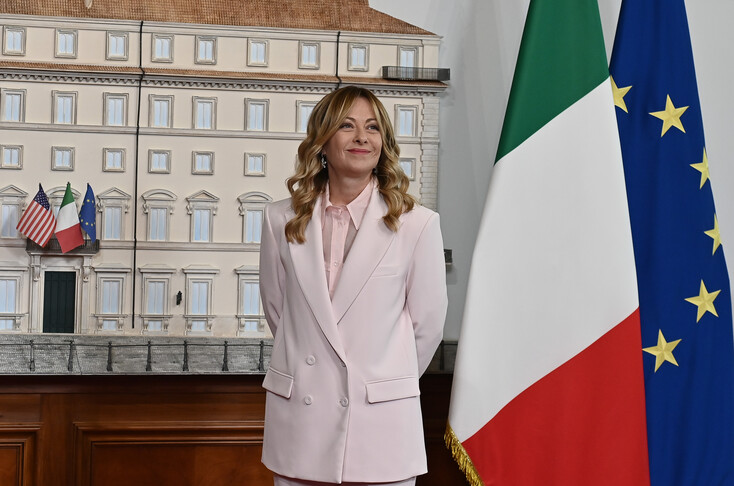
Italian Premier Giorgia Meloni said on Wednesday that her government will approve a legal framework this summer to restart nuclear power generation, marking a potential return to the energy source decades after it was abandoned.
Italy phased out nuclear energy following a referendum held after the 1986 Chernobyl disaster.
Meloni said the government now plans to reintroduce nuclear power through next-generation small reactors developed by the private sector. The government plans to pass enabling legislation for the nuclear initiative later this year.
The initiative is aimed at strengthening Italy’s energy autonomy and lowering costs at a time of mounting economic pressure linked to geopolitical instability. Meloni tied the move to tensions, including the war involving Iran, which the government says is contributing to higher energy costs and broader strain on the economy.
“Clearly, the situation we find ourselves in — with a particularly complex international economic framework and ongoing geopolitical tensions — is affecting growth, energy costs, the competitiveness of businesses and the purchasing power of households,” Meloni told the Senate during a question time.
The announcement drew mixed reactions from opposition parties during the Senate debate.
Carlo Calenda, leader of the centrist Azione party, broadly welcomed the focus on energy but said the scale of the crisis required a more comprehensive strategy for businesses, warning that limited measures would not be enough.
Five Star Movement's Stefano Patuanelli raised concerns about the government’s reliance on small modular reactors, arguing they could generate significantly more nuclear waste and deliver energy at higher costs than renewable alternatives.
Former Premier Matteo Renzi, leader of Italia Viva, took a more critical tone, questioning the government’s overall economic and geopolitical strategy and accusing it of being unprepared for the scale of the energy crisis linked to tensions in the Middle East.
The broader opposition has also pushed for a more structured and coordinated response to the economic fallout from the conflict, including proposals for a cross-party “control room” on energy and industrial policy, an idea raised during the Senate debate.
Meloni called for greater cooperation across the political spectrum to tackle strategic challenges.
“In a moment that is not easy, there should be less space for controversies and more room for concrete discussion on the major strategic issues concerning Italy,” she said.