Nuran Erkul and Ata Ufuk Seker
20 February 2026•Update: 20 February 2026
LONDON / BRUSSELS
Europe is rolling out new initiatives to reduce reliance on US-based payment systems and build a secure, independent payment infrastructure.
Since US President Donald Trump’s re-election and return to office last year, Washington’s relations with its closest allies in diplomacy, defense and trade have grown increasingly strained, particularly with the EU and the UK.
Trump has repeatedly urged Europe to increase defense spending and assume greater responsibility, while also threatening tariffs and raising the prospect of annexing Greenland, an autonomous territory under Denmark, further straining transatlantic ties.
Against this backdrop, European countries are taking concrete steps to strengthen self-sufficiency in payment systems, especially as consumers rely less on cash and more on digital transactions.
The EU views dependence on foreign-controlled systems as not only an economic vulnerability but also a geopolitical risk, given that Visa, Mastercard, PayPal and Alipay account for most card and mobile payments in Europe and are operated outside the bloc.
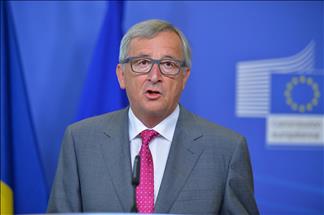
European Central Bank (ECB) President Christine Lagarde recently stressed that the bloc urgently needs its own digital payment system.
Although the ECB has been working for years on a digital euro, tangible results have yet to materialize. The digital euro is envisioned as an electronic version of physical cash issued by the ECB.
Unlike cryptocurrencies, which operate on decentralized blockchain networks, the digital euro would be managed by a central authority.
Calls are growing across EU member states for faster progress on the digital euro to reduce dependence on US payment providers.
The European Payments Initiative (EPI), led by major European banks, aims to establish a unified payment infrastructure across the continent and offer a homegrown alternative to Visa and Mastercard.
The UK is pursuing similar efforts. Senior banking executives are scheduled to hold their first meeting Friday, chaired by Barclays UK CEO Vim Maru, to explore the creation of an alternative system.
About 95% of card transactions in the UK were processed through Mastercard and Visa, according to 2025 data from the UK’s Payment Systems Regulator (PSR).
Globally, Visa remains the most widely used payment network, handling 257.5 billion transactions worth $14.2 trillion last year.
Mastercard processed 160 billion transactions totaling $9.8 trillion in 2024.
Other major global payment systems include UPI, UnionPay, AliPay, WeChat Pay, SEPA, PIX, PromptPay and PayPal.
In Türkiye, the domestic Troy payment system has played a central role in advancing fintech independence and strengthening the digital payments ecosystem.
Troy processed transactions totaling 4.8 trillion Turkish lira ($109.4 billion) last year, marking a 125% year-on-year increase, with its market share reaching 25.3%.
*Writing by Emir Yildirim in Istanbul