- Experts say Europe’s response remains largely reactive as US and Israel drive military agenda
- Conflict testing transatlantic unity and Europe’s ability to act collectively on global security crises, say analysts
BIRMINGHAM, England
As the US and Israel press ahead with their military campaign against Iran, European governments are scrambling to contain the political and economic fallout from a war they did not start and cannot fully control.
Across the continent, leaders have urged restraint and diplomacy, warning that a widening conflict could destabilize the region, disrupt energy markets, and pull Europe into a broader crisis. The war has exposed divisions over how closely countries should align with Washington.
For many governments, the challenge is balancing longstanding security ties with the US against concerns that the conflict could spiral beyond control.
Speaking to Anadolu, Scott Lucas of the Clinton Institute at University College Dublin emphasized that Europe has little leverage, noting that Israel is pursuing military objectives with US support while Tehran shows no signs of capitulating.
“Europe can’t really shape that dynamic,” Lucas said, adding that Gulf states, especially Qatar, have attempted mediation but so far without success.
Brussels sets the tone
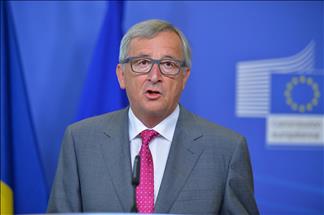
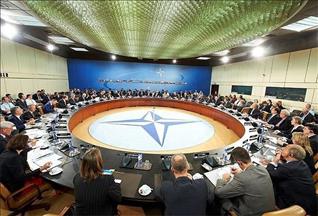
EU officials moved quickly to frame the continent’s response, calling for “maximum restraint” and renewed diplomatic efforts. Leaders have avoided endorsing the US-Israeli strikes, emphasizing international law and civilian protection. Diplomats say the priority is preventing the conflict from spreading.
Pieter Cleppe, editor of BrusselsReport.eu, told Anadolu that most European countries are not participating directly in the fighting but are allowing the US to use military infrastructure – with Spain as the notable exception. Cleppe added that divisions among European democracies are expected, but countries have remained united in defending each other, citing the Greek Cypriot Administration after a suspected drone attack as an example.
Elisabeth Braw, a senior fellow at the Atlantic Council, said the range of responses across Europe reflects the fact that foreign and security policy ultimately remains in the hands of national governments rather than EU institutions.
“There are different views within Europe on this war … and it’s not surprising that there are differences,” Braw said.
Some countries, such as Spain, quickly voiced opposition to the war, while others, like Italy, have been more restrained in their public statements, she said, underscoring how European governments remain free to adopt their own positions on such conflicts.
Behind the scenes, governments have stepped up naval patrols and military deployments to protect shipping routes and citizens in the region. Officials are also monitoring disruptions to oil shipments through the Strait of Hormuz, a vital corridor whose closure is driving global prices higher.
Ensuring adequate energy supplies has become a rallying point for governments. French President Emmanuel Macron said France and its allies are preparing a “purely defensive” naval mission aimed at reopening the Strait of Hormuz and escorting vessels once the most intense phase of the conflict subsides.
Lucas noted that Europe could have amplified its influence by publicly supporting Gulf-led mediation and emphasizing de-escalation early on. He said the lack of a unified stance has left Europe “on the sidelines” amid a war that is already expanding into Lebanon and beyond.
Britain treads carefully
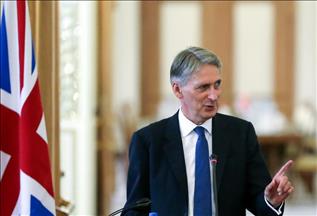
Outside the EU, Britain has tried to strike a careful balance. Prime Minister Keir Starmer has declined direct participation in the strikes while emphasizing regional security and the protection of shipping lanes. The UK has deployed naval and air assets and is coordinating evacuation and defense planning with allies.
Starmer’s cautious approach has drawn criticism from US President Donald Trump, who dismissed the British prime minister as “not Winston Churchill,” reflecting tension between Washington and European capitals. British officials have sought to downplay the disagreement, stressing the transatlantic alliance while continuing to call for de-escalation.
Britain is walking a diplomatic tightrope while dealing with an aggressive US, while outlining protective measures at home to mitigate the economic effects of the ongoing war. Starmer has admitted that the US-Israel war will “likely” impact people in the UK.
Spain takes a harder line
Spain has emerged as Europe’s most outspoken critic. Prime Minister Pedro Sanchez condemned the strikes as a unilateral action that risks fueling a wider conflict. Madrid has refused US requests to use Spanish bases for operations, arguing such involvement requires a clear legal mandate.
Cleppe emphasized that Madrid’s stance illustrates how countries can diverge on participation while still uniting on defense, noting that Spain, Italy, and France pledged support to Cyprus after attacks. The Trump administration has threatened economic retaliation, heightening tensions with Spain.
A continent wary of another war
Elsewhere in Europe, governments have largely avoided choosing sides overtly. France, Germany and Italy have condemned Iranian missile and drone attacks while calling for renewed diplomacy. The cautious approach reflects both strategic concern and historical memory, with leaders wary of being drawn into another Middle East conflict after Iraq.
Braw said the divisions also reflect the way the conflict began, arguing that European governments were not closely involved in the decision-making that preceded the war. The US launched the military campaign without consulting European allies in advance, she said, leaving them to respond after the consequences began to affect Europe itself.
“It’s not just a war that is affecting the Middle East and Iran alone, but it’s already affecting Europe as well, and the effects will become stronger as the war goes on,” Braw said.
Lucas observed that Europe’s role has been mostly reactive: “Once Iran retaliated, they could unify around defense, for example, protecting Cyprus,” he said, “but this does not enhance Europe’s leverage over ending the war.” Officials also fear the economic consequences of a prolonged confrontation, particularly as energy supplies disruptions raise alarm.