Mücahithan Avcıoğlu
19 September 2025•Update: 19 September 2025
ISTANBUL
The EU on Friday unveiled its 19th package of sanctions against Russia, targeting energy revenues, financial loopholes, and military supply chains in response to Moscow's war on Ukraine.
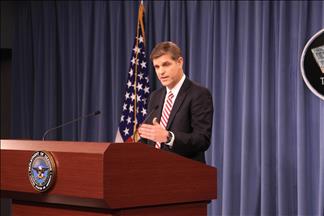
"The Commission's proposal for the 19th sanctions package will aim to weaken Russia's already weakened war economy further," Dombrovskis said during the Eurogroup press conference in Copenhagen.
Stating that no one implemented stronger sanctions than Europe, Dombrovskis emphasized that the sanctions work, particularly as part of a coordinated G7 approach.
He said that G7 sanctions have already inflicted real costs on the Russian economy ranging in the hundreds of billions.
"But it is clear that we must step up the pressure against Russia further to make its war of aggression unsustainable," Dombrovskis stated, adding that the details will be disclosed "very soon."
European Commission President Ursula von der Leyen said in a statement that the new measures come as Russia continues "the full extent of its contempt for diplomacy and international law," citing large-scale missile and drone strikes on Ukrainian cities and repeated violations of EU airspace by Russian drones.
The package includes a ban on imports of Russian liquefied natural gas (LNG) into EU markets, the lowering of the crude oil price cap to $47.6 per barrel, and sanctions against 118 additional vessels from Russia’s so-called shadow fleet. In total, more than 560 ships are now listed under EU sanctions.
Major Russian energy trading companies Rosneft and Gazpromneft will face a full transaction ban, while refineries, petrochemical firms, and oil traders in third countries, including China, will also be targeted for circumventing restrictions.
The sanctions also extend to the financial sector, introducing transaction bans on additional Russian banks and financial institutions in third countries. For the first time, EU restrictive measures will cover cryptocurrency platforms, with curbs on crypto transactions and foreign banks connected to Russia's alternative payment systems.
Von der Leyen reiterated that the bloc is also working on a plan to use immobilized Russian assets to provide Ukraine with a "Reparations Loan" to support its defense.
"I now call on the Member States to quickly endorse these new sanctions. We want Russia to leave the battlefield and come to the negotiating table," she added.
EU foreign policy chief Kaja Kallas underlined that the new sanctions are designed to "strike where Russia gets its money," targeting illicit cash flows and schemes of financial evasion abroad. She confirmed that the EU aims to phase out Russian LNG imports completely by January 2027.
"Today, we present our 19th sanctions package. Every sanction reduces the Kremlin’s ability to wage war. We won’t stop putting pressure on Russia until it ends its war," she wrote on the US social media platform X.