- Poland revokes Zelenskyy's state honor over dispute involving controversial World War II-era Ukrainian nationalist group
- Several Ukrainian officials return Polish awards, warning that fallout risks benefiting Russia
- Row highlights how unresolved World War II grievances continue to shape one of Europe's most important wartime alliances
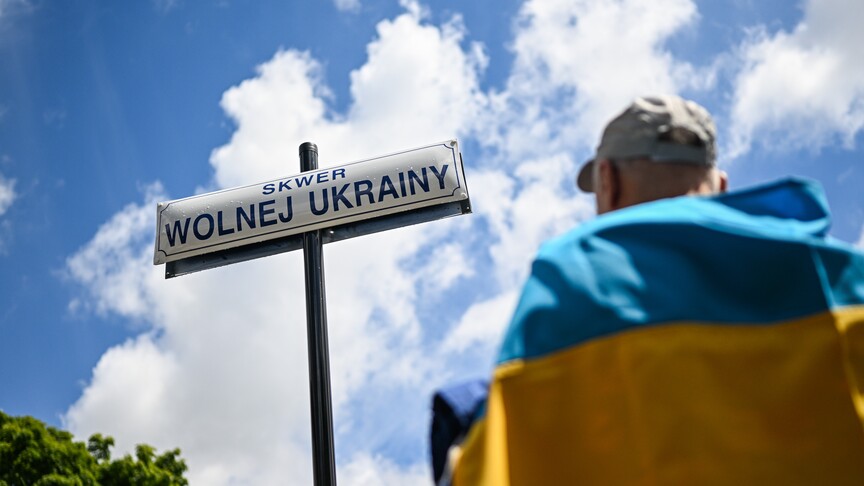
In recent years, Poland has emerged as one of Ukraine's closest allies, serving as a gateway for Western military aid, a refuge for millions of Ukrainians, and one of Kyiv's strongest advocates within Europe.
Now, a dispute over the legacy of a World War II nationalist movement is threatening to strain one of the most important partnerships forged during the Russia-Ukraine war.
The tensions erupted after Ukrainian President Volodymyr Zelenskyy named a military unit after the Ukrainian Insurgent Army (UPA), a group regarded by many Ukrainians as a symbol of resistance against Soviet rule, but remembered in Poland for massacres that killed tens of thousands of Polish civilians during World War II.
In response, Polish President Karol Nawrocki revoked Zelenskyy's Order of the White Eagle, Poland's highest state honor, prompting the Ukrainian leader to return the award on Saturday.
On Sunday, Zelenskyy said Ukraine and Poland cannot be “anything but partners and friends,” but warned that the spat could end in a “very dangerous escalation,” in a post through US social media company X.
In solidarity with Zelenskyy, former Ukrainian presidents Leonid Kuchma, Viktor Yushchenko, and Petro Poroshenko also announced they would renounce their own Order of the White Eagle honors.
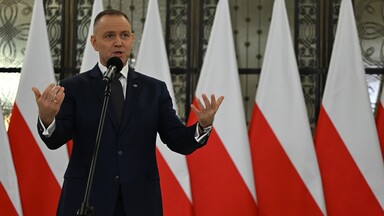
Meanwhile, Nawrocki defended his decision, arguing that honoring the UPA "hurts the memory of Polish victims" and undermines efforts at historical reconciliation. He said the move did not change Poland's support for Ukraine against Russia.
Fears dispute could benefit Russia
The increasingly public exchange has prompted warnings from officials in both Warsaw and Kyiv that the fallout could play directly into Russia's hands.
"Undoubtedly, this is a gift to the Moscow aggressor, who will certainly use it against both of our countries," said Kyrylo Budanov, head of Ukraine's presidential office, who also announced that he would return the Gold Officer's Cross of the Order of Merit of Poland, awarded to him last year.
Former Ukrainian leader Poroshenko called for calm.
“Ukraine cannot afford to quarrel with Poland. Poland cannot afford to quarrel with Ukraine. We are fighting for the independence and existence of Ukrainian statehood,” he posted on X. “Russia, meanwhile, will only applaud every mutual humiliation, every careless word, every new scandal.”
Ukrainian Foreign Minister Andrii Sybiha also announced he would return the Commander's Cross with the Star of the Order of Merit of the Republic of Poland, awarded to him in 2022, describing Warsaw's decision as "a strategic mistake, from which only Russia will benefit."
Polish Prime Minister Donald Tusk also weighed in on the debate.
“The conflict between Poland and Ukraine delights Putin and shocks our allies. The task of Presidents Zelenskyy and Nawrocki is to calm emotions, not to stoke tensions. The front line runs elsewhere,” he wrote on X Sunday.
“Getting entangled in the political conflict between politicians in Poland and Ukraine is a strategic mistake that will cost both sides: in business, geopolitically and reputationally,” he added.
Why is UPA so divisive?
At the center of the dispute is the Ukrainian Insurgent Army, known as the UPA, a World War II-era nationalist force whose legacy remains deeply contested.
Founded in 1942, the UPA fought for an independent Ukrainian state and battled both Nazi German and Soviet forces at different stages of the war.
For many Ukrainians, particularly in western regions of the country, the group is remembered as a symbol of resistance against Soviet domination and part of a broader struggle for national independence.
In Poland, however, the UPA is most closely associated with the Volhynia massacres of 1943-44, during which historians estimate that tens of thousands of Polish civilians were killed in territories that now form part of western Ukraine.
Poland officially recognized the killings as genocide in 2016, while Ukraine has generally viewed the violence within the broader context of wartime conflict between Poles and Ukrainians.
The differing interpretations have repeatedly complicated relations between the two countries, although Russia's attack on Ukraine pushed many of those disagreements into the background.
Order of the White Eagle
At the same time, the Order of the White Eagle is Poland's oldest and most prestigious state honor.
Zelenskyy received the award from then-President Andrzej Duda in 2023 in recognition of his role in strengthening Polish-Ukrainian relations and leading Ukraine's defense against Russia.
Under Polish law, a state decoration may be revoked if “the decorated person has committed an act as a result of which that person has become unworthy of the order or decoration.”
Established in 1705, the Order of the White Eagle has been awarded to the most distinguished Poles for their merits and occasionally to the heads of state of foreign countries, including former German Chancellor Gerhard Schroder and Italian dictator Benito Mussolini.
It has never been permanently stripped from a recipient.
Zelenskyy wrote on X that the award, as Poland's highest state distinction, requires “not only merit but also respect for the values that form the foundation of our community.”
“Therefore, if it is considered that this special symbol may remain with (18th-century Russian Empress) Catherine II, Benito Mussolini, and Gerhard Schroder, then we in Ukraine will not argue with that,” he said.