ISTANBUL
The war in the Gulf has added new environmental challenges to an already fragile region, as attacks on energy infrastructure and military targets have triggered widespread pollution and toxic emissions, raising nuclear safety concerns.
The conflict began on Feb. 28, when the US and Israel struck targets inside Iran.
Alongside casualties, the fighting has generated millions of tons of carbon emissions and significant environmental damage, according to data compiled by Anadolu from sources including the UN Environment Programme, the UK-based Conflict and Environment Observatory and the US-based Climate and Society Institute.
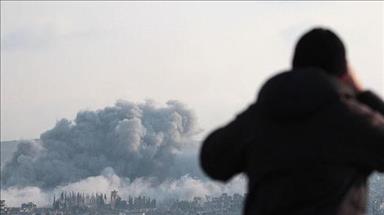
According to the data, attacks on oil facilities in particular released toxic smoke, creating serious risks for human health and natural resources.
More than 300 strikes targeting civilian and military infrastructure were recorded across Iran, Iraq, Israel, Kuwait, Jordan, Cyprus, Bahrain, Qatar, the United Arab Emirates, Saudi Arabia, Oman and Azerbaijan during the first 10 days of the conflict.
Of those, 232 incidents carried environmental risks.
Explosions and fires resulting from attacks on military targets increased the likelihood of oil, heavy metals and toxic substances contaminating the environment.
Facilities located near residential areas also raised the risk of civilian exposure to hazardous pollutants.
Tehran emerged as one of the locations where these risks were most visible. Between March 7 and 8, four oil facilities in and around the Iranian capital were targeted.
The Aghdasiyeh Oil Depot, Shahran Oil Depot, Fardis oil storage facility and a storage site at the Tehran Oil Refinery were all struck.
The refinery, with a daily capacity of about 225,000 barrels, is one of Iran's largest facilities and focuses on producing liquefied petroleum gas and gasoline.
It also produces vacuum-based products used in sulfur recovery and asphalt production.
On March 2 and 3, Iran-launched drones targeted the Ras Tanura refinery in Saudi Arabia and Fujairah Port in the UAE.
Experts warned that dense smoke produced by attacks on oil refineries contains harmful gases and chemicals that pose serious risks to human health.
Marine pollution
Marine pollution risks also increased amid heightened military activity along the Persian Gulf coastline.
Following US strikes against Iran's naval forces, more than 43 Iranian vessels were estimated to have been damaged or sunk. Military port infrastructure around Bandar Abbas and Konarak was also affected.
An oil spill triggered by an attack on Iran's Dena frigate near the coast of Sri Lanka further contributed to marine pollution risks.
Separately, Iranian strikes targeting port infrastructure in Abu Dhabi, Dubai, Jebel Ali and Manama damaged vessels and port facilities, allowing fuel and other pollutants to spread into surrounding waters.
Carbon emissions
Carbon emissions generated by the conflict surpassed Iceland's annual emissions within just two weeks.
Emissions were categorized into five sources: destruction of buildings, explosions at fossil fuel facilities, fuel used in combat and support operations, embedded carbon in military equipment and emissions from missiles and drones.
Carbon emissions from building destruction totaled 2.415 million tons.
Explosions at oil refineries produced 1.883 million tons, while fuel used in combat and support operations accounted for 529,000 tons.
Embedded carbon from equipment contributed 172,000 tons, and missiles and drones generated an additional 55,000 tons.
In total, carbon emissions reached 5.054 million tons in the first two weeks of the war, exceeding Iceland's annual emissions.
Nuclear risk
The conflict has also raised nuclear safety concerns as strikes moved closer to sensitive facilities.
On March 21, the Atomic Energy Organization of Iran announced that the US and Israel had carried out an attack targeting the Natanz nuclear facility.
Shortly afterward, sirens sounded in southern Israel, where the Dimona nuclear facility is located, following Iran's retaliatory response.
The International Atomic Energy Agency called on all sides to exercise restraint to prevent a nuclear accident, while World Health Organization Director-General Tedros Adhanom Ghebreyesus warned that the conflict in the region had reached a dangerous level.
*Writing by Gizem Nisa Demir